
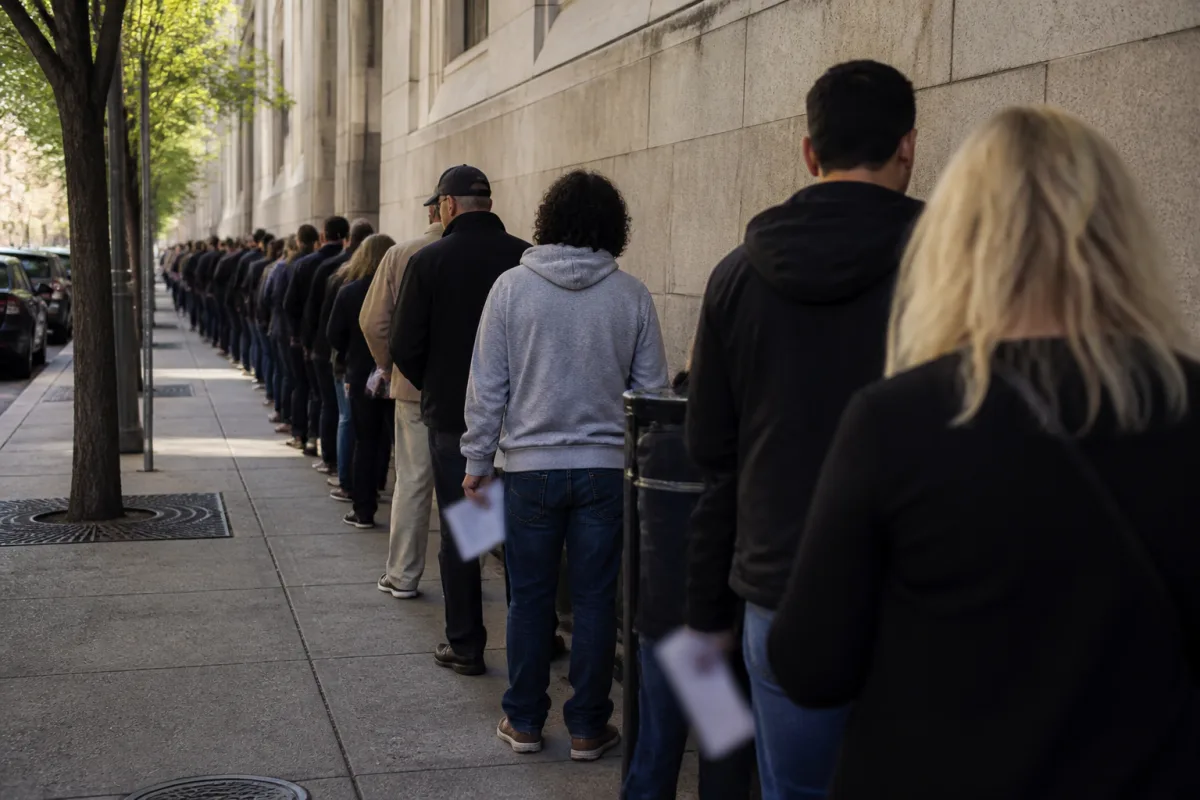

The State Department has expanded immigrant screening for public charge — the risk of becoming a financial burden on the state. At consular interviews, officers now ask dozens of questions about the applicant’s and sponsor’s income, health, housing, and financial plans. The I-864 form no longer guarantees approval.
What is public charge and why have the rules tightened
Public charge is a standard established in the 1920s that determines whether an immigrant can financially support themselves in the USA or will rely on state benefits. For many years, proving that an applicant would not become a financial burden required the sponsor to provide three years of tax returns and income statements, a letter of employment, and recent pay stubs.
In 2025, the administration announced that this was insufficient and expanded public charge screening, particularly for consular interviews abroad. New restrictions were introduced for citizens of 75 countries. The State Department suspended immigration visa interviews worldwide to retrain consular personnel. Although the pause is officially ongoing, there were reports of visa processing resuming in September 2026. Meanwhile, USCIS rescinded the 2022 public charge regulation that had been introduced on September 18, 2026, and now officers can consider any means-tested benefits.
How officers assess public charge
Under section 212(a)(4) of the Immigration and Nationality Act, the officer predicts whether an applicant will become dependent on the state, considering age, health, marital status, assets, resources, education, and skills. Although the sponsor’s I-864 form still matters, according to the State Department, it does not close the investigation. A joint sponsor does not automatically resolve a weak case.
Rejections are typically issued on grounds of 212(a)(4) — the public charge provision — or 221G, when the case is placed in administrative processing. In the latter case, the applicant is given an opportunity to prove they will not become a financial burden. In rare instances, an officer may offer a public charge bond through USCIS, though this practice is uncommon.
Questions about housing, employment, and medical care
At the interview, officers verify the specific address where you will live in the USA — not vague plans, but an exact location. They ask how you will pay for the apartment or house, who will pay for it, and how the money will be obtained.
Regarding employment, officers want to know what exactly you plan to do, what qualifications you have, and whether licensing is required. For example, a doctor from another country may face difficulties if obtaining a license takes three years. You need to describe your job search process and expected annual income for the first year.
Retired individuals are asked about pensions, access to benefits from their home country, and retirement plans. Health insurance will be a key factor. Officers ask about chronic illnesses, ways to pay for treatment, current coverage, and the specific monthly premium for adding you to a health insurance policy.
For children, you should discuss school plans. For elderly individuals, explain where they will receive care in old age — at home or in a specialized facility.
Sponsor’s financial condition and household
Officers investigate the sponsor’s income, assets, and debts. They request information about the sponsor’s position, salary, other household earners, real estate, savings, investments, and liabilities — student loans and other debt.
Significant attention is paid to the history of receiving government benefits. Any current or past benefits received by household members, care in state institutions — all of this is used to demonstrate whether the family might become dependent on the state.
If there is a joint sponsor, officers inquire about their relationship to the family, how long they have known each other, whether they live in the same state, whether they have sponsored people before, and what benefits the sponsor themselves has received.

How to prepare for the interview
First and foremost, you need to have a specific address where you will live, not vague plans. Develop a detailed financial support plan: where you will work, what housing will cost, and how you will pay for medical care.
Create a clear description of your employment: where you worked, what skills you have, how you will apply these skills in the USA, and how much you will earn. If you don’t have a job offer, it’s even more important to have a compelling narrative about your abilities.
Find out what government benefits you or any family members have received. Before mentioning food banks or state health programs, consult with a lawyer.
Some consulates accept a written statement before the interview, while others issue a questionnaire to upload to CEAC before your appointment. In either case, prepare written answers in advance. Remember: the more specific and detailed your answers, the higher your chances of approval. Officers want to see not general statements, but specific numbers, dates, employer names, and payment amounts.
When and on what grounds can a refusal be issued
A refusal on public charge grounds does not mean the end of the process. If an officer determines that an otherwise qualified applicant is a public charge, they can attempt to overcome this decision. Upon refusal, a document is issued either with grounds 212(a)(4) or 221G — administrative processing.
If you are offered a bond, it may help in some cases, although successful examples are not numerous. You can also upload additional evidence to CEAC before a follow-up interview or submit written responses to specific officer questions if the consulate allows it.


Comments
Reader experience is useful, but it is not advice: check the rules on the official site.
No account needed: click Sign in, type any name, and you are done.