
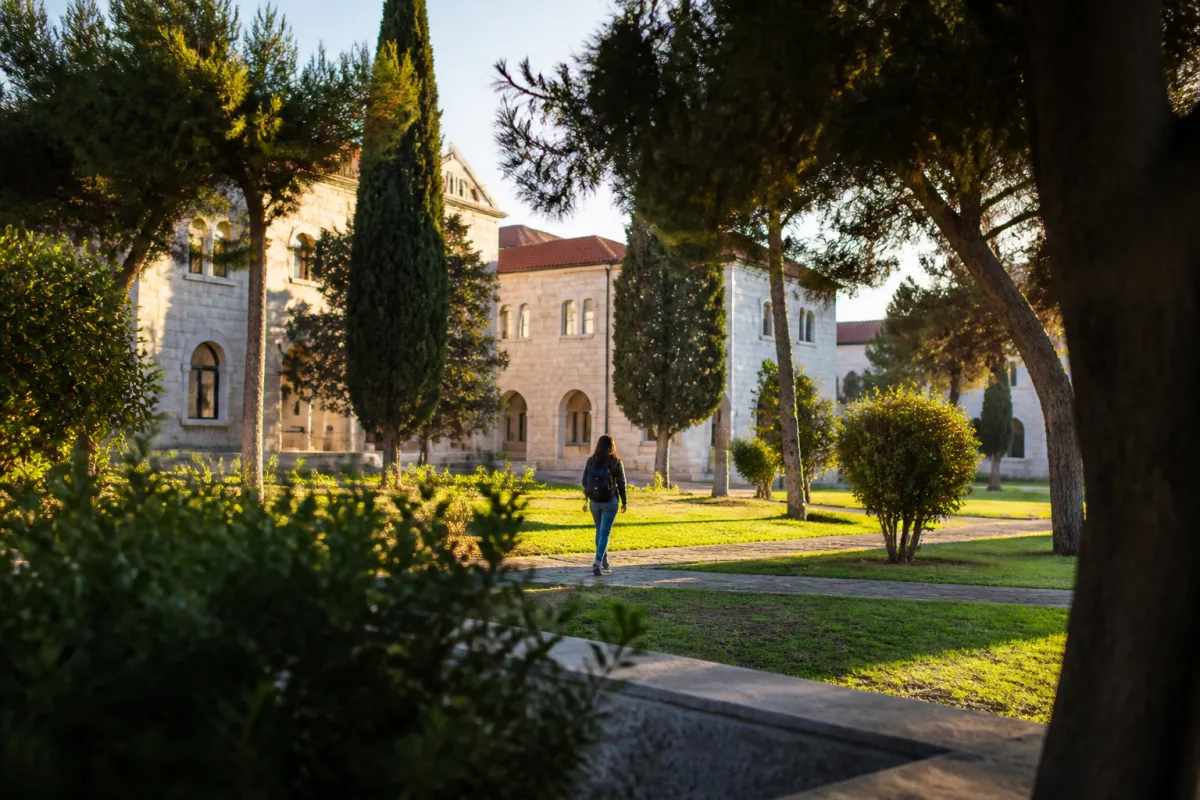

A student from Kazakhstan has spent a year studying International Relations at the University of the Aegean on the island of Rhodes, after eight months of learning Greek to pass the entrance language exam.
In short
- The language exam is mandatory: without it, there’s no admission to the chosen program at a Greek university.
- Out of 13 first-year courses, five weren’t passed on the first attempt — all were cleared in the September retake.
- Dorm housing and meals in the university cafeteria are free for students.
- Of the department’s four language courses, only two are actually running — Turkish and Arabic — since French and Hebrew have no instructor.
- A summer job as a pool bar waiter paid over €1,000 a month, but it ends once the academic year starts.
How to Get Into International Relations in Greece: Language and Exam
Greek needs to be learned ahead of time, before the move — ideally starting back in the final year of high school, alongside graduation exams. In this case, learning the language took eight months, and the language exam was passed in May, so by the time of admission and relocation the language was already in place.
Juggling high school and language courses in that last year is doable, but it takes prioritizing: time has to be split between language study and exam prep. At the same time, school grades can’t be neglected — they matter a lot when choosing a university later, alongside language proficiency.
Passing the language exam is one of the most important steps in getting into a Greek university: without it, there’s no admission to the chosen program. Greek itself isn’t among the easier languages to learn, so the exam becomes a real challenge rather than a formality.
without it, there’s no admission to the chosen program
Conversational fluency develops only after the move, through everyday immersion rather than textbooks. That process speeds up when there are few Russian-speaking students around: in this case, the environment was almost entirely Greek, which accelerated language learning — unlike situations where students stick together in national groups and progress slows down.
Greek is best started back in the final year of high school, alongside graduation exams — that way it’s already in place by the time of the move, not a first-year problem.
Preparing to Study International Relations in Greece
University of the Aegean in Rhodes: Department and Major
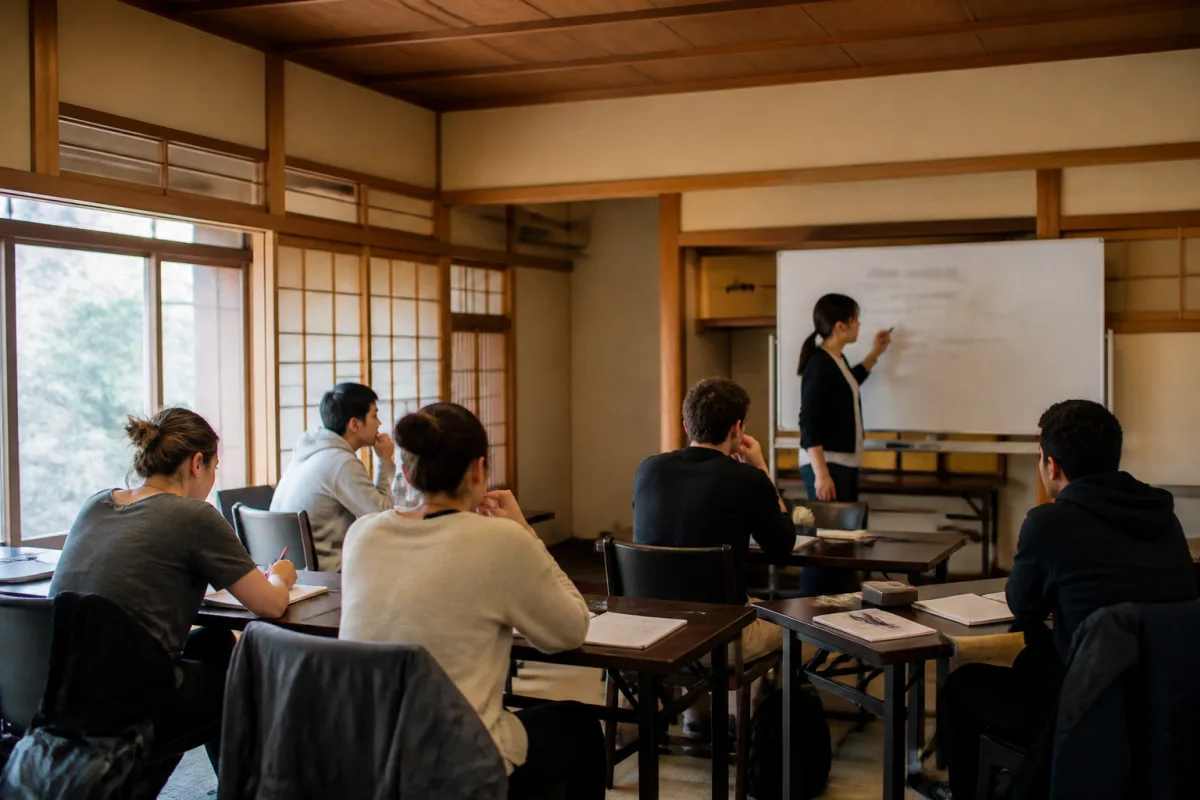
The university is the University of the Aegean, based on Rhodes. The department is called “Mediterranean Studies”: it covers three tracks at once — International Relations, Archaeology, and Linguistics — and in the first two years, courses from all three run in parallel. The department was chosen specifically for the International Relations track.
Required courses include Mediterranean history with a focus on the Greek region, and for International Relations — projects and book reviews. Elective courses have included “Turkish Literature and Language” and a course that translates roughly as “Language and the Body,” which covers topics like feminism and how sexism shows up in language and linguistics.
Faculty in the department were understanding toward students: some exams could be taken in English, and professors explained what exactly was being studied and what to expect on exams. Grades weren’t inflated, though — the help was simply about making sure students understood the material.
What Happens If You Fail an Exam: Retakes and Course Load
If a student fails a course during the term, the debt carries over to a retake the following September — the system doesn’t expel students over one failed session. In this case, five such debts piled up after the first year: two courses from the first semester and three from the second. All five were cleared in the September retake, with no debts left heading into the second year.
The first year had 13 courses in total, meaning nearly half the course load wasn’t passed on the first attempt. Of those, the student considers only two genuinely difficult. The reason for the failed exams, in his view, isn’t the difficulty of the material but a lack of language experience: the everyday spoken Greek used daily and the academic Greek of exam terminology are two different things, and some exam wording simply doesn’t register.
the everyday spoken Greek used daily and the academic Greek of exam terminology are two different things
A separate issue is the schedule itself, not the coursework: classes sometimes run in the morning and evening with roughly a six-hour gap in between, effectively eating up the whole day. By the student’s observation, universities in Kazakhstan have similarly uneven schedules, so this isn’t unique to this particular department.
From Debts to Retakes
How failed exam retakes work in the department
- First-semester exams failed2 courses
- Second-semester exams failed3 courses
- Retake of all debtsSeptember
- Start of second yearno debts left
Of 13 first-year courses, fewer than half were passed on the first try: five debts carried over to the September retake. The reason is usually unfamiliar terminology, not difficulty of the material.
Language Courses in the Department: Arabic, Turkish, and Other Options
The department offers four language courses — Turkish, Arabic, French, and Hebrew — but only two are actually running right now. French and Hebrew aren’t taught because there’s no instructor for either.
In this case, the student chose Arabic over Turkish. Turkish didn’t appeal to him given his focus on International Relations: he decided Arabic would be more practically useful, since it’s spoken across many countries, while the pool of Turkish speakers is narrower.
The student enjoys Arabic, even though it isn’t easy to learn. Some of the material has to be studied independently. The main difficulty lies elsewhere: the course is taught in Greek, and his Greek still isn’t fluent enough to follow the explanations effortlessly. In effect, one foreign language is being learned through another that isn’t fully mastered yet — on top of the usual challenges of starting a new language.
Erasmus+ and Studying in Other EU Countries
The university in Rhodes runs an Erasmus+ exchange program, and the Kazakh student plans to take part. Back in high school, he had his eye on Italy, but chose Greece for his degree — he sees an Erasmus+ exchange as a way to follow up on that interest and, in the process, see nearly all the EU countries he hasn’t visited yet.
For him, it’s a combination of study and travel: the program offers both an educational experience and a chance to see different countries. He says he got solid support with the language after moving to Greece.
The same program created an odd moment in the department: when he first arrived, classmates came up to introduce themselves, assuming he was an Erasmus student — his choice of this particular university struck them as unusual enough to ask.
classmates came up to introduce themselves, assuming he was an Erasmus student
Dorm and Meals: What’s Free for Students
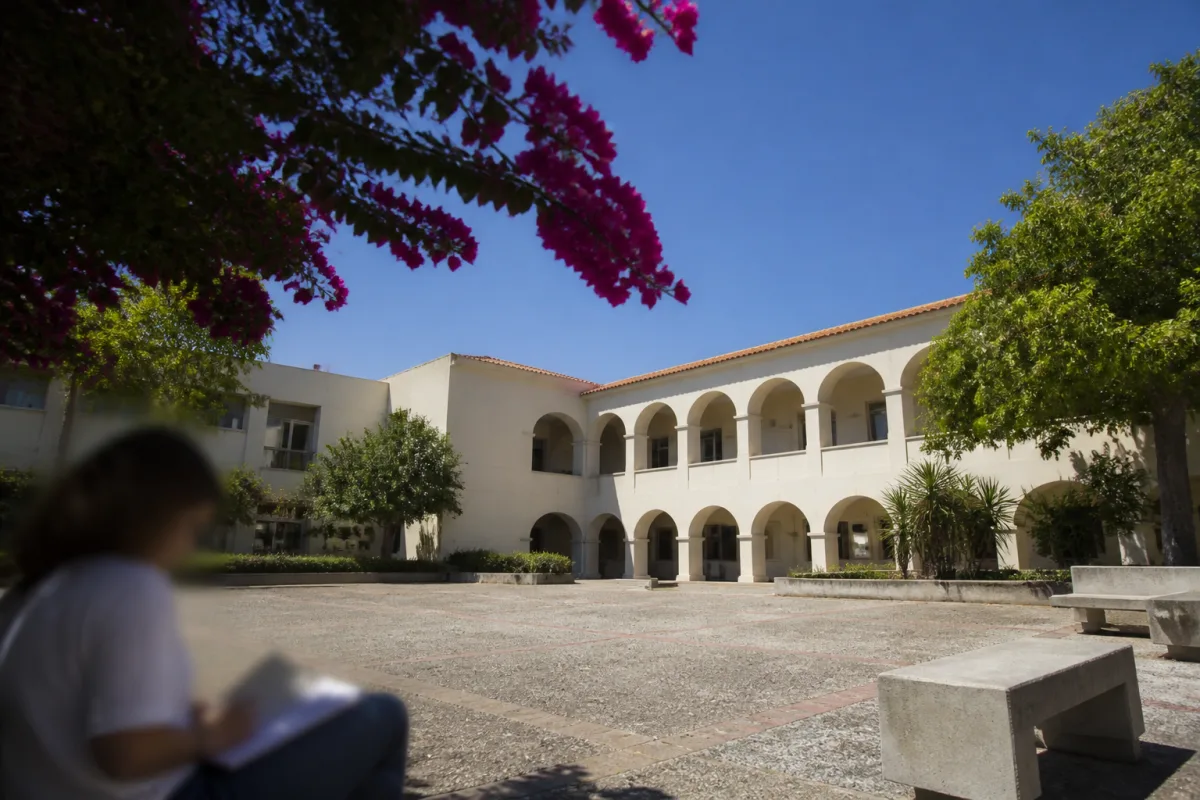
Dorm housing and meals in the university cafeteria are free for students. Last year, the dorm consisted of two buildings, both converted from old hotels: one newer, one older. He was the first of his roommates to move into the older building, and the room was in rough shape at the time — it had to be cleaned and the furniture rearranged.
Over the following summer, the room got a light cosmetic touch-up: the white walls were repainted and furniture rearranged, but nothing major changed. An attempt to switch rooms for the new academic year through the university didn’t pay off right away — another student ended up getting a free room instead, and even that one wasn’t ideal. Based on accounts from Greek students from other cities, dorms at larger universities are noticeably worse, which makes the conditions in Rhodes look decent by comparison.
The university cafeteria is open to students in the morning, at lunch, and in the evening. Breakfast is a light snack — a boiled egg and a muffin. Lunch is mostly pork, sometimes chicken, fish, or squid. For students who don’t eat pork for religious reasons, the cafeteria accommodates them by serving extra feta cheese instead of meat.
Dorm housing and cafeteria meals are free for students — a significant cut in the cost of living on the island.
Climate and Life on the Island of Rhodes
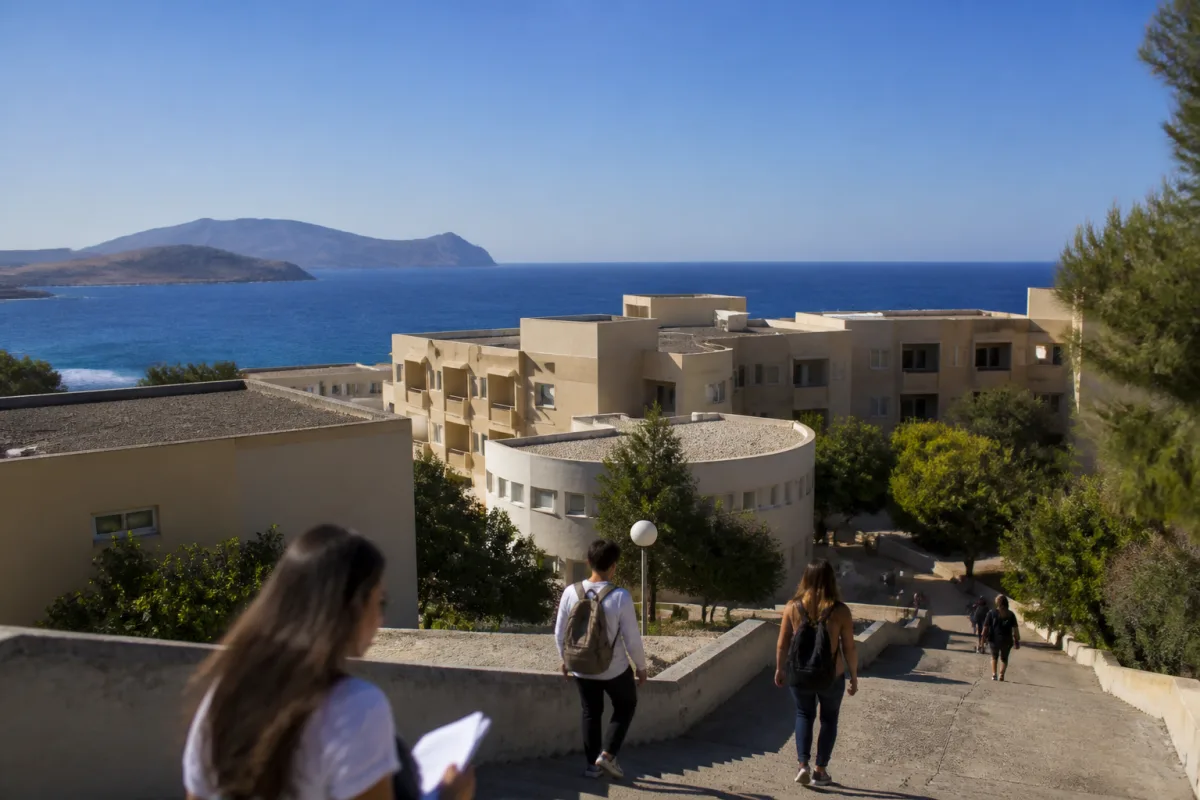
Rhodes is an island, and the city of Rhodes itself takes up only a small part of it: the student’s housing is about 20 minutes from the center, and that area already counts as central. The town itself feels compact, but the island as a whole is large — in summer, it’s possible to travel across all its areas, including for work.
Winter and summer on the island are drastically different. Winters are cold because of high humidity: it’s not a dry cold but a damp chill that’s harder to bear. The dorm’s air conditioner, which has a heating function, runs on a schedule — roughly from 1 p.m. to 6 p.m. — and shuts off centrally at night with no way to turn it back on manually. For nighttime warmth, students buy their own space heater, which costs around €20, and there’s no rule against using one.
Summer transforms the island: temperatures sit roughly between +23 and +35 degrees Celsius, with occasional real heat. That summer season is exactly why Rhodes is a popular tourist destination and why people come here on vacation.
The housing is right by the sea: it’s about a 5-minute walk from the dorm to the beach, and just a few meters from there to the water itself. The island’s beaches are mostly clean, which sets it apart from mainland Greece: in Thessaloniki, for example, part of the coastline is closed to swimming because of the port. Rhodes has a port too, but it doesn’t get in the way — all the other beaches are fine for swimming.
Food and Local Cuisine: What’s Eaten and What’s Missing
Outside the university cafeteria, students mostly stick to the same tavernas in town — a group of friends usually doesn’t change its route. There, the go-to order is gyro with meat, and for drinks — wine, which gets more attention than beer. Among local drinks there’s also ouzo, which he describes as something similar to mastic liqueur.
He rarely cooks himself: the kitchen in his room is tiny, with no room to really get going. When he does cook, it’s something special and effort-intensive rather than an everyday meal. More often he eats at the cafeteria or orders food, which means home cooking is in real short supply.
What he misses most is familiar Kazakh home cooking and meat. Beef in Greece is pricey, so chicken gets picked more often instead — though he’s already tired of it. A separate issue is cottage cheese (tvorog): after a year, it still hasn’t turned up in a single store, and the only dairy available is milk and yogurt.
Can Students Work Part-Time in Greece
Students in Greece can take on part-time work — in this case, the student got a job at a resort hotel in Rhodes with its own private beach. He worked from July through early October and earned over €1,000 a month.
His position was pool bar waiter, meaning the job was effectively based on the beach. The work wasn’t hard for him: he’d already waited tables before, so there was no need to learn the job from scratch.
The part-time work ends on its own once the season wraps up — in October, hotels on the island wind down their summer operations. Combining it with coursework isn’t an option either: classes start taking up more and more time, and student status itself puts a limit on how much work is possible.
The student worked as a pool bar waiter at a resort hotel from July to October, earning over €1,000 a month — but once classes start, combining work with studies isn’t possible.
Frequently asked questions
Can you get into a Greek university without passing the language exam if you agree to study in English?
No: admission to the chosen program at a Greek university specifically requires passing the language exam, and without it, there’s no admission to studies. Individual professors sometimes allow certain exams to be taken in English, but that applies to specific courses within the program, not to admission itself.
What happens if too many retake debts pile up to clear in a single September session?
The case described here involved five debts after the first year, all cleared in a single September retake, and the system doesn’t expel students for a failed session. There’s no information on what happens if the number of debts is much higher or can’t be cleared in one retake.
What if you can’t find an instructor or enroll in a desired language course because it isn’t being offered?
Of the four language courses listed in the department — Turkish, Arabic, French, and Hebrew — only two are actually running, since there’s currently no instructor for French or Hebrew. In that situation, the choice is effectively limited to the courses that are still active.
Is it possible to keep working in Greece after the tourist season ends?
In this case, no: the seasonal hotel job ends on its own once hotels on the island wind down their summer operations in October. Combining it with coursework isn’t an option either, since classes leave no spare time once the term starts.
Are students allowed to work in Greece without time restrictions, or does student status limit it?
Student status itself sets a limit: once classes start taking up more time, combining work and study stops being feasible. In this case, the part-time job was only possible during the period free of heavy coursework — from July through early October.
Comments
Reader experience is useful, but it is not advice: check the rules on the official site.
No account needed: click Sign in, type any name, and you are done.