
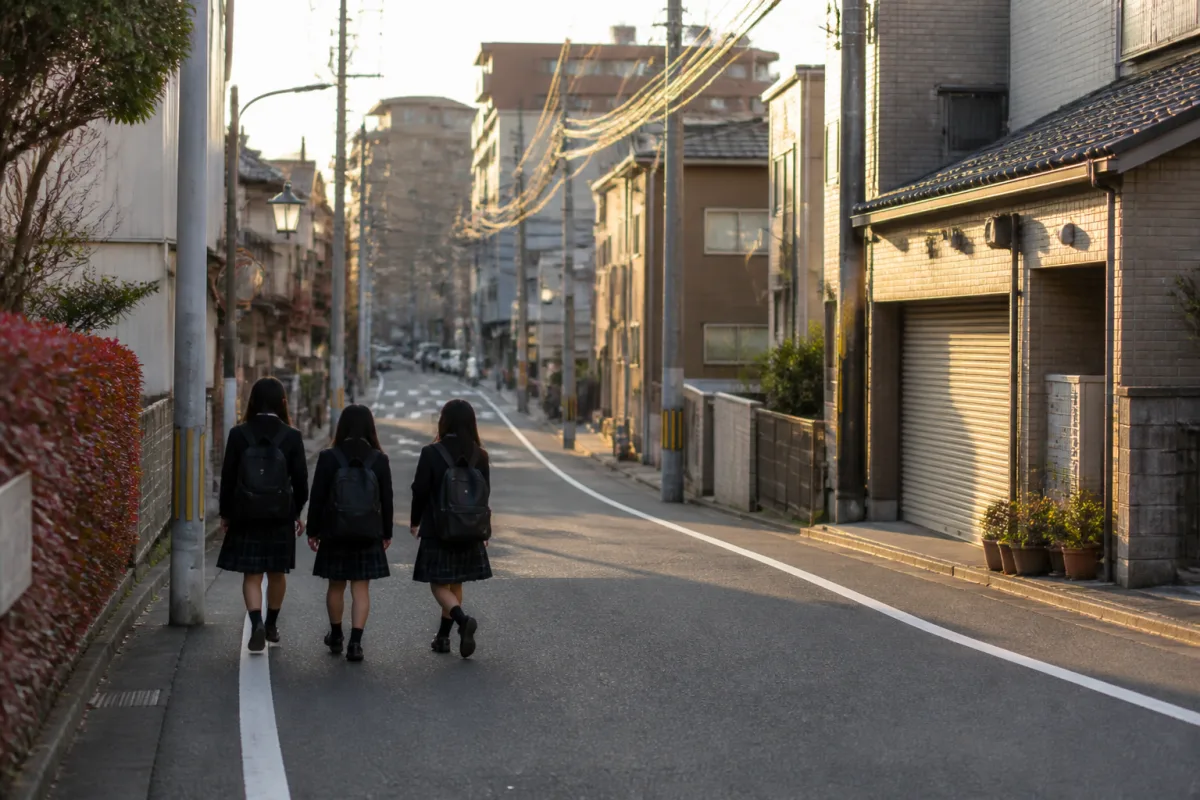

Moving to Japan through a language school means enrolling as a student in a Japanese-language course — a route that typically takes about two years of preparation and requires learning the language and saving money well in advance.
In short
- A Japanese level of at least N4 is the minimum for enrolling at a language school, but N1–N2 is a better target.
- The legal cap on part-time work for a student is 28 hours in a regular week and 40 hours during breaks — but that’s a ceiling, not a norm.
- A broken study routine means repeating the same level and losing an extra three months with no progress made.
- A relocation support service handles the paperwork and school coordination, but choosing the school and housing stays with the person moving.
The Real Timeline of Moving to Japan Through a Language School
The first trip to Japan, taken purely to get a feel for the country, happened in 2024 — and afterward came the decision not just to visit as a tourist again, but to live in the country for two years and study at a language school. By that point, roughly eight years had passed since finishing university, and there was little appetite for sitting back down with textbooks — especially for Japanese, whose grammar and kanji demanded studying alongside a full-time job.
The second trip — not a standard tourist route this time, but to Okinawa — took place in 2025. It was after that trip that the original plan got reconsidered: enrollment in a language school had initially been targeted for April 2027, but that wait started to feel too long.
After recalculating the budget, the target date moved up from April 2027 to an earlier point. The budget was then recalculated a second time, and it became clear the move could be pushed forward even further. In the end, enrollment at a Japanese language school happened in July 2026 — almost a full year ahead of the original plan.
enrollment at a Japanese language school happened in July 2026 — almost a full year ahead of the original plan
An important caveat: this repeatedly-accelerated timeline was achieved by someone who already had prior experience preparing for a move abroad, and following the same path should be attempted at one’s own risk.
How the Enrollment Date Shifted Over Time
Recalculating the budget moved the timeline up by almost a year compared to the original plan.
- Original planApril 2027
- Actual enrollmentJuly 2026almost a year ahead of plan
What Japanese Level You Need Before Enrolling
In practice, enrollment in a language school is built around a benchmark of at least N4 — dropping below that level is not advisable. Exact requirements can vary by school, so they’re worth confirming directly with the specific school in question. There’s no upper limit to how much preparation helps: the higher your level on arrival, the smoother the adjustment period.
If at all possible, it’s worth preparing up to N1 or N2 — that way, time at the school itself goes toward sharpening nuance, building conversational fluency, and preparing for work (putting together a resume, job hunting) rather than covering the basics. A higher level also simplifies the practical logistics of the first few months — moving into a share house, handling school paperwork, visits to the local ward office, the post office, opening a bank account, and setting up a SIM card. On top of that, arriving with stronger language skills cuts costs: things that would otherwise require paying an intermediary can often be handled independently.
N4 is the floor for enrollment, but it’s worth pushing toward N1–N2: school time then goes into conversation practice and resume-building instead of basics, and everyday logistics get resolved faster and more cheaply.
Finances and Part-Time Work While Studying at a Language School
The legal cap on part-time work (baito) for a language school student is 28 hours during a regular week and 40 hours during school breaks. That’s a ceiling, not a mandatory quota — the more money saved up before the move, the less actual need there is to work up to that limit.
Ideally, part-time work should be optional rather than a means of survival — a chance to practice the language with coworkers and customers and get a feel for Japanese work culture. If a student instead takes full shifts, the brain can physically stop being able to absorb new material: there’s simply no energy left for studying.
the brain can physically stop being able to absorb new material: there’s simply no energy left for studying
That leads to two practical takeaways at the preparation stage:
- study Japanese in advance and as intensively as possible — the higher your starting level, the less pressure there is to rely on part-time work just to get by;
- save up as much money as possible before the move, through every legal means available.
Studying in Japan itself costs a substantial amount, which is one more argument for building savings: the bigger the cushion, the lower the risk that studies end up sacrificed to a part-time job.
The legal cap is 28 hours a week and 40 during breaks — but that’s a ceiling, not a target. The more savings and the stronger the language level going in, the less need there is to work at the expense of studying.
What Happens If the Study Routine Breaks Down at Language School
If the study routine breaks down — most often because part-time work and lack of sleep eat into the energy needed for studying — a student can end up stuck at the same level and the same term for another round. In practice, that means retaking the exact same course from scratch, not just falling a couple of weeks behind.
Money saved up in advance for tuition and living costs in Japan then goes toward an extra three months of studying the same material over again — with no progress whatsoever. The real loss here is that the money spent doesn’t buy a new language level or bring the student closer to the next stage; it just repeats a stretch of the program already completed.
the money spent doesn’t buy a new language level or bring the student closer to the next stage; it just repeats a stretch of the program already completed
The risk compounds: the more hours go into part-time work at the expense of sleep and study, the higher the chance of derailing the routine and ending up in exactly this situation.
What Happens If the Study Routine Breaks Down
A broken pace doesn’t mean falling a couple weeks behind — it means repeating the entire level.
- Term outcome
- Time in school
- Savings
If part-time work and lack of sleep throw off the study pace, expect to retake the same level for another three months — for the same money, with no progress made.
Relocation Support Services: What They Handle For You
Part of the administrative burden can be handed off to a paid relocation support service: gathering documents and coordinating with the school and the visa application center is taken on by the service rather than the person moving. This isn’t the only path — the same amount of work can be done independently by researching the school’s and consulate’s requirements directly.
- Clients get a clear list of actions and a clear list of documents to gather — the job becomes following instructions rather than figuring out requirements from zero.
- Clients are assigned a dedicated manager who can be reached with questions at nearly any time — with the caveat that the manager also works set hours, not around the clock.
- Choosing the school and place of residence stays up to the person moving — it’s the one part of the process where the decision isn’t made by the support service but by the individual.
- Even so, that choice isn’t made blind: based on the individual’s specific request, the school gently steers the decision — suggesting options among in-person Japanese language schools.
- Housing works the same way: recommendations on where to live take into account the requested distance and budget.
In short, the administrative and coordination side of the move is covered by the service, while the substantive choices — which school, which neighborhood — stay with the person, just with guidance along the way.
A relocation service handles document collection and coordination with the school and visa center, but choosing the specific school and neighborhood to live in stays with the person moving.
What a Relocation Support Service Handles
Frequently asked questions
What if my Japanese level is below N4 — can I still enroll in a school?
The material describes N4 as an absolute floor that’s not advisable to go below. It’s a benchmark, not a universal rule: exact requirements are set by the individual school, so at a level below N4, it’s worth checking directly with that school whether enrollment is still possible under those conditions.
Can you transfer to a different language school if you’re not happy with the current one?
There’s no direct answer on switching schools. But the way relocation support works shows that choosing a specific school is, from the start, a personal decision for the student rather than something fixed in place forever: it’s one of the areas where the individual decides, not an outside service.
Do you have to use paid relocation support to move to Japan for school?
No, it’s not the only path: the same amount of work — gathering documents, coordinating with the school and the visa application center — can be handled independently by researching the school’s and consulate’s requirements directly. The service just takes that burden off your hands; it isn’t a mandatory condition for moving.
Can you start saving for the move while still studying the language, or should the language come first?
The material offers two parallel pieces of advice for the preparation stage, not a sequence: study the language as intensively as possible while also saving money through every legal means available. These are two independent tasks tackled at the same time, not one step after another.
What happens if the money saved up isn’t enough to cover tuition and living costs in Japan?
There’s no specific figure given in the material, but the logic is clear: the less saved up, the more has to be covered through part-time work within the 28-hour weekly cap (40 during breaks), and lack of sleep from taking full shifts raises the risk of breaking the study routine and losing money already spent on a course that then has to be retaken.


Comments
Reader experience is useful, but it is not advice: check the rules on the official site.
No account needed: click Sign in, type any name, and you are done.