
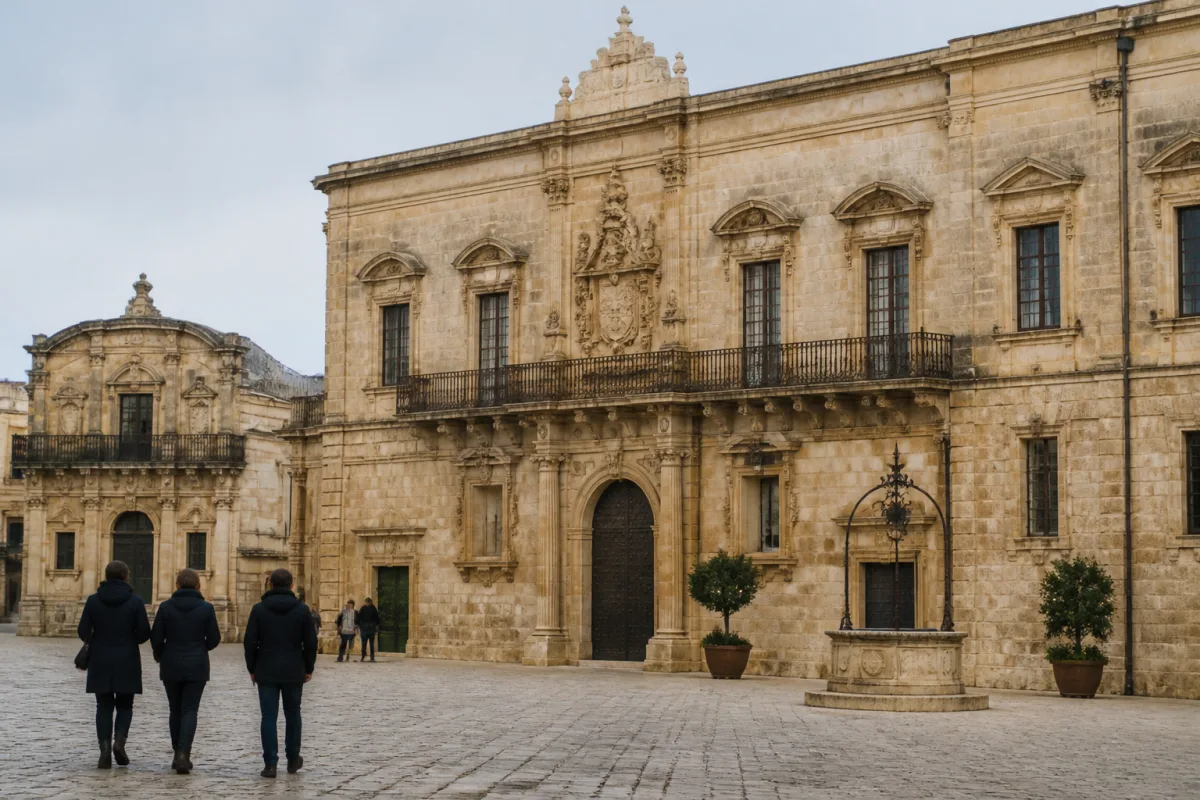

A Swiss passport can be obtained through naturalization after at least 10 years of residency, a language test, and an integration review — without giving up any citizenship already held.
In short
- Naturalization without tax residency status is impossible — no country lets you obtain a passport remotely through residence alone.
- In Switzerland, the baseline timeline to a passport is 10 years of residency, with the full process stretching to 10–12 years due to issuance time.
- France, the Netherlands, Luxembourg, and Belgium grant citizenship after 5 years — faster than any other country in this comparison.
- Switzerland doesn’t require giving up another citizenship, but the naturalization decision is made by several assessors, not just the migration service.
- You can’t accumulate residency time in two EEA countries at once — only one after another, by choosing a single country as your center of life interests.
What naturalization is and when it’s possible
Naturalization is a path to a passport through residence: a person moves to the country, goes through integration, and receives citizenship in exchange. The scheme assumes real, physical presence in the country, not a status arranged remotely on paper.
A common request is to obtain a passport from a strong European country — Switzerland, Luxembourg, or any other — without becoming a tax resident and without physically living there: apply once and simply receive the document by mail a few years later. That’s not how naturalization works. Obtaining citizenship through naturalization without acquiring tax residency status is impossible — this is a mandatory condition, not a formality.
Obtaining citizenship through naturalization without acquiring tax residency status is impossible — this is a mandatory condition, not a formality.
The exception isn’t naturalization itself but other programs: citizenship by descent, where the applicant has documented roots in the country (for example, an ancestor who was a Swiss citizen). But only a minority of applicants actually hold such documents.
Naturalization requires real residence in the country and tax residency status. You cannot obtain a passport remotely, applying once and simply waiting for the document to arrive by mail.
Alternative paths: descent and outstanding achievement
Naturalization without tax residency status is impossible, but there are two exceptions to this rule — citizenship by descent and citizenship for outstanding achievement.
The first exception is citizenship by descent. If a grandfather or great-grandfather was a citizen of a country (say, a Swiss banker, a Polish nobleman, or a Spanish Sephardic Jew), the corresponding program may grant citizenship of Bulgaria, Romania, Spain, or Portugal. In Switzerland, citizenship by descent is recognized only for direct descent from a parent who is a Swiss citizen — not from more distant ancestors. The practical problem is documentation: most people have no proof of a family link to residents of Switzerland, Luxembourg, or Liechtenstein, simply because they were born far from these countries.
The second exception applies in select countries (not Switzerland) — a passport for outstanding achievement, also without the need to become a tax resident. This route requires meeting one of a narrow set of criteria: being a member of an Olympic reserve squad or national team (participation isn’t possible without a passport), being a highly recognized performer, or being a major technology investor.
For 90–99% of ordinary people, the achievement route simply isn’t available. That’s why the practical alternative to naturalization is citizenship through marriage — which remains an accelerated version of the same residence-and-integration procedure.
Citizenship through marriage and education
Marriage to a citizen of the country speeds up getting a passport but doesn’t eliminate naturalization itself. It’s the same scheme — relocation, residence, tax residency status, and integration — just on a shortened timeline, thanks to the extra tie to the country through a family member.
In some countries, education obtained there further speeds up the process. Language proficiency, meanwhile, is a mandatory condition regardless of the basis for naturalization: some countries didn’t used to require it, but now it’s applied almost everywhere.
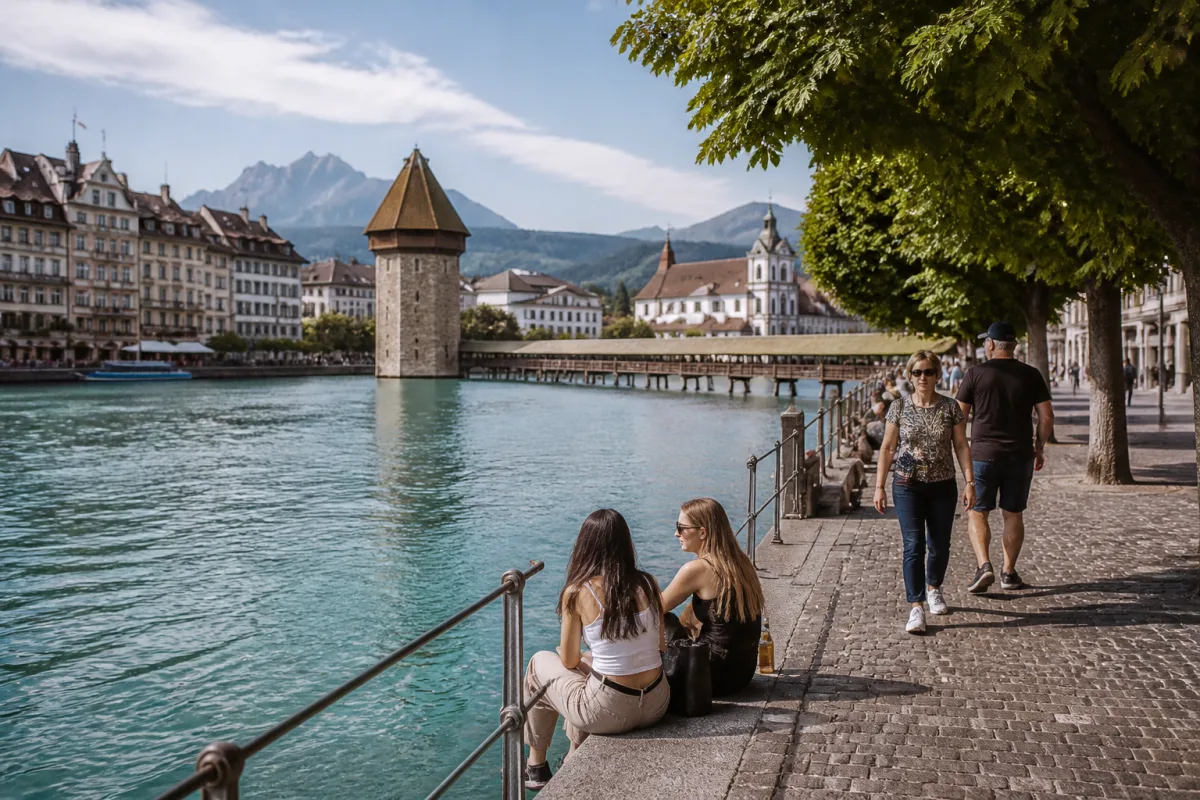
Regardless of the basis for naturalization — marriage, education, or the general track — passing a language test is now required almost everywhere, even in places that didn’t used to have this condition.
How many years you need to live in Switzerland for citizenship
The baseline residency period before applying for a Swiss passport is 10 years, with at least 3 of those years falling within the last 5 years before filing the application. The entire naturalization process typically stretches to 10–12 years. The difference comes from the fact that issuing the passport itself takes additional time even after the formal conditions are met.
The 10-year period isn’t the only thing that affects when a passport is actually issued. Each canton is entitled to add its own rules on top — for instance, requiring a certain number of years lived specifically in that canton, not just in Switzerland overall. So the real timeline depends on which canton a person holds residency in.
Beyond the residency period, a candidate must pass a test in one of Switzerland’s national languages. The required level for this test currently remains fairly accessible — authorities aren’t planning to tighten it in the near term.
The defining feature of the Swiss procedure is that the decision isn’t made by migration authorities alone, but by several assessors who must confirm the candidate is suited to integration into Swiss society. It’s this collegial review that makes the process unpredictable: even after 10 years of residence, getting a passport has become harder than before.
It’s this collegial review that makes the process unpredictable: even after 10 years of residence, getting a passport has become harder than before.
Access to the residence permit itself — the one that starts the clock on this period — also isn’t universal: it requires significant assets or a willingness to invest in the Swiss economy.
Swiss naturalization requirements
Formal thresholds for applying for a Swiss passport
- Residency period10 yearsAt least 3 years must fall within the last 5 years
- Total process length10–12 yearsIncluding the time needed to issue the passport
- Language testOne of the national languagesRequired level currently remains fairly accessible
- Candidate assessmentMultiple assessorsA collegial decision, not just migration authorities
The baseline 10 years isn’t the final word: each canton is entitled to add its own residency requirement specific to that canton, so the actual timeline depends on which canton you’re in.
Do you need to give up your other citizenship
Switzerland doesn’t require giving up another citizenship during naturalization — you can obtain a Swiss passport while keeping the one you already have. This sets it apart from countries with a strict single-citizenship requirement and removes one of the common barriers for applicants.
That said, Switzerland takes no responsibility for the other side’s rules: if a person’s country of origin strips citizenship upon acquisition of a second passport, Swiss authorities have no influence over that. In practice, few applicants run into this situation.
Which European countries grant citizenship faster than Switzerland
| Country | Naturalization timeline | Renouncing other citizenship | Notes |
|---|---|---|---|
| France | 5 years | Not required | Comfortable for modest incomes — not designed for large capital |
| Netherlands | 5 years | Required | — |
| Luxembourg | 5 years | — | A capital gains tax break still applies with proper asset structuring; a broad network of double-taxation treaties; language requirement is Luxembourgish at basic A2 level |
| Belgium | 5 years | — | Capital gains tax has been reintroduced — the break that effectively meant no such tax before is gone; language requirement is being tightened |
| Spain | 10 years | — | Tax conditions are tougher than in France |
| Italy | 10 years | — | Tax conditions are tougher than in France |
| Portugal | 10 years (recently extended) | — | Tax conditions are tougher than in France |
| Cyprus | 8 years (5 years for IT specialists under a fast-track program) | — | Not in the Schengen Area; how the IT fast-track actually applies is still unclear |
| Malta | around 15 years | — | Conditions recently tightened, obtaining a passport isn’t guaranteed |
| Greece | a path formally exists but doesn’t work in practice | — | An investor visa without real residence in the country doesn’t lead to citizenship |
Five years is the shortest timeline among the alternatives covered here, and four countries converge on it: France, the Netherlands, Luxembourg, and Belgium. The difference between them isn’t the timeline but the conditions: the Netherlands requires giving up prior citizenship, while France, Luxembourg, and Belgium don’t.
Luxembourg and Belgium are also notable from a tax standpoint. In Luxembourg, with proper asset structuring, a zero rate on capital gains still applies, and a broad network of double-taxation treaties allows, in a number of cases, income from foreign real estate or the sale of business shares to be routed at a low rate. Belgium has eliminated that kind of break, effectively introducing a capital gains tax that didn’t exist before.
Spain, Italy, and Portugal keep a ten-year timeline — the same as Switzerland’s, but with tougher tax conditions. Cyprus raised its requirement to 8 years (5 for IT specialists under a fast-track program whose operating rules aren’t yet settled) and remains outside Schengen. Malta tightened its rules to 15 years with no guarantee of outcome, and the Greek route through an investor visa without permanent residence in the country doesn’t lead to citizenship.

France, the Netherlands, Luxembourg, and Belgium all grant citizenship after 5 years, but only the Netherlands requires giving up your previous passport — the other three let you keep both.
Naturalization timelines and conditions across Europe
Table scrolls sideways
| Country | France | Netherlands | Luxembourg | Belgium | Spain | Italy |
|---|---|---|---|---|---|---|
| Naturalization timeline | 5 years | 5 years | 5 years | 5 years | 10 years | 10 years |
| Renouncing other citizenship | Not required | Required | — | — | — | — |
| Notes | Comfortable for modest incomes | — | Capital gains tax break, A2 language level | Capital gains tax reintroduced, language requirement tightening | Tougher tax conditions than France | Tougher tax conditions than France |
Data reflects what’s stated in the article; a dash means the information wasn’t mentioned.
Can you combine citizenship paths across EEA countries and count years toward both
You can’t accumulate residency time in two European Economic Area countries at once — for example, in Switzerland and Luxembourg simultaneously: both countries are part of the EEA, and formally, you can’t remain a resident of both at the same time. You can pursue these two tracks one after the other, but not in parallel — you’ll need to pick one country as the center of your life interests.
You can’t accumulate residency time in two European Economic Area countries at once — for example, in Switzerland and Luxembourg simultaneously
A separate case is the EU Blue Card, which allows flexible movement between different EU countries. With it, years of residence in one country can, in some cases, count toward permanent residency or citizenship in another, and in theory it’s possible to accumulate the required 5 years of residence in parts across several states. But the rule doesn’t apply to every country combination — which pairings count and which don’t depends on the specific countries involved.
Frequently asked questions
Can you apply for a Swiss residence permit without significant capital or investment
No — access to the residence permit that starts the clock on the naturalization timeline isn’t universal in itself: it requires significant assets or a willingness to invest in the Swiss economy. Without meeting this condition, a person can’t even begin accumulating residency time.
What happens if you move to Switzerland, live there for 10 years, but don’t pass the language test
You won’t get a passport: a test in one of Switzerland’s national languages is a mandatory condition alongside the residency period. The residency period and the language test are checked independently of each other, and meeting only one of them isn’t enough to apply for citizenship.
What happens to your residency status if you move from one Swiss canton to another before obtaining a passport
Since each canton is entitled to set its own requirement for the number of years lived specifically in that canton, rather than just in Switzerland overall, moving between cantons can reset the time accumulated under that local rule and push back the actual timeline for getting a passport.
Can you get citizenship for achievement if you have no sports or artistic credentials but have significant capital for investment
Yes — one of the narrow criteria for this route is being a major technology investor, alongside membership in an Olympic reserve squad or recognition as a performer. But this route only works in select countries, not Switzerland, and remains unavailable to 90–99% of ordinary people regardless.



Comments
Reader experience is useful, but it is not advice: check the rules on the official site.
No account needed: click Sign in, type any name, and you are done.