
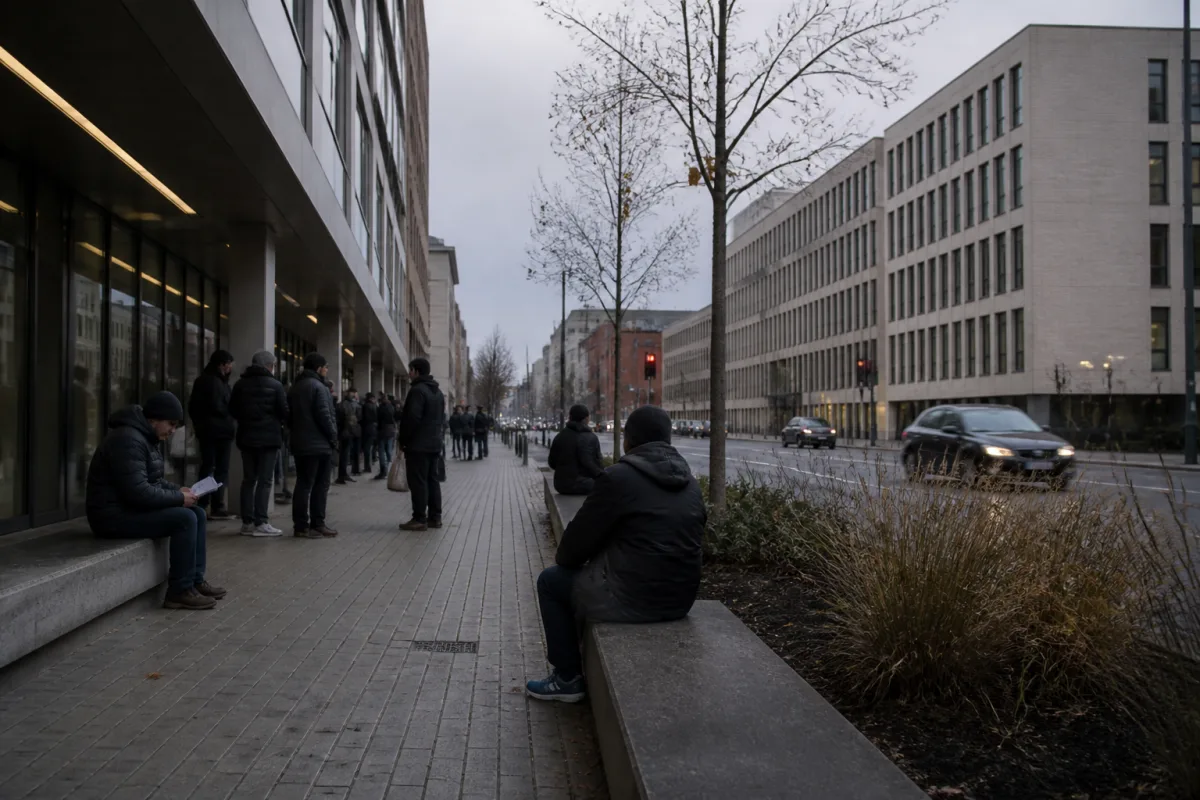

BAMF has launched a mass review — and in some cases revocation — of humanitarian status (refugee status, subsidiary protection, deportation ban) for Syrians, following a reassessment of the situation in Syria, and it primarily affects three groups: people convicted of serious crimes, well-integrated holders of permanent status, and recipients of substantial welfare benefits.
In short
- The status review isn’t limited to Syrians — nationals of Afghanistan, Iraq, Eritrea, and Somalia will have their status reassessed under the same process.
- A conviction for a serious crime (grievous bodily harm, knife attacks, rape, murder) makes deportation a natural consequence regardless of status.
- Switching to permanent settlement status (Niederlassungserlaubnis) should be done in advance — after a letter from BAMF arrives, the process happens under pressure and tight deadlines.
- The number of status review letters could run into the tens of thousands, threatening to overload immigration offices and administrative courts.
- Inaction after a letter arrives is the main risk: without a response, BAMF’s decision becomes final, leaving only a choice between pressure and leaving the country.
What’s happening: BAMF is reviewing Syrian refugee status
The Federal Office for Migration and Refugees (BAMF) is sending mass notifications to Syrians about status review — checking whether the grounds for their residence permit still hold now that the situation in Syria has changed. The review covers residence permits issued on the basis of refugee status, subsidiary protection, or a deportation ban.
This isn’t a one-off action and it isn’t exclusively a Syrian matter. The same review process will extend to nationals of Afghanistan, Iraq, Eritrea, and Somalia — essentially anyone who received status as a national of a country Germany traditionally recognizes as a source of refugees. Syrians are first in line simply because the situation in their country changed first.
BAMF is reviewing refugee status, subsidiary protection, and deportation bans for Syrians first, followed by nationals of Afghanistan, Iraq, Eritrea, and Somalia.
Group 1: people convicted of serious crimes
The first risk group is people convicted of serious crimes. The categories identified include:
- grievous bodily harm;
- knife attacks;
- rape;
- murder and intentional homicide.
With convictions of this kind, deportation is treated as a natural consequence — a residence permit does not shield a person from removal in these cases.
With convictions of this kind, deportation is treated as a natural consequence — a residence permit does not shield a person from removal in these cases.
Group 2: well-integrated Syrians with permanent status
The second risk group covers Syrians who have lived in Germany for around 10 years, learned German, and hold a job — people generally considered examples of successful integration. Among them are tradespeople, parcel couriers, doctors, and engineers: the occupations span nearly every field of employment. Being settled in life does not exempt them from the status review — the grounds for reassessment remain the change in conditions in Syria, not the applicant’s personal merits.
Being settled in life does not exempt them from the status review — the grounds for reassessment remain the change in conditions in Syria, not the applicant’s personal merits.
A specific trigger for review is travel to Syria for holidays or vacation among those who already hold permanent residence or German citizenship. Such trips are increasingly drawing the attention of authorities, though they are not, by themselves, the main reason for a status review.
The financial argument in favor of this group runs as follows: the state has spent years investing in their integration — language courses, the work of immigration offices, processing residence rights. These investments were made specifically so people would put down roots in society, and the longer someone has lived in Germany, the more has already been invested in them.
Group 3: recipients of social benefits
The third risk group is Syrians who continue to receive social benefits from the state. This includes classic welfare assistance and payments from the job center; housing subsidies and child benefit top-ups are also mentioned separately, though they are not the main criterion for review.
The risk grows with time: some migrants have been in Germany for around 10 years and are still registered as benefit recipients. The longer someone stays on benefits without moving to independent income, the harder it is to argue for keeping their status.
Situations within this group vary. Someone who arrived in Germany at age 55 may already have reached retirement age by the time of the review and objectively had no chance to build up a work record. In other cases, only one spouse works while the other raises the children — formally, the family is still registered as a partial benefit recipient.
The decisive factor remains the scale of assistance: receiving substantial sums from the job center significantly complicates keeping or obtaining status. With classic welfare assistance, the picture is less clear-cut — this criterion isn’t defined with full certainty.

The longer someone receives substantial job center payments without moving to independent income, the harder it becomes to defend keeping their status.
Why the situation in Syria is being reassessed
Starting in 2015, a humanitarian crisis unfolded in Syria that was assessed as a catastrophic situation in the country. Germany admitted Syrian refugees on that basis — on the original condition that protection was temporary, lasting until conditions back home improved.
The current assessment holds that the situation in the country of origin looks significantly better than in 2015. This assessment is framed with the caveat “apparently” — there is no unequivocal confirmation, but it is cited as the main reason BAMF is sending out status review notices. In other words, the agency is proceeding on the basis that the original condition for granting protection — its temporary nature, pending improvement back home — no longer holds.
First step: check what status is listed in your documents
The first thing to do is check your residence permit (Aufenthaltstitel) — it shows whether you can expect a status review letter. The grounds for concern are refugee status, subsidiary protection (Subsidiärer Schutz), or a deportation ban (Abschiebungsverbot) — check the exact paragraph number against your own decision letter. If your documents list one of these grounds, a BAMF letter will follow.
Unofficial estimates put the number of such letters in the tens of thousands. For the agency itself, this means a sharp rise in workload: each case requires a separate decision on whether the grounds for staying in the country still apply. In parallel, a rise is expected in both lawyer consultations and court disputes — immigration offices and administrative courts will face an overload already at the case-review stage.
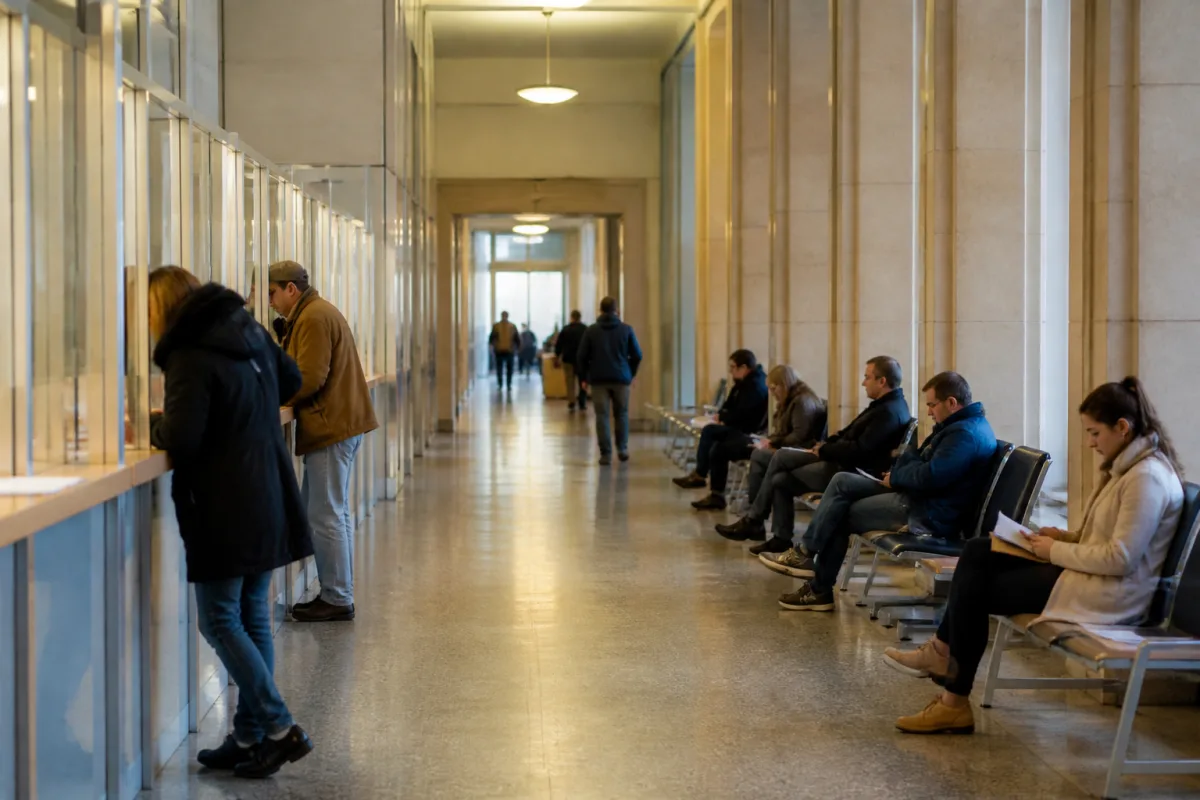
What to check if you’re in the risk zone
How to protect your status: switching to a work- or family-based permit
Skilled workers with vocational training obtained in Germany, or with recognized foreign qualifications, can switch to a residence permit for skilled workers (typically listed as § 18a of the Residence Act — check the current paragraph number in your case). Those who are simply employed, without a specific qualification, increasingly qualify under the permit for employment without a qualification requirement (typically § 19c of the Residence Act, check the current number) — this route is designed exactly for employment not tied to a particular qualification. Other grounds apply in individual cases too — their exact paragraph and applicability should be checked individually. If the family includes a child with German citizenship, or a spouse who is a German citizen, a switch on family grounds is available (typically § 28 of the Residence Act — verify the number against your own situation).
A more reliable option is switching to a permanent settlement permit (Niederlassungserlaubnis): it takes a person out of the status-review risk zone with high probability, though it offers no absolute guarantee. The requirements are fairly consistent across cases:
- length of stay in Germany — roughly 2 to 5 years, with the exact figure depending on the residence permit currently held;
- German language skills — usually level A2, sometimes B1 is required;
- a valid Syrian national passport — noticeably easier to obtain now than a few years ago, though exceptions exist;
- having a job, ideally with several years of work history already built up in Germany;
- pension contributions — sometimes 60 months of payments are required, sometimes fewer, and in some cases this condition doesn’t apply at all.
It’s worth pursuing a switch to permanent status in advance, before a review letter arrives — after it arrives, the process has to happen under time pressure and under strain.
Requirements for switching to permanent settlement status
The thresholds most commonly checked when applying for a Niederlassungserlaubnis.
- Length of stay in Germany2 to 5 yearsdepends on current residence permit
- German languageusually A2, sometimes B1
- Passportvalid Syrian national passport
- Employmenthaving a jobseveral years of work history in Germany is preferable
- Pension contributionssometimes 60 monthsin some cases doesn’t apply at all
It’s better to switch to permanent settlement status before a review letter arrives — afterward, the process has to happen under time pressure and strain.
If a status review letter has already arrived
The status review letter states: humanitarian residence status was granted because of flight from Syria, and now, given the changed assessment of the situation in the country, the agency is reviewing whether it will be revoked. Receiving such a letter does not close off the path to a status change — applying for a different residence permit, temporary or permanent, is still possible after receiving it; the only difference is that the process now proceeds under pressure.
Receiving substantial social benefits — the full amount from the job center — noticeably complicates the position in this review. With welfare assistance the picture is less clear, but the trend is the same: the more an applicant depends on state payments, the harder it is to defend their status.
For well-integrated Syrians (this category excludes those convicted of serious crimes), it’s advisable in any case to reinforce residence security — the preferred route here is naturalization, which many already qualify for on formal grounds.
The only real problem arises from inaction: if there is no response to the letter at all, BAMF’s decision becomes final, and the only choice left is between pressure from the agency and having to leave the country. This scenario is easy to avoid by starting a status change in advance, rather than waiting for the decision to become final.
The only real problem arises from inaction: if there is no response to the letter at all, BAMF’s decision becomes final
Why Germany needs exactly these workers
Germany needs labor — and not only doctors and qualified specialists. Demand is concentrated in tough, low-paid sectors:
- elderly and patient care (Pflege);
- restaurants and catering;
- parcel delivery;
- courier services.
These industries have plenty of vacancies with no one to fill them. Notably, Syrians who arrived as refugees in the past two years are still in an active integration phase — unlike those who arrived in 2015–2017, for whom, according to the assessment described, this process is largely complete. Employment in understaffed sectors is cited as an argument that works regardless of political rhetoric: a worker the labor market needs is less vulnerable when status is reviewed.
A worker in an understaffed sector — elder care, catering, delivery — is less vulnerable to a status review regardless of political rhetoric.
Frequently asked questions
What happens if someone ignores a BAMF letter and doesn’t respond at all
If there’s no response, BAMF’s decision becomes final, leaving only a choice between pressure from the agency and having to leave the country. This can be avoided by starting a status change in advance, rather than waiting for the decision to become final.
Is it still possible to apply for a different residence permit after receiving a BAMF letter
Yes, receiving the letter doesn’t close off the path to a status change — applying for a different residence permit, temporary or permanent, is still possible afterward. The only difference is that the process then happens under pressure and tight deadlines, so it’s more reliable to start earlier.
Does the status review also affect people who already hold German citizenship
A specific trigger for attention from the authorities is travel to Syria for holidays or vacation among those who already hold permanent residence or German citizenship. Such trips aren’t by themselves the main reason for a status review, but they’re increasingly drawing attention.
Which is better for keeping status — a work-based residence permit or naturalization
The more reliable options are switching to permanent settlement status (Niederlassungserlaubnis) or naturalization: both take a person out of the status-review risk zone with high probability, though neither offers an absolute guarantee. For well-integrated Syrians, naturalization is specifically recommended, and many already qualify for it on formal grounds.
How can someone find out the exact paragraph their status was granted under
The exact paragraph number needs to be checked against the text of one’s own status decision letter — the grounds for concern are refugee status, subsidiary protection, or a deportation ban. There’s no single number that applies to all cases; it depends on the individual decision.



Comments
Reader experience is useful, but it is not advice: check the rules on the official site.
No account needed: click Sign in, type any name, and you are done.