
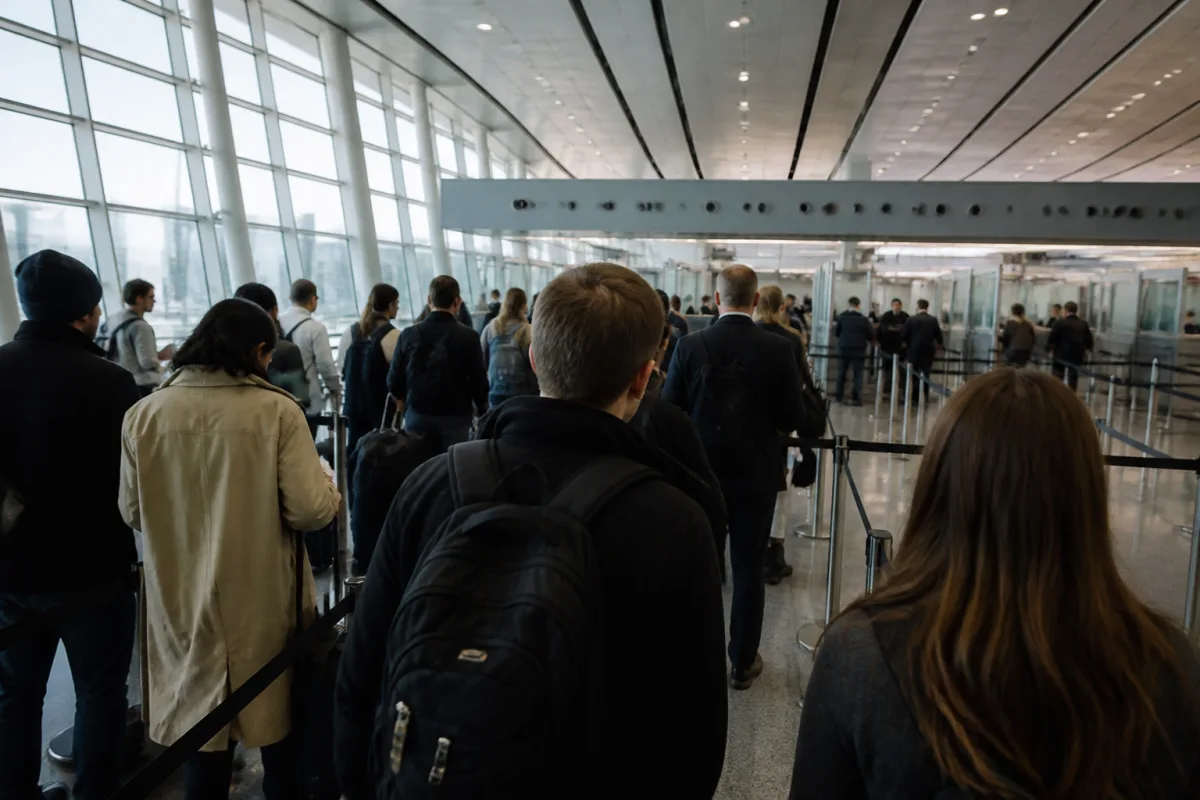

Green card holders get pulled aside at the airport when a CBP officer sees a reason to question their status — a criminal record, an unusually long stay abroad, or inconsistencies in travel history — and in those cases they can be classified as an “arriving alien” and sent to secondary inspection.
In short
- A CBP officer cannot cancel a green card — only an immigration judge has that authority
- Three main inspection triggers: a criminal history, absences longer than 6 months, and signs of fraud
- Signing Form I-407 irreversibly cancels resident status without a court hearing
- For trips longer than 6 months, it’s worth arranging a re-entry permit in advance
- With a notice to appear or a denied I-751 outstanding, it’s best not to leave the country at all
What a CBP officer can and cannot do with your green card
A CBP officer cannot tear up a green card or cancel the status on the spot — that authority belongs only to an immigration judge. But the officer has other tools: they can detain a green card holder for questioning, take their phone, walk them into a separate room, and try to get them to sign a form giving up permanent resident status.
The key issue is the status under which a person is admitted. A returning green card holder is normally admitted as a permanent resident. But if the officer has grounds — for example, pending charges or a conviction that could call the status into question — they can classify the person as an “arriving alien,” as if applying for admission for the first time.
The difference matters: if a person is not admitted as a green card holder but instead processed as an “arriving alien,” it weakens their defense in court against deportation — any charge starts to work against them more heavily. Secondary inspection begins with exactly this classification: the person is taken to a separate room, pressured, and pushed to sign a document giving up their status, on the grounds that they were out of the country too long or have some other issue.
Agreeing with these claims on the spot is not required. A green card holder has the right to contest the decision in court — and giving up that right under pressure at the airport is not advisable.
giving up that right under pressure at the airport is not advisable
A CBP officer cannot strip someone of a green card — only an immigration judge can do that. But the officer can classify a holder as an “arriving alien,” which weakens their defense in court.
Reason 1: criminal history and pending charges
The first of three main reasons is a criminal history: convictions for drug possession, DUI, fraud, or domestic violence. According to CBP officers, even the absence of a conviction can be a problem — pending charges alone can trigger scrutiny.
How long ago it happened doesn’t matter. CBP doesn’t care whether the conviction was 15 years ago, whether the case ended in probation only, whether it ever reached a conviction at all, or whether the record was later expunged — in any of these cases, an officer can find the green card holder inadmissible.
whether the record was later expunged — in any of these cases, an officer can find the green card holder inadmissible
Before flying, if there is any criminal history at all, it’s worth consulting an immigration attorney and asking them to review the record — to make sure it doesn’t give CBP a formal basis to deny entry.
Reason 2: too much time spent abroad
The second reason for detention is more than 6 months of continuous time spent abroad. At that point, CBP may operate on the assumption that the green card holder has abandoned resident status, and that becomes grounds for additional questions at the border. In this case, documents proving that residency was not abandoned are needed: proof of employment in the US, a lease or property ownership, tax payments — anything showing that the person’s base remains in the country.
Suspicion grows if the officer sees signs of relocation — a new job abroad and similar circumstances — and pressure to go through inspection increases accordingly. If a trip lasts longer than 6 months or is approaching a year, it’s worth arranging a re-entry permit in advance — a document confirming that the departure was planned ahead of time and does not signal abandonment of residency.
If a trip lasts longer than 6 months or is approaching a year, it’s worth arranging a re-entry permit in advance — it confirms the departure was planned and doesn’t mean abandoning residency.
Reason 3: fraud, inconsistencies, and suspicious travel patterns
The third trigger is signs of fraud or inconsistencies in an applicant’s history. This includes problems with earlier applications, as well as a situation where a green card holder who got their status through marriage files a petition to remove conditions (I-751) while traveling with a spouse they are already divorcing: to CBP, that looks like a sign the marriage was a sham for status.
A travel pattern also raises suspicion when a green card holder comes to the US formally — once a year — just to avoid losing status, but doesn’t actually live in the country. That kind of visiting schedule reads to CBP as an attempt to preserve a green card without real residence, not as ordinary time spent by a resident.
Another reason for scrutiny is a mismatch between what the officer sees in the system and what’s on personal devices — social media or phone messages. CBP has the legal authority to search a phone or laptop at the border, and refusing the search doesn’t cancel that authority.

CBP has the legal authority to search a phone or laptop at the border, and refusing the search doesn’t cancel that authority.
What to do if pulled into secondary inspection
-
Stay polite and don’t argue. Don’t try to prove you’re right to the CBP officer on the spot, and don’t admit guilt on any point of the allegations — regardless of which reason triggered the stop.
-
Tell a simple, truthful story. Don’t add extra details and don’t volunteer information the officer didn’t directly ask for.
-
Ask for a lawyer if a problem comes up. This is worth doing at any complication during secondary inspection, but it’s important to understand: getting access to a lawyer right at the border is extremely difficult.
-
Do not sign Form I-407 if asked to. This form means voluntarily giving up resident status — CBP has no authority to cancel a green card on the spot, but a signature effectively hands that power to the person signing it.
-
If it reaches a formal record, don’t try to fight the decision at the airport. The airport is not the place to argue the case: contesting the facts and getting a decision reviewed has to happen in court, not at the secondary inspection counter.
What to do during secondary inspection
Five steps that reduce the risk of losing status on the spot.
- Stay polite and don’t argueDon’t admit guilt on any point
- Tell a simple, truthful storyDon’t add extra details
- Ask for a lawyer if problems ariseAccess to a lawyer at the border is extremely hard to get
- Do not sign Form I-407It’s a voluntary abandonment of resident status
- Don’t contest the decision at the airportDisputes belong in court, not at the inspection counter
Form I-407: why you shouldn’t sign it
Form I-407 is a voluntary abandonment of permanent resident status: by signing it, a green card holder gives up their own status rather than contesting the officer’s decision. Once signed, the green card is cancelled, and the status cannot be restored the same way — the process is made irreversible precisely because the person is treated as having agreed to it themselves.
the process is made irreversible precisely because the person is treated as having agreed to it themselves
During secondary inspection, a CBP officer may push for a signature if they believe residency was abandoned or the green card’s conditions were violated. The form should not be signed under any circumstances, even if the inspection drags on and signing seems like the fastest way to end the conversation.
Instead of signing, it’s worth insisting the case be referred to court: only an immigration judge, not an airport officer, has the authority to decide that permanent resident status has been lost. A hearing in court is a chance to present documents and explanations; an argument at the border offers no such chance.
Form I-407 is a voluntary abandonment of resident status. Once signed, the green card is cancelled with no way to restore status the same way.
Five US airports where green card holders run into the most trouble
The ranking below is not official CBP statistics — it’s an immigration attorney’s assessment based on observed detention cases. No airport publishes its own statistics on green card holders, so this is an expert opinion, not an official record.
| Airport | Why it’s difficult |
|---|---|
| LAX (Los Angeles) | High passenger volume, long secondary inspections. According to the attorney, the airport was given extra staffing and was among the first to use AI-based databases linked to DMV and Social Security records. Any mismatch in the records sends a green card holder straight to secondary inspection |
| SFO (San Francisco) | The international terminal has hidden holding areas. According to the attorney, there are known cases of green card holders being held there for several days, and sometimes, by some accounts, even longer. SFO handles heavy international traffic from the Middle East and Asia |
| MIA (Miami) | According to the attorney’s assessment, one of the airports with the highest number of detentions among green card holders. Large-scale transfers to ICE happen out of Miami — after being detained, a person can be sent anywhere in the country. ICE agents are physically present at the airport |
| JFK (New York) | Intensive secondary checks, large numbers of officers. This is one of the airports where green card holders are most often pressured into signing Form I-407 and giving up status |
| IAH (Houston) | According to the attorney, multi-day holds have also been recorded here, along with frequent database matches when checking returning residents |
The airport itself is rarely the actual cause of trouble: it comes down to passenger volume and the systems that generate matches on arriving travelers. If CBP determines a green card holder has violated the conditions of their status, they get classified as an “arriving alien” regardless of which airport they enter through. There’s no picking a “safe” airport if the file is already flagged over a history of violations — the route doesn’t affect the outcome of the check.
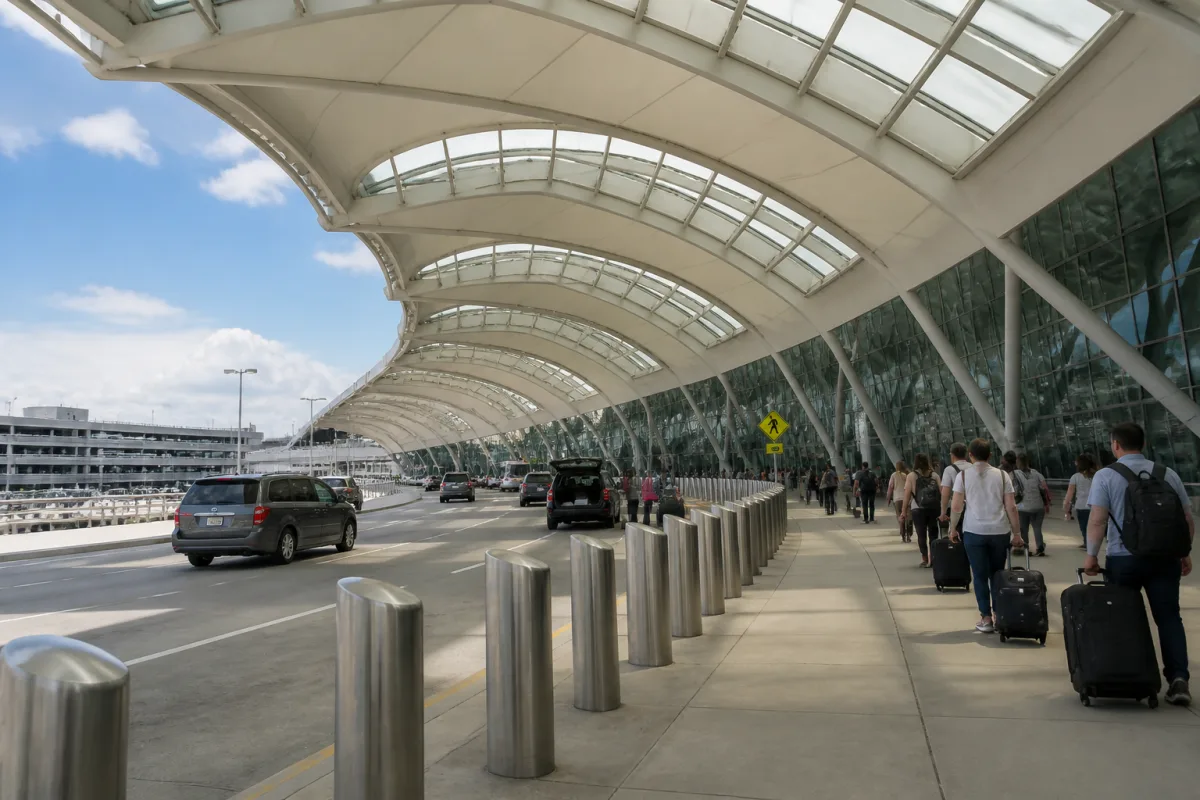
Five problem US airports for green card holders
Table scrolls sideways
| Airport | LAX | SFO | MIA | JFK | IAH |
|---|---|---|---|---|---|
| Main issue | AI-based databases linked to DMV and Social Security records | Hidden holding areas in the international terminal | Highest number of detentions, active ICE transfers | Intensive secondary checks, pressure to sign I-407 | Multi-day holds, frequent database matches |
| ICE presence | — | — | ICE agents physically present | — | — |
| Length of detention | Long secondary inspection | Several days, sometimes longer | — | — | Multi-day holds |
This ranking is based on an immigration attorney’s opinion, not official CBP statistics.
How to prepare for a flight to avoid getting detained
Before a long trip abroad, it’s worth consulting an immigration attorney and checking your own immigration file — this makes it possible to find out in advance whether there are flags in it that CBP would treat as grounds for secondary inspection.
If there are unresolved issues in the file — a notice to appear in court or a denied I-751 — it’s best not to leave the country at all: with those documents outstanding, returning to the US is almost guaranteed to end in detention.
When crossing the border, it’s important to carry:
- the physical green card — not a copy or a photo;
- documents proving residency wasn’t abandoned (for example, proof of employment, a lease, or US tax payments for the period spent abroad);
- paperwork explaining any criminal episodes in the person’s background, if there are any.
Another practical step is to let family or friends know the expected arrival time in advance. If a green card holder hasn’t been heard from for several days past the expected return date, it can mean they were held in secondary inspection.
What to bring when crossing the border
Frequently asked questions
Can a green card be restored after signing Form I-407?
No: signing Form I-407 means voluntarily abandoning permanent resident status, after which the green card is cancelled and status cannot be restored the same way. The only way back is to go through the immigration process for getting a green card again, not to contest the old one.
What happens if someone already signed Form I-407 under pressure?
Once signed, the green card is treated as cancelled, since CBP considers the signature a voluntary abandonment of status rather than an officer’s own decision. Since the stated reason for the loss of status is the cardholder’s own consent, it can’t be contested through the normal process, so the only real option is to contact an immigration attorney as early as possible.
Does the choice of arrival airport affect the risk of detention?
No: the airport itself doesn’t create the problem — the risk comes from passenger volume and the database systems that generate matches on arriving travelers. If a file is already flagged over violations of status conditions, the person gets classified as an “arriving alien” regardless of the route — there’s no such thing as a “safe” airport.
Is it safe to leave the country with a notice to appear in court outstanding?
No: if there are unresolved issues in the file, such as a notice to appear or a denied I-751, it’s best not to leave the country at all. With those documents outstanding, returning to the US is almost guaranteed to end in detention at the border.
How many times a year do you need to visit the US to avoid losing a green card?
A formal once-a-year visit doesn’t protect against problems: CBP treats that kind of travel pattern as an attempt to preserve a green card without actually living in the country, not as ordinary time spent by a resident. That pattern alone can become grounds for secondary inspection.


Comments
Reader experience is useful, but it is not advice: check the rules on the official site.
No account needed: click Sign in, type any name, and you are done.