
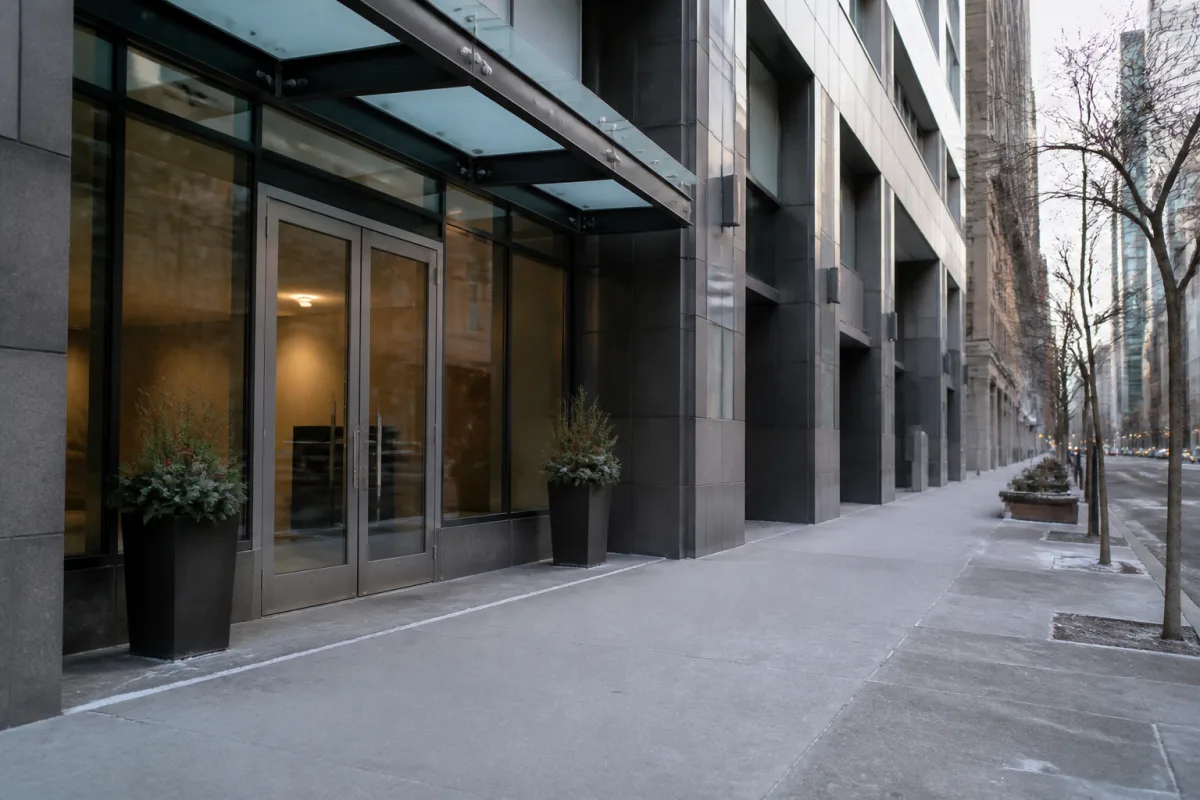

On September 18, Canada’s largest language school, ILAC, shut down without warning carrying more than $135 million in debt; no refunds are being issued, but students enrolled in English and French courses are entitled to a free transfer to another school through the Languages Canada association.
In short
- ILAC will not refund paid courses: the only compensation is a free transfer to another school on the Languages Canada list.
- College and high school students are not covered by the Languages Canada program — they need to contact the bankruptcy trustee and provincial funds instead.
- The cause of the collapse was the 2024 rules: since September, graduates of ILAC’s joint programs with colleges stopped getting a post-graduation work permit.
- At the time of bankruptcy, ILAC had about $8 million in assets against more than $135 million in debt.
- The transfer to OHLA never happened — it isn’t a Languages Canada member, and the offer was withdrawn the next day.
What Happened at ILAC on September 18
On Friday, September 18, the week at ILAC began like any other: teachers were running classes, and the sales department was still enrolling new students. At quarter past four in the afternoon, ILAC’s CEO John DeFranco gathered staff on a short video call and announced the school was closing immediately. People panicked and traded personal phone numbers before their work email was cut off, while teachers rushed to print out course materials while the printers still worked.
Agents received the bankruptcy notice that same day, at 6:36 p.m. — agents, not students, had always been ILAC’s primary point of contact. The scale of the problem became clear from the bankruptcy filings obtained by journalists. According to those filings, at the time of closure the school had just over a million dollars in cash and roughly seven million more in securities, against debts exceeding one hundred thirty-five million dollars — for every hundred dollars owed, there was less than six dollars in assets. This wasn’t a temporary cash crunch; it was a hole the company had been sinking into for months.
for every hundred dollars owed, there was less than six dollars in assets
The accounting firm KPMG was appointed as trustee for the bankruptcy proceedings.
On September 18, ILAC shut down instantly: staff were notified on a video call and agents received bankruptcy letters that same day. Debts exceeded $135 million against just over $8 million in assets.
What ILAC Was — Canada’s Largest Language School
ILAC opened in Toronto in 1997, later adding a Vancouver campus. Languages Canada, the national language-school association, called ILAC the country’s largest language school. By the time it went bankrupt, ILAC was no longer just one school but an entire education group:
- English courses in Toronto and Vancouver, plus the online school ILAC KISS for students anywhere in the world;
- online French courses, launched in 2025: the curriculum and instructors came from partner school ATPAL in Montreal, which has 50 years of experience, while ILAC handled enrollment and payment;
- a private college, ILAC International College, awarding diplomas in business, marketing, and other fields;
- a private high school for international teenagers, also in Toronto and Vancouver;
- official IELTS and CELPIP testing centers in both cities;
- its own student housing — homestays with Canadian families and the Casa residences.
In 2023, ILAC bought Vancouver-based Tamwood, along with its career courses and summer camps for children and teens. In 2024, the company acquired the American online platform UniApplyNow, through which students applied to more than 200 U.S. colleges and universities.
ILAC also ran joint programs with Canadian public colleges: students studied in ILAC’s building but received their diploma from the partner college. A dedicated campus with 44 classrooms was built for Fanshawe College, and in October 2023 the Georgian@ILAC campus opened on Bloor Street in downtown Toronto — the same building that housed the company’s head office (a separate address from ILAC’s original campus on Yonge Street, where the school began in 1997). Starting in September 2026, ILAC launched a program at the campus of Red Deer Polytechnic in Alberta.
Two more episodes show the company’s scale right before the collapse. In 2019, a controlling stake in ILAC was bought by an investment fund, after which the school kept expanding — a new campus, the Tamwood purchase, the UniApplyNow purchase. And in October 2024, ILAC became an official partner of the Toronto Raptors basketball club.
Why ILAC Went Bankrupt: New Rules for International Students
The official cause of ILAC’s bankruptcy is the new rules for international students that Canada introduced in 2024. A few years ago, studying in Canada was one of the clearest paths to permanent residence for those who didn’t have enough points through other immigration channels. The scheme worked like this: a student enrolled in a Pathway preparatory program, and even before finishing it, the study visa application was already filed; some students received a scholarship — for example, $2,000 per semester. While the student studied, their spouse could get an open work permit, and after graduation the student themselves received a work permit valid for up to three years — opening the way to permanent residence.
Starting in January 2024, Canada restricted the number of study permits issued to international students. From spring of that year, the right to a spousal work permit was largely limited to master’s and doctoral students. And starting in September 2024, graduates of programs that private colleges ran jointly with public ones stopped getting a post-graduation work permit altogether — and it was exactly this kind of partnership that ILAC’s business model was built on.
The effect of the new rules shows up in the numbers: for 2024, Canada had planned to admit 155,000 new international students, but only about 22,000 arrived in the first half of the year — the market didn’t just shrink, it effectively collapsed. Yet during this same period ILAC kept expanding: building a campus, buying up other businesses, and in October 2024 becoming an official partner of the Toronto Raptors basketball club — nine months after the government had already announced the restrictions, meaning it was pouring money into expensive marketing at the very moment the rules were already working against it.
it was pouring money into expensive marketing at the very moment the rules were already working against it
How Canada’s Rules for International Students Changed Starting in 2024
The tightened deadlines lined up and pulled the rug out from under ILAC’s business model
- Study permit
- Spousal work permit
- Post-graduation work permit for joint-program grads
- International student intake
What Language-Course Students at ILAC Should Do
The school will not refund money for paid courses: after bankruptcy, ILAC can no longer process any payments. The only compensation for language-course students is a free transfer to another school, not a refund.
- Wait for a letter from Languages Canada. On September 19, the language-school association issued an official statement: ILAC students are being transferred to other schools on its list without paying tuition again. Check your spam folder — the letter is easy to miss.
- Don’t buy a new course on your own, and don’t rush. A telling example is the case of the American school OHLA, which offered ILAC’s online students a spot before the official placement through the association had even happened.
- Transfer only through schools on the Languages Canada list. The association warns directly that switching to a school outside its list can hurt your future studies and even your status in Canada.
- Keep in mind how fast the process is moving. In the first three days, the association had already placed more than 430 students — the transfer mechanism works quickly, and the wait for a decision is usually short.
It’s important to understand the difference: this is a transfer to a similar program, not a refund of money already paid.
After bankruptcy, ILAC cannot process any payments. The only compensation for language-course students is a free transfer to another school on the Languages Canada list, not a refund.
Don’t buy a new course on your own before getting a letter from Languages Canada, and transfer only to schools on its official list — switching elsewhere can hurt your status in Canada.
What ILAC Language-Course Students Should Do
What College and High School Students at ILAC Should Do
The Languages Canada transfer program does not cover ILAC’s college and high school students — it applies only to language courses. One telling case: a sixteen-year-old came to Toronto to study in tenth grade, the family paid for a full year, and he ended up attending for only one month.
Students in this situation need to keep every document and payment record — the enrollment agreement, payment receipts, and correspondence with the school. These papers will be needed for claims to the bankruptcy trustee and to provincial student protection funds, which are the only channels through which compensation for the unused portion of the program can be sought.
Among those affected by ILAC’s closure were more than a dozen college and high school students who sought help gathering documents and negotiating with the association, colleges, and partner organizations.
The Languages Canada program does not cover ILAC’s college and high school students. They need to keep all documents and contact the bankruptcy trustee and provincial student protection funds.
The OHLA Transfer and the Fate of ATPAL’s French Courses
A few days after the bankruptcy, ILAC students received a letter from OHLA, an American school in Miami, offering to take in ILAC’s online students. OHLA wasn’t an unrelated outsider: it was founded by Jenny Nivin, who had previously run UniApplyNow, the platform ILAC had once bought. Even before ILAC’s bankruptcy, OHLA and ILAC had jointly sold combined programs — a semester of English at OHLA followed by studies at an American college.
Under OHLA’s offer, the first four weeks of classes were free, after which students would have to pay for tuition themselves every four weeks. Agents who helped transfer students were promised a commission payment.
But the transfer never happened: Languages Canada, which runs the student protection program for language schools, did not approve it — OHLA is not a member of the association. Languages Canada only transfers students to schools that are its members, so the promise made in that first letter was withdrawn the following day.
A separate story involves ATPAL’s French courses. ILAC collected all the payments for these courses, but the money never reached ATPAL. Despite this, ATPAL is continuing to teach ILAC’s students — the school explained that since it’s their own curriculum and name at stake, they’re doing everything they can to help the students.
ILAC Wasn’t Alone: Similar Bankruptcies and a New School at the Same Address
ILAC wasn’t the only language school to close in September: just four days earlier, the EC English network shut down — twenty-five schools across seven countries.
Meanwhile, ILAC’s rank-and-file staff had no idea a bankruptcy was coming until the very end. In early September, the sales team traveled to a major trade fair in London to promote 2027 summer camps, and a week before the closure, one of the sales managers was promoted to regional director. In the final week before bankruptcy, the school was still enrolling new students.
ILAC’s closure happened on a Friday evening. The very next day, Jonathan Kolber, one of the school’s three founders, announced on LinkedIn the opening of a new school, Dream English, at 920 Yonge Street — the very address where ILAC itself had started out. One more detail: Kolber has owned a student residence for international students in Toronto for years, The Dream House. Three days after ILAC’s closure, the company sent agents a memo about relocating students, and The Dream House topped the list of recommended housing.
announced on LinkedIn the opening of a new school, Dream English, at 920 Yonge Street — the very address where ILAC itself had started out
How to Vet a Language School or College in Canada Before Paying
Checking out a school on your own takes about ten minutes and can save you thousands of dollars.
- English or French courses. Look up the school in the Languages Canada membership list — as mentioned above, the association only transfers and protects students of its member schools. If a school isn’t on that list, there’s no such protection at all.
- Private college. Check its registration in the provincial registry: in Ontario, there’s a college search on the ServiceOntario website; in British Columbia, there’s a directory of private training institutions on the provincial government’s website. It’s important to check not just the college itself but the specific program — it must be approved separately. Only under that condition does the provincial student protection fund kick in if the college closes.
- Studying for longer than six months on a study permit. The institution must be on the official list maintained by Canada’s immigration authority — without that, a visa tied to that enrollment simply won’t be issued.
- Refund policy. Before paying, ask the school for its written refund policy. If the school can’t produce one, that’s a red flag in itself.
Before paying, check the school against the Languages Canada list, the college against the provincial registry, and for long-term studies, the official list from Canada’s immigration authority. This can save you thousands of dollars.
Five Takeaways From the ILAC Bankruptcy for Future Students
-
Enroll through an education agent. An agent is a company that recruits students for schools and colleges, helps with the program, paperwork, and visa preparation, and then stays involved throughout the studies. These services are free for the student: the school pays the agent a percentage of tuition, and courses booked through an agent are often cheaper than buying directly from the school’s website. An important caveat: an agent doesn’t insure you against the school’s own bankruptcy. The real difference is elsewhere: as noted, ILAC notified agents first, not students — and the agents’ clients had a plan of action the very next day, while those who bought courses directly were left on their own with a dead website.
-
Vet the school or college before paying. A good agent does this check for you, but it’s not hard to repeat it yourself — the checklist for doing so is above.
-
Don’t pay too far in advance unless you have to. A discount for paying a full year upfront looks appealing, but if the school goes bankrupt, the entire amount is at risk.
-
Keep every document and payment record. It sounds obvious, but these papers turned out to be the main tool ILAC students used both to transfer to another school and to try to recover their money.
-
Even a large, well-known company can shut down in a single day. ILAC had thirty years of history, a partnership with a basketball club, and hundreds of agents worldwide — none of it saved Canada’s largest language school from closing in a single evening.
Frequently asked questions
What should I do if I already paid for a year of ILAC courses upfront and only studied for a month?
There’s no refund for the unused period: after bankruptcy, the school cannot process any payments. For language courses, the only option is a free transfer to another school through Languages Canada. For college and high school programs there’s no such transfer, so you need to keep the enrollment agreement and all payment records and file a claim with the bankruptcy trustee and the provincial student protection fund.
Can I get my tuition back through an agent if the school goes bankrupt?
No: an agent helps with admission and often gets a better price, but doesn’t insure you against the school’s own bankruptcy, and the company doesn’t pay out the agent’s commissions after closing either. The only real protection is checking the school beforehand and not paying too large a sum in advance.
How can I find out if a specific college program is covered by the provincial student protection fund?
It’s not enough to check that the college itself is registered in the provincial registry — you need to confirm that your specific program is approved separately. Only under that condition does the provincial student protection fund kick in if the college closes; if the program isn’t approved, that protection doesn’t apply even if the college is listed in the registry.
What happens to my visa or study permit if the school I transfer to isn’t on the official list?
For studies longer than six months on a study permit, the institution must be on the official list maintained by Canada’s immigration authority — without that, a visa tied to that enrollment simply won’t be issued. So when you change schools, check the new institution against that list again rather than relying on your existing visa.
Should I trust offers from schools that reached out to ILAC students directly after the bankruptcy?
Don’t rush to accept such offers on your own: a transfer is only protected through the official Languages Canada list, and schools outside that list can’t offer the same protection. Even if the offer comes from a familiar brand or a related company, the decision on transfers is made by the association, not by the school itself.
Can international students expect a post-graduation work permit after studying at a private college that partners with a public one?
No: as of September 2024, graduates of programs that private colleges run jointly with public ones no longer get a post-graduation work permit at all. This exact model is what ILAC’s business was built on, and it became one of the causes of its bankruptcy.
What if I don’t want compensation through the provincial fund and want a direct refund instead?
A direct refund from the school itself isn’t realistic: after bankruptcy, it can’t process any payments. A claim for compensation for the unused portion of your studies can only be filed through the bankruptcy trustee and provincial student protection funds, along with your agreement and payment records — there’s no other refund mechanism available to students.

Comments
Reader experience is useful, but it is not advice: check the rules on the official site.
No account needed: click Sign in, type any name, and you are done.