

Irish schooling splits into Primary School and Secondary School, each with its own rules on uniforms, meals, and extracurriculars — and the experience of a family with five children across both levels shows how it actually works day to day.
In short
- Uniform requirements, free lunches, and early breakfast are set by the individual school — worth checking when you’re choosing one.
- In secondary school, every student has a personal locker, so textbooks don’t need to be carried around to every class.
- The elective subject list at Irish secondary schools is broader than in Germany: Business, woodwork with technical drawing, and home economics, among others.
- School sports teams compete against teams from other schools — this helps kids integrate into school life.
- Awards are given not just for grades but for social engagement, drama, and sports, with the ceremony held in the assembly hall in front of the whole school.
Primary School: Uniforms, Meals, and Early Breakfast
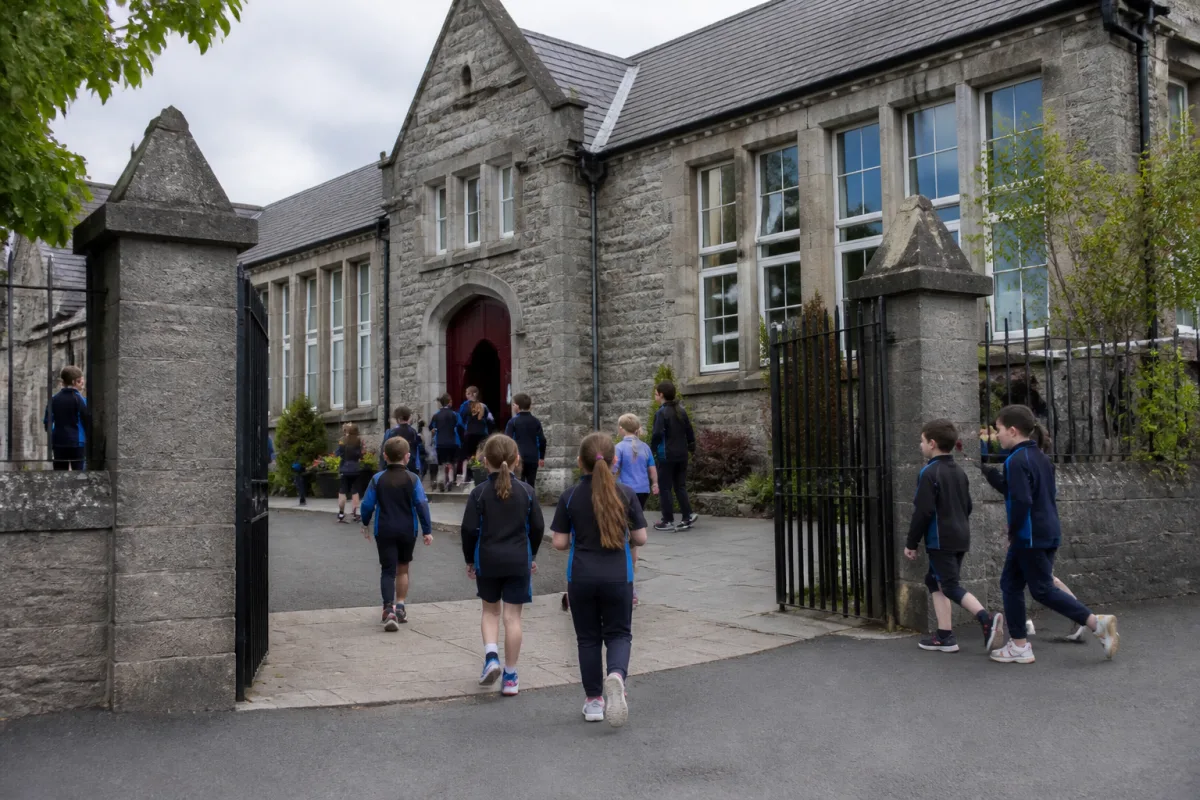
Irish primary schools require a uniform, but it’s usually less formal than what you’d see in, say, Germany: instead of a dress shirt, sweater, and tailored trousers, think tracksuit bottoms, a zip-up jacket, and a T-shirt underneath. Requirements vary from school to school — some primary schools stick to a more formal look, others go fully sporty. If how the uniform looks matters to you, it’s worth asking about when you’re choosing a specific school for your child.
School lunches at the primary level are free under the government’s Hot School Meals programme — but each school has to confirm its participation every year, so it’s worth checking whether a school is actually enrolled before you commit to it. Meals are picked through an app: parents get a long list of options and can plan ahead what the child eats on a given day of the week, and the food is served at school during the lunch break.
Some primary schools let you drop your child off early for breakfast before classes start — handy if a parent has to leave for work early. This service runs on a sign-up basis with a limited number of spots; other schools may not offer it at all, since it’s entirely up to the individual school.
Uniform requirements, participation in the free lunch programme, and the option of early breakfast all vary from school to school — worth confirming before you settle on a school.
After-School Care, Clubs, and Attendance Tracking via App
After classes, primary schools run an after-school care programme — essentially supervised homework time under an adult’s watch. Alongside that, schools offer extra activities: a two-month boxing course that meets once a week in the afternoon, a book club, and language courses. Spanish, for instance, is one of the language options — and it’s what one of the children in the family got interested in.
Attendance and absences are logged through an app, which is also where school notifications come through and where you can pay for extracurricular activities and fees.
The school app logs attendance, sends notifications, and handles payments for clubs and fees — one tool for the whole routine.
Secondary School: Uniforms, Lockers, and Textbooks
Secondary School uniforms are stricter than at the primary level: tailored trousers, black shoes, a shirt with a sweater on top. On PE days, tracksuit bottoms, a T-shirt, or a sports sweater are allowed instead — and students can wear that outfit all day without changing back.
Textbooks don’t need to be lugged around all day: every student gets their own locker at school. Instead of carrying a backpack from classroom to classroom, students keep colour-coded clear folders in the locker — one per subject. Before class, a student just grabs the one folder with materials for that lesson, rather than the whole stack of textbooks and notebooks.
Textbooks don’t need to be lugged around all day: every student gets their own locker at school.
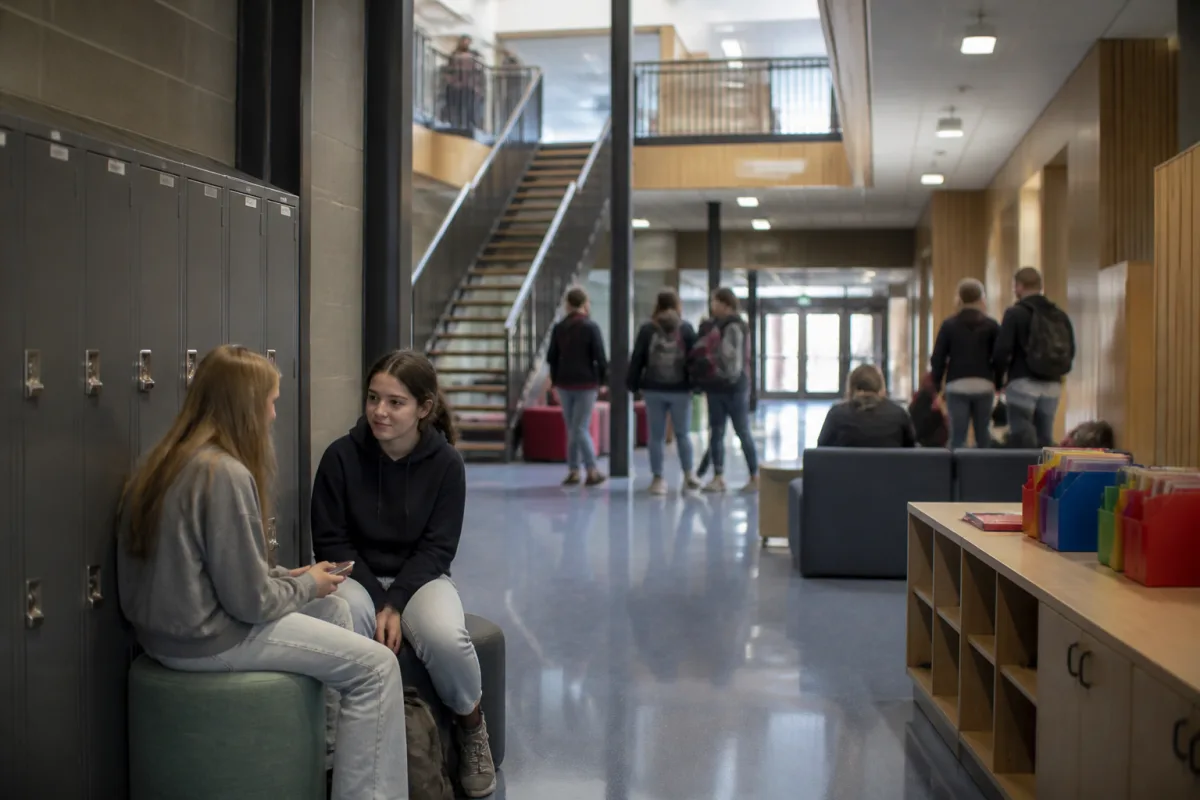
In secondary school, a student keeps all materials in a personal locker and brings only the colour-coded folder needed for that lesson — not the whole stack of textbooks.
Primary vs. Secondary School in Ireland: Key Differences
| Aspect | Primary School | Secondary School |
|---|---|---|
| Uniform | Tracksuit bottoms, zip-up jacket, T-shirt — a less formal option | Tailored trousers, black shoes, shirt with sweater on top |
| On PE days | — | Sports kit allowed all day |
| Textbook storage | — | Personal locker with colour-coded subject folders |
| Meals | Free lunches under Hot School Meals (subject to school confirmation) | — |
Elective Subjects in Irish Secondary School
Secondary School offers a wider range of elective subjects than a typical German school. Among them:
- Business — an economics-focused subject covering the basics of entrepreneurship;
- Woodwork/metalwork and technical drawing;
- Home economics (cooking and household skills).
This list isn’t exhaustive — the actual set of electives varies from school to school.
School Sports Teams and the Recognition System in Ireland
Secondary Schools run their own sports teams, which compete against each other and against teams from other schools — a format that’s unusual compared to the German school system. The most popular sports are Gaelic football and hurling. At the school in this family’s experience, there are also basketball and golf teams; other schools may have a different lineup, including swimming or rugby.
Being on a team brings kids closer together and makes it easier to settle into school life: shared training sessions and matches against other schools build a social circle within the class and the school as a whole.
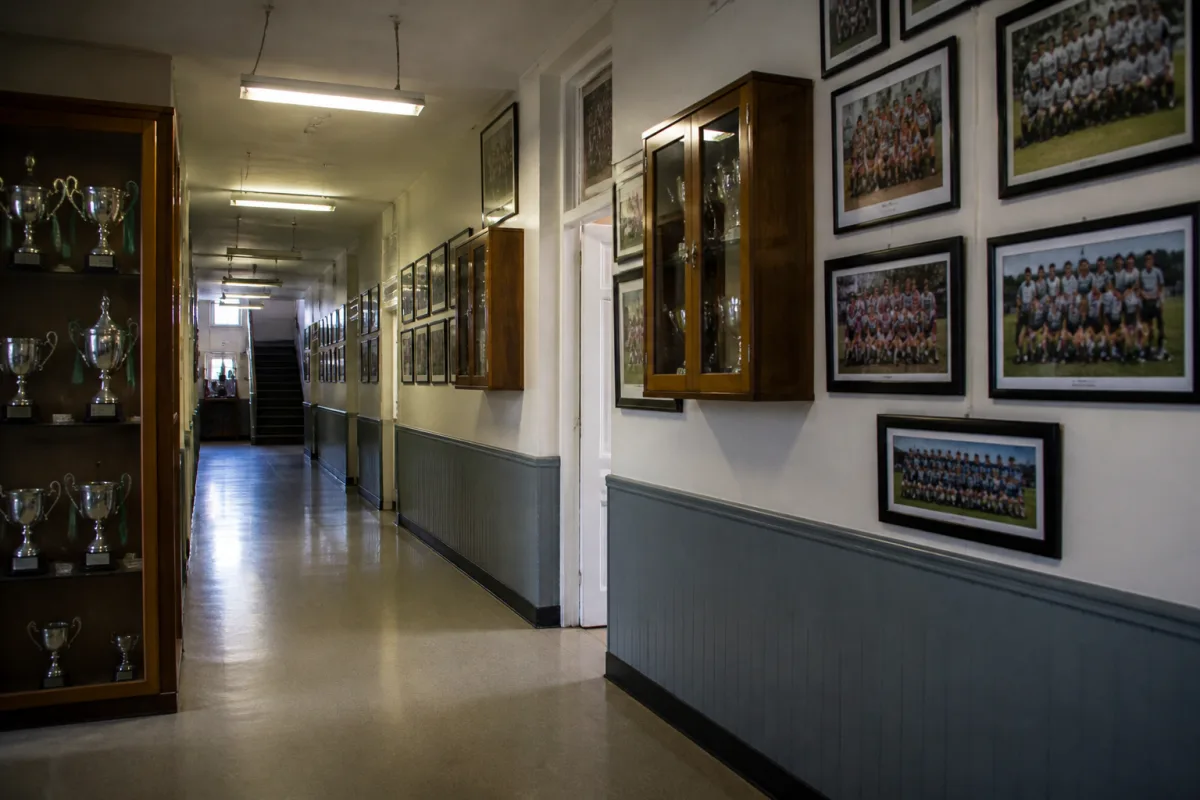
Sporting achievements are recorded officially: the school keeps cups, trophies, and boards listing winning teams by year. Photos line the hallways, and trophies sit in display cases — and this isn’t limited to sports; it covers the school’s achievements more broadly.
What Earns Students an Award
The recognition system at an Irish Secondary School goes well beyond grades. Students are recognised for:
The recognition system at an Irish Secondary School goes well beyond grades.
- social engagement and helping others;
- active participation in class;
- acting and drama activities;
- extra courses a student chose to take at school;
- sporting achievements.
The awards ceremony is a formal event — held in the assembly hall in front of the whole school.
Being on a school team — training together and playing matches against other schools — helps kids settle into school life faster and build a social circle.
What Irish schools give awards for
Frequently asked questions
Do you have to pay for extracurriculars like boxing or Spanish?
The material doesn’t specify the cost of these activities directly — what’s known is that fees for them can be paid through the school app, and the courses themselves (boxing, book club, Spanish) exist as paid or free electives depending on the specific school.
What if the school you choose doesn’t have a free lunch programme?
Since schools confirm their participation in Hot School Meals every year and not all schools are enrolled, it’s worth checking directly with the school’s administration before enrolling — otherwise you’ll need to arrange your child’s meals yourself.
Do lockers and electives also apply to primary school?
No — lockers with subject folders and a wide choice of electives are specific to Secondary School; primary school handles textbooks and classes differently.
Is joining a sports team mandatory in secondary school?
The material describes teams as a voluntary part of school life that helps with integration and socialising, but doesn’t indicate that participation is required — the specific sports on offer depend on the individual school.
Comments
Reader experience is useful, but it is not advice: check the rules on the official site.
No account needed: click Sign in, type any name, and you are done.