
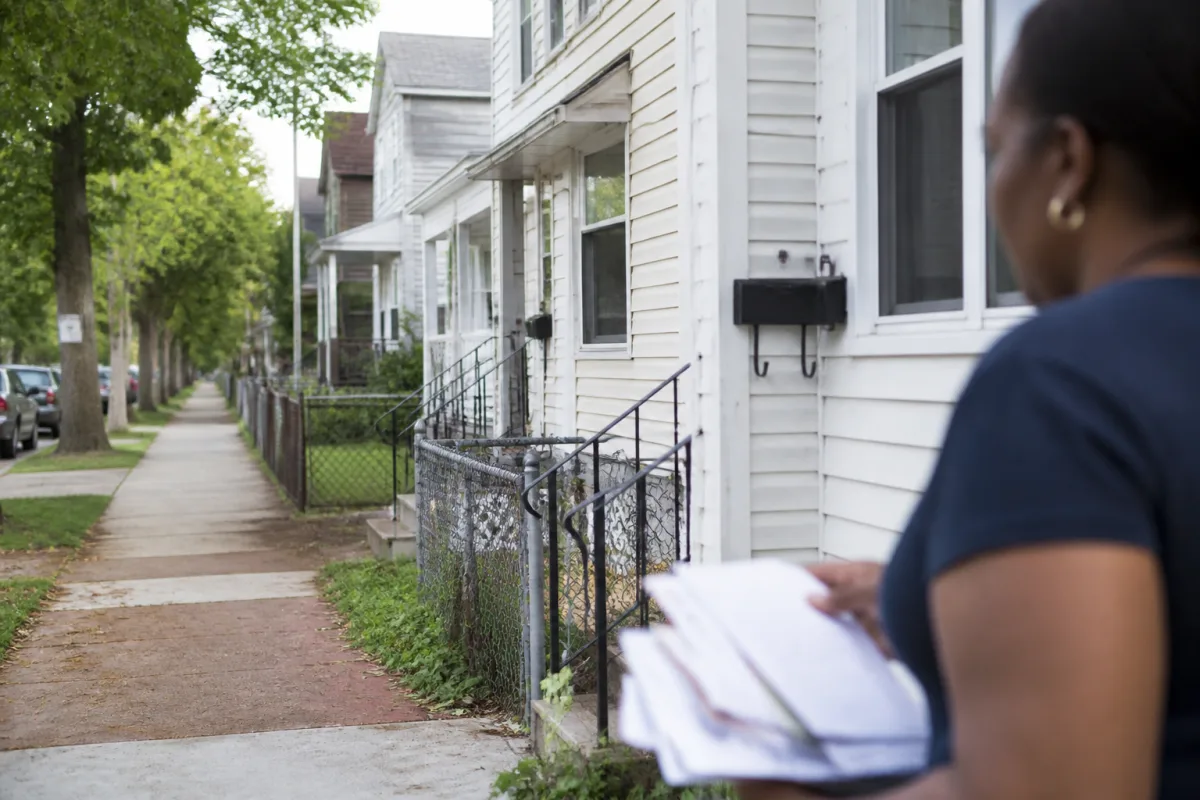

A new ruling from the Board of Immigration Appeals (BIA) has limited the right to reopen in absentia removal cases when immigration authorities sent notice to the last address they had on file. Now, simply not receiving the letter no longer guarantees a case review — even if the address was provided years ago and the applicant has since moved.
How the Right to Reopen a Case Has Changed
The Matter of DIJI decision, issued a week ago, fundamentally changes the approach taken by immigration courts. Previously, if someone was ordered removed in absentia (because they failed to appear at a hearing), they could easily reopen the case by claiming they never received notice of the hearing. That no longer works automatically.
Under the new precedent, if immigration authorities sent a Notice to Appear to an address the person once provided when filing a petition for an immigration benefit — even if this happened many years later, and even if the applicant was not in removal proceedings at that time — their claim of not having received the letter no longer automatically leads to reopening the case. The fact that the letter was sent to the address provided is treated as proper notice.
A Trap With No Way to Update the Address
This precedent creates a paradoxical situation. Often, a person is denied an immigration benefit in, say, 2005, and then moves. There is no mechanism to update an address with the immigration court because the person is not yet in removal proceedings — there is no active case to file the update with.
At the time, updating an address with U.S. Citizenship and Immigration Services (USCIS) was a complicated procedure, and many people were unaware of the requirement. Then, years later, when trying to obtain a new immigration benefit or during a border inspection, a Notice to Appear surfaces. The document is sent to the old address from the past, the person never receives it, fails to appear at the hearing, and is ordered removed in absentia.
A Small but Important Exception
The new ruling is not a total bar. If a person can prove the letter was not received for a different reason — for example, a mail delivery problem, a lost letter, or other people living in the home who frequently took someone else’s mail — they still have a chance to reopen the case.
What must be shown is that the problem was not with the address itself, but with circumstances that prevented the letter from being received. In addition, if the envelope was returned to the immigration agency marked “address does not exist” or “no such addressee,” that fact can help support reopening the case.
A Real Example Involving a Nonexistent Address
Immigration authorities detained a person and released him on his own recognizance without bond. During the detention, he was asked to provide an address. His English was very limited, and he made a mistake: instead of a street name, he gave the name of a town, and instead of a city, he wrote New York, even though that was an entirely different place. The address was completely incorrect and did not correspond to any real location.
Later, a Notice to Appear was mailed to this nonexistent address. He never received it, failed to appear at the hearing, and was ordered removed in absentia. Years later, while pursuing a motion to reopen, a Freedom of Information Act (FOIA) request was filed. The documents obtained included a copy of the envelope marked by the postal service: “address does not exist.” The judge agreed that proper notice cannot be sent to an address that does not exist in reality, and reopened the case. The removal proceedings were terminated.
However, under the new Matter of DIJI precedent, it’s unclear how this case would turn out today. Even though there is written proof that the letter never reached the recipient, a question remains: will authorities insist that since he provided the address himself, that is sufficient grounds for sending notice? The answer to this question may emerge as the new precedent is applied in practice over the coming year.
What Has Changed Overall
The new ruling significantly narrows the paths for reopening removal cases when an applicant failed to appear at a hearing allegedly due to improper notice. Whereas previously, not receiving the letter was often treated as grounds for reconsideration, now it is enough for authorities to show that the letter was sent to an address the applicant himself provided.
This will significantly complicate matters for people who were denied an immigration benefit many years ago, then moved and forgot about it, until authorities discovered the old case. However, the door is not completely closed: if there are facts indicating the letter was not delivered for other reasons, or if the address was clearly incorrect or nonexistent, a person still has a chance to reopen the case.


Comments
Reader experience is useful, but it is not advice: check the rules on the official site.
No account needed: click Sign in, type any name, and you are done.