
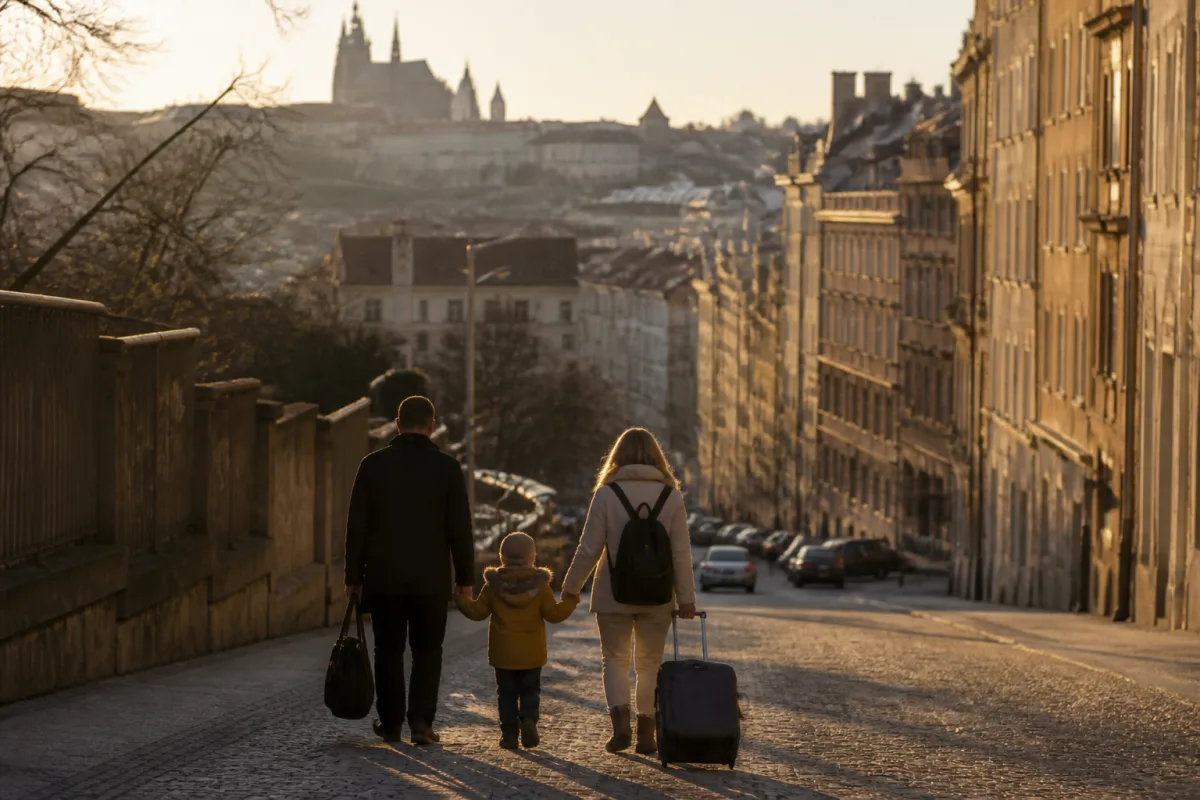

Life for Ukrainian refugees in Czechia is a years-long path of adaptation that, for one family from Luhansk, began back in 2014 and today combines work, a child in Czech nursery school, participation in a local reality show, and learning the Czech language.
In short
- The family had only a week to prepare for filming and spent ten days without a phone or internet.
- Since 2014, the family from Luhansk has gone through 11 moves and three months without communication in Alchevsk.
- In Czechia, the family has been learning Czech for four years, and there’s practically no one to practice Ukrainian with.
- The daughter at nursery school already speaks Czech better than the adult family members — it’s her first language.
- The participant deliberately chose not to present herself as a “poor refugee,” opting instead for the image of someone who simply works and keeps living.
How Ukrainians End Up on the Czech Reality Show “Wife Swap”
The coordinator stayed silent for a year, then called to say filming would start in a week. The participant was leaving work, not yet knowing she’d get that call by evening — and within seven days she had to show up on set. Before leaving, she chose the family herself, turning down an option involving heavy drinking: she wanted to see Czech traditions and spend time with good people, not go through another negative experience on top of everything that had already happened recently.
The coordinator stayed silent for a year, then called to say filming would start in a week.
During filming, the participant went ten days without hearing her husband’s or child’s voice and had no internet access. She brought an ordinary notebook with her, knowing in advance she’d be left without a phone or connection. At the same time, she was studying at a driving school, with one month of preparation left before her driving test. She was given a laptop only a few times, for three days at a stretch — and even then not for free use, but under supervision and with access only to a website with practice test questions for the exam.
Studying properly under these conditions wasn’t possible: she couldn’t concentrate, so she spent part of the time just flipping through a book. In that same notebook, she managed to jot down Ukrainian recipes — just in case, since even at home she cooks by peeking at notes.
The participant learned the filming date a week in advance and spent ten days without a phone, internet, or her family’s voice — while simultaneously preparing for a driving school exam.
The Family’s Journey From Luhansk: From 2014 to Czechia
“We haven’t lived a normal life since ’14. We’re from Luhansk” — that’s how the participant explains why the family agreed to take part in the project. Before 2014 she was studying at a university she calls great, the one she enrolled in right after school. The war interrupted her studies, and the family had to decide what to do next: move to Dnipro and continue her education there.
“We haven’t lived a normal life since ’14. We’re from Luhansk”
More moves followed: from one place to another, from one temporary shelter to the next, until they finally found somewhere permanent. According to the participant, the family moved 11 times in total.
Shelling hit both Luhansk itself and the district where the family lived — Vовchansk, back in 2014. The participant says she felt it even as a child, though few people outside the region knew about these events at the time. She separately recalls three months spent in Alchevsk cut off from the outside world — the city was completely isolated from the rest of the country. According to her, no one even suspected such details existed, which is exactly why the family’s story surprised the other participants in the Czech project, who had no idea when the war in Donbas had even started.
The family from Luhansk lived through shelling back in 2014, three months cut off from communication in Alchevsk, and repeated relocations — which is exactly why their story surprised even the other participants in the Czech project.
The Language Question: From Russian in Luhansk to Czech in Czechia
The family from Luhansk always spoke Russian at home — it was the everyday language of both the household and the city. But schooling, according to the participant, was conducted in Ukrainian: she loved the Ukrainian language and songs, and wore vyshyvankas and traditional clothing.
In Czechia the situation shifted again: the family has now been learning Czech for four years. There’s no time or occasion left to practice Ukrainian — as the respondent puts it, she simply has no one to speak Ukrainian with: there’s nowhere to go back to, since home, in the usual sense, no longer exists.
The family’s language path turned out to be anything but linear: Russian as the language of childhood, Ukrainian as the language of schooling and identity — the vyshyvankas, the songs — and Czech as the language of a new life, one they now have to learn from scratch as adults.
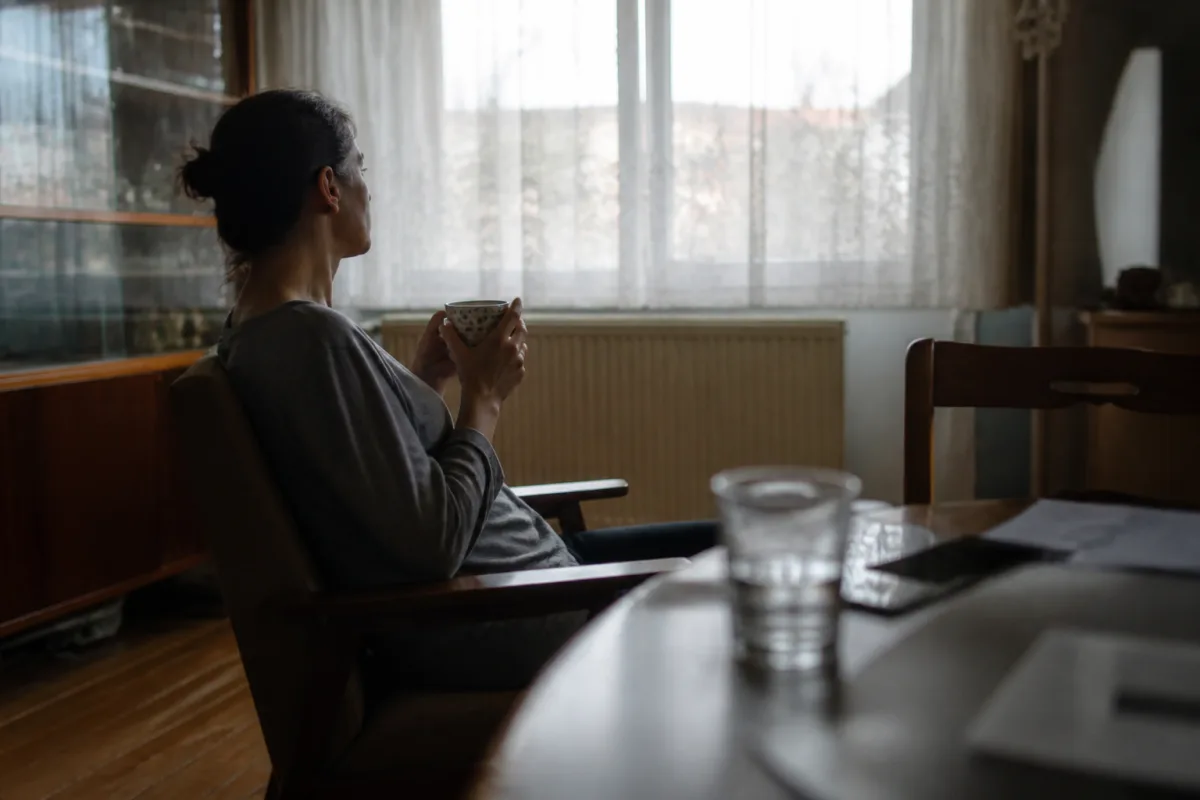
Russian remained the language of childhood, Ukrainian the language of schooling and identity, while the family is learning Czech from scratch as adults, since there’s no Ukrainian-speaking home left to return to.
How the Family Has Adapted to Life in Czechia Today
Today the participant works at a school — something she’s happy about and says plainly, without complaint about the circumstances. Her daughter attends nursery school, and according to her mother, the child already speaks Czech better than any of the adults in the family: for her, it became her first, natural language.
The participant deliberately refused to play the “poor refugee” when a teacher at the school asked about the war and Ukraine: she didn’t want to talk about “how unfortunate she is,” but wanted to show that the family keeps living and working.
The family’s daily routine also pushes back against stereotypes: according to the participant, no one in the family drinks heavily or smokes. Household duties are split evenly — the husband cooks, cleans the house, and takes on a substantial share of domestic responsibilities. The only thing show viewers could find to criticize, in her words, was exactly that: the husband “runs the household,” meaning he handles traditionally “female” duties.
The only thing show viewers could find to criticize, in her words, was exactly that: the husband “runs the household”
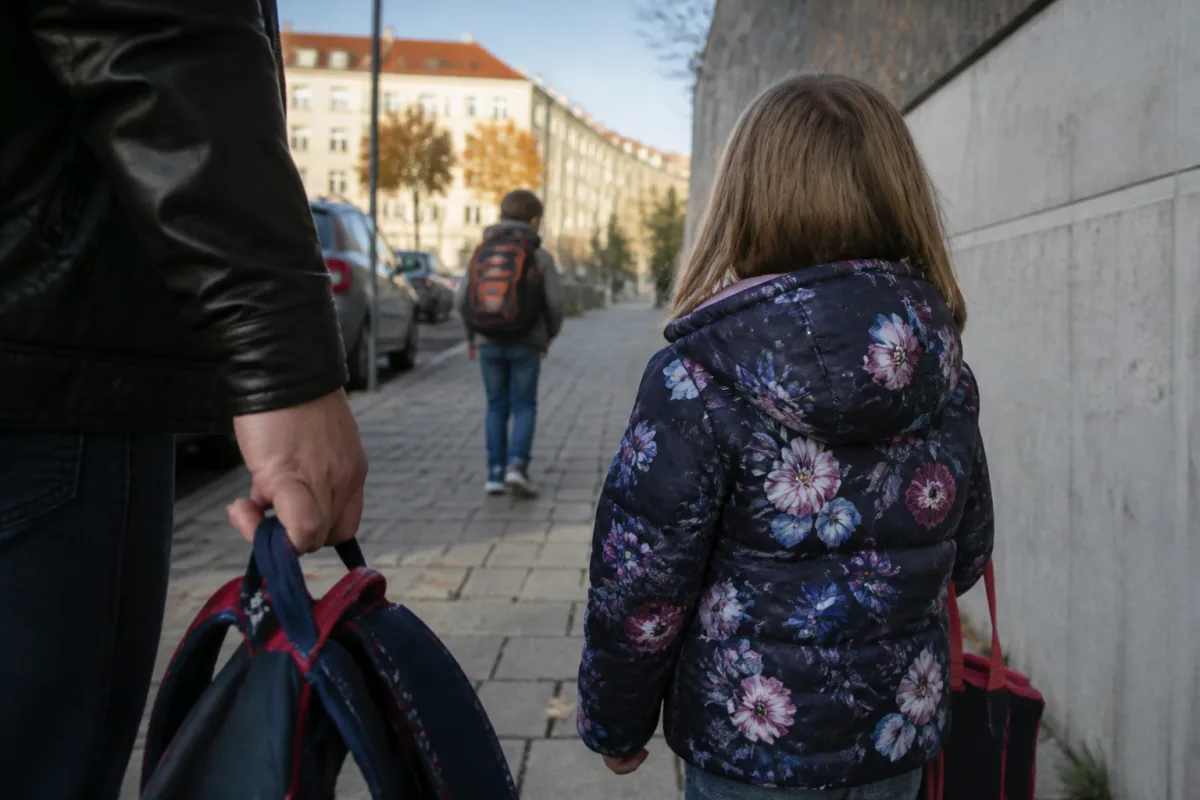
Instead of talking about “how unfortunate she is,” the participant chose to show that the family simply lives, works, and raises a child — shifting how viewers perceive refugee stories.
Frequently asked questions
Can you back out of a reality show after the coordinator has already confirmed the filming date?
The material shows that the participant chose the family herself right before leaving and turned down an option involving heavy drinking — meaning she did have some choice and the right to decline during the preparation stage. But once the date was confirmed and the terms agreed, filming started just a week later, with no real room to change her mind afterward. This suggests key decisions are best made at the stage when a family is being offered, not later.
What happens to the participant’s child while the parents are filming or at work, and does it affect her language development?
In this family, the daughter attends nursery school, and it’s there, among peers and teachers, that she’s picking up Czech faster than the adults — for her, it became a first, natural language. This is typical for children of migrants: nursery or school immerses them in the language every day, while adults learn it through separate lessons. So the gap in level between the child and the parents shouldn’t be read as a sign that the adults are learning poorly.
Can a whole family with a child go back to Ukraine after leaving?
For this family, returning is complicated by the fact that home, in the usual sense, no longer exists: their hometown went through shelling and repeated relocations, and there are no ties left to go back to. This isn’t a universal rule for all displaced people, just this particular family’s situation. Whether to return always depends on whether housing has survived and whether there’s somewhere and someone to go back to.
Does living abroad for years without practicing Ukrainian affect fluency in the language?
This family ended up in a situation where Russian remained the language of childhood, Ukrainian the language of schooling, and Czech is being learned from scratch as adults — with no one to practice Ukrainian with. That means a language not used daily gradually fades into the background, even if a person once knew it well. For this family, that turned out to be a natural consequence of relocation rather than a deliberate choice.
How long does it usually take a family with children to adapt to a new country?
For this family, the process took several years: they’ve been learning Czech for four years now, and before that went through 11 moves within Ukraine and Europe. The pace of adaptation depends on where a person is starting from — this family carried years of instability behind them even before leaving Ukraine. So it’s worth measuring progress against your own pace of learning the language and daily life, not against average timelines.

Comments
Reader experience is useful, but it is not advice: check the rules on the official site.
No account needed: click Sign in, type any name, and you are done.