


When filing for adjustment of status, people often make mistakes that can lead to a green card denial and even deportation proceedings. Knowing the main pitfalls and how to avoid them helps preserve status and save precious time.
Relying Only on Assets to Prove Financial Support
The first and most common mistake is filling out the affidavit of support based solely on the applicant’s assets. This approach almost always triggers a Request for Evidence (RFE), and that request rarely explains clearly what exactly the problem is. Instead, the agency sends a standard template response, leaving the applicant alone with a mystery — forced to guess on the ChatGPT portal what’s wrong.
Trying to respond to the RFE with the same flawed affidavit of support almost guarantees a denial of adjustment of status. A second RFE won’t be issued — getting even one is considered lucky. The agency has the right to simply deny the application without intermediate warnings.
In attorneys’ practice, denial often happens precisely because applicants delayed bringing in a joint sponsor. Previously, a denied application meant losing money and the possibility of reapplying — unpleasant, but not catastrophic. Now, however, a denial of adjustment of status immediately triggers deportation proceedings. The case doesn’t just become more expensive — it can lead to removal. There’s no guarantee that success is even possible in deportation proceedings.
The conclusion is simple: if income is insufficient, a joint sponsor must be found before filing. This eliminates unpredictable expenses and risks.
Representing Yourself in Immigration Court
The second mistake often seems obvious — until it happens: people try to represent themselves in immigration court. Immigration court proceedings are nothing like what an average person can handle without preparation.
There are many examples. In one, a woman came to her second court hearing, misunderstood what the judge said, and was found removable on the spot. She hired an attorney only after that. By that point, the chances of fixing the situation had dropped to 30%, and huge expenses lay ahead. Had she reached out earlier, the court would have given her the opportunity to return with an attorney.
Second example: a very capable and attentive person prepared several motions for court himself and even made a good impression with his competence. But when he filed a motion for change of venue several times to move the case from New York to another district where he now lived, the judge denied it over and over. And although the judge explained in the negative rulings what needed to be done, most judges would probably have granted such a motion. When the applicant finally hired a lawyer, we managed to change the venue — but only after he had already been forced to travel from the middle of the country to New York for a five-minute hearing and then travel back.
Traveling while in removable status carries risks. Had he flown, the likelihood of being detained at the airport would have been significant — this would have moved the case to the detained docket. That’s a completely different process: no time to prepare, no access to family or resources, and proceedings rushed straight from a detention cell. The non-detained docket is what one should strive for.
Handling the early stages of the case alone led to unnecessary suffering. There are moments in immigration law that can be handled on one’s own — naturalization or removal of conditions, for example, and sometimes even a full adjustment of status package, if a person studies everything carefully. But deportation proceedings are the exception. Trying to handle such a case without a lawyer almost always ends in disaster.
Misunderstanding Your Adjustment Category
The third mistake concerns people who recently lost protected status and rush to file for adjustment of status without understanding the grounds and restrictions.
Many file through category-based petitions — for example, because a parent or spouse has permanent resident status. They don’t realize that adjustment of status within the U.S. requires the applicant to be in a genuinely valid nonimmigrant status at the time of filing and to have maintained that status continuously since entry. If the status was revoked or canceled, such an applicant is not eligible to file through USCIS. They cannot do adjustment of status through the regular channel and will be denied.
Another common mistake is filing for adjustment without checking whether there are old deportation orders or active removal proceedings in the person’s history. Except for so-called arriving aliens, all other categories of people with such a background cannot file through USCIS. They can go through the adjustment process, but not through this agency — a path exists, but it’s different.
Before filing documents, one must know exactly which category the application falls under and whether restrictions apply. Ideally, this check should be done together with an attorney. Although adjustment of status is a solvable task, it is very complex, and the stakes are high: denial almost always means the start of deportation proceedings. Rushing and self-filing right now is especially risky.
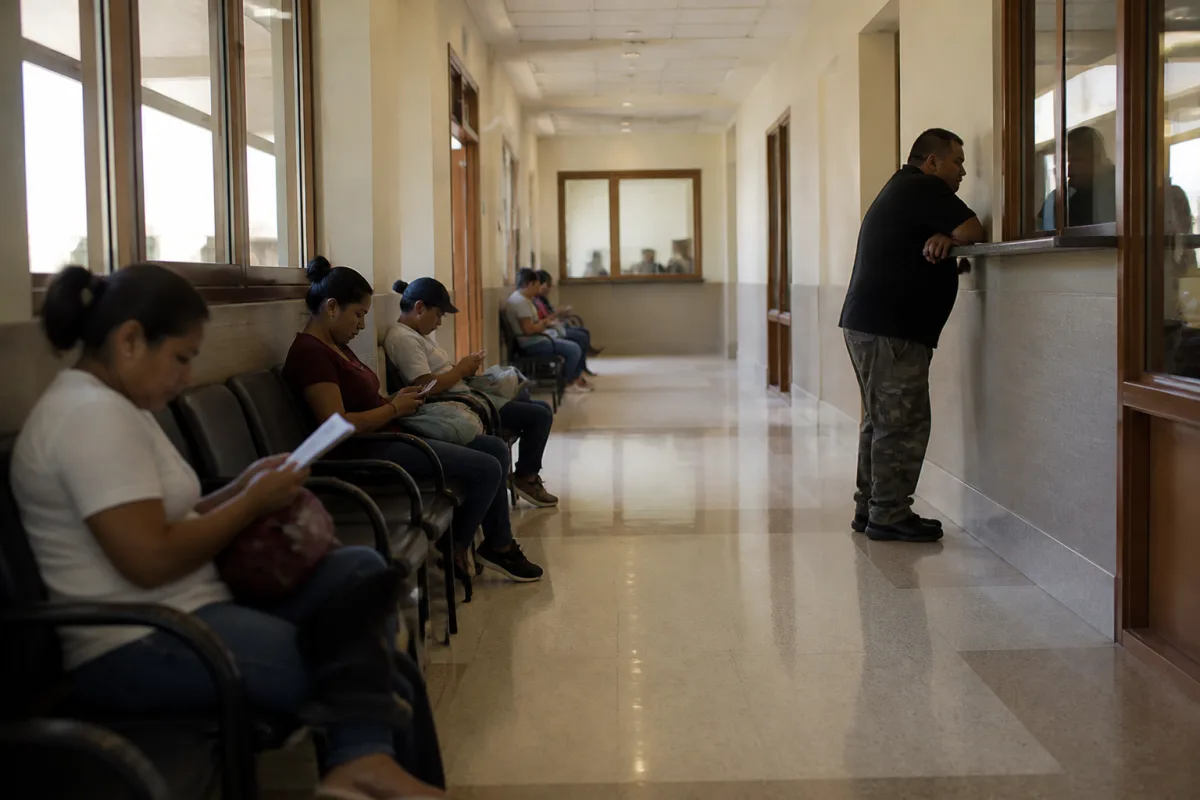
What to Do If Detained: The ICE Emergency Preparedness Program
At the moment of an ICE detention, the average wait time before an attorney can start working on the case is two weeks. Two weeks in a cell, away from family and work — time that could be avoided.
For such situations, there is the ICE Emergency Preparedness Retainer Program. The applicant registers in advance, providing a complete history of their immigration case and copies of all documents. In the event of detention, the program immediately notifies the designated contacts, locates the person in the detention system, and connects their family with a local advocate working where the detainee is held. This provides instant access to legal help at a critical moment.


Comments
Reader experience is useful, but it is not advice: check the rules on the official site.
No account needed: click Sign in, type any name, and you are done.