
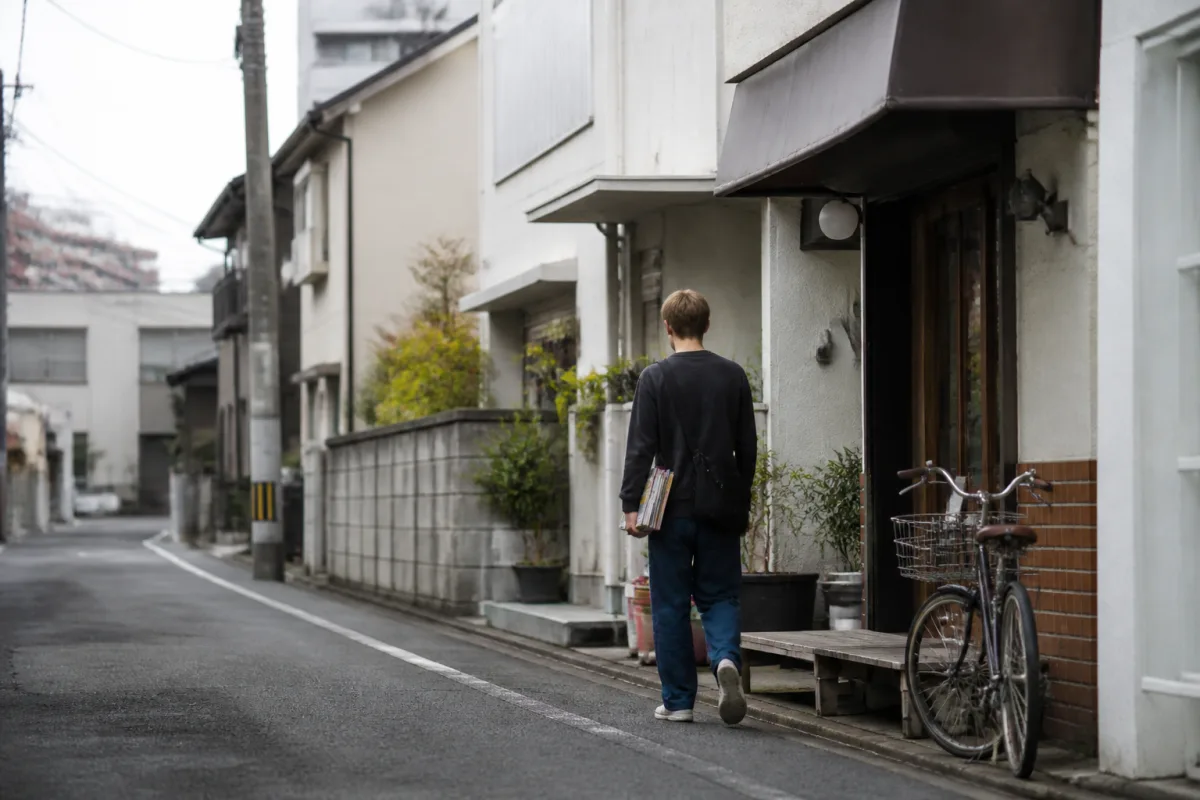

Moving to Japan through a language school takes about a year from start to finish: you get a long-term student visa valid for 2 years, which lets you study the language legally, work part-time, and later switch to a work visa without leaving the country.
In short
- A long-term student visa for a language school is the simplest way to move to Japan compared to Europe and the US.
- Applications open four times a year, but the path from starting preparation to moving takes about a year.
- The visa is valid for 2 years, allows part-time work up to 28 hours a week, and leads to a work visa without leaving the country.
- Switching to a work visa requires both N2-level Japanese and a university degree from any country.
- Without a degree, you can stay through a paid 2-year college program or the tokutei gino program at N4 level.
Why a Language School Is the Simplest Way to Move to Japan
Moving to Europe usually means proving large financial reserves, and the US immigration process is long and bureaucratically heavy. Southeast Asia, by comparison, lags behind in development, and relocating within one’s own region doesn’t always fully answer the desire for a different country altogether. Against that backdrop, Japan remains one of the most attractive destinations — not just for its economy and culture, but for how straightforward the process itself has become.
The idea of Japan as a country with sky-high requirements and endless paperwork is outdated — that was the case about 20 years ago. One of the simplest ways to move there today is enrolling in a long-term program at a Japanese language school. This is the path most people take when they choose Japan deliberately: some go after falling for the country during a trip, others because they want a developed nation with a rich history and a strong sense of safety.
The idea of Japan as a country with sky-high requirements and endless paperwork is outdated — that was the case about 20 years ago.
Based on the experience of a language school operating since 2010, moving through a Japanese language school remains the simplest, most convenient, and fastest option compared to other ways of settling in Japan long-term.
When and How to Apply to a Japanese Language School
Most Japanese language schools open enrollment four times a year — in January, April, July, and October — but the exact schedule should be confirmed with the specific school. For three of the four intakes, applications are accepted regardless of Japanese level: there’s no formal language requirement for January, April, or October. The exception is the July intake: most schools only accept applicants who already hold at least JLPT N3 (roughly equivalent to B2).
To apply, you’ll need a copy of your passport, a personal photo, a completed application form, and proof that you started studying Japanese well in advance — not a month before applying. Schools want to see that the applicant has genuinely been learning the language for a while, not just collecting a certificate for the sake of it.
What Counts as Proof of Language Study
- A certificate confirming 150 hours of Japanese language study — though it’s worth checking with the school whether this is still accepted on its own or whether an additional certificate or interview is now required;
- A JLPT N5 certificate (the minimum JLPT level).
Both documents are accepted individually by schools, but combining the hours certificate with the JLPT certificate strengthens an application the most.
The 150-hour study certificate and the N5 certificate are each accepted on their own, but together they noticeably strengthen an application — schools recommend submitting both.
What You Need to Apply to a Language School
Financial Requirements: How Much Money You Need to Show
Schools usually ask applicants to show a balance — in their own account or across several — of at least $20,000, roughly six months before enrollment; the exact amount and timing depend on the specific school, and the consulate may additionally request documents proving where the funds came from. If someone other than the applicant is financing the studies, sponsorship documents are submitted instead of a personal bank statement.
The JLPT exam is held twice a year: on the first Sunday of July and the first Sunday of December. Schools recommend submitting both language documents together — the 150-hour certificate and the JLPT certificate — since the combination noticeably improves the odds of approval.
The Interview and Getting Your Student Visa
If the document package is in order, the school schedules an interview with the candidate — conducted in Japanese. This isn’t a fluency test: schools prepare applicants for the interview individually, including those at the entry-level N5, and small mistakes in speech at this stage aren’t critical. What really matters is the quality of the document package itself — with a well-prepared set of papers, the chances of approval are high.
The entire path from zero to moving to Japan takes about a year. At the end of it, you receive a long-term student visa valid for 2 years, which grants the right to work part-time legally. This visa effectively becomes a ticket to staying in Japan longer-term: once it expires, you can apply for a work visa locally, without leaving the country or returning home first.
This visa effectively becomes a ticket to staying in Japan longer-term: once it expires, you can apply for a work visa locally, without leaving the country or returning home first.
The interview isn’t a fluency test — schools prepare even N5-level applicants for it. What matters is the quality of the document package, and the resulting visa gives 2 years of legal part-time work plus the ability to switch to a work visa without leaving the country.
How Much Studying and Living in Japan Costs
A year of study at a Japanese language school costs roughly $10,000–15,000, with the range depending on the specific school. Housing is added on top of that: its cost depends on the city, the type of accommodation (dormitory, shared room, or a separate apartment), and how many people share a room — there’s no single figure here, since the math works out differently for everyone.
A separate cost to plan for is the first few months after arrival. You’ll need at least $2,000 to get started: furniture, an initial housing deposit, insurance, and other everyday expenses. Compared to the cost of living in the US or Europe, this amount looks manageable.
Students on a long-term student visa are allowed to work part-time — up to 28 hours a week during the school term and up to 40 hours a week during vacations. These hours aren’t meant to replace a main income: the priority of the trip remains studying, and part-time work is extra money that, depending on the job, can help cover part of housing and tuition costs. The jobs actually available depend heavily on the applicant’s Japanese level.
Part-time work has another function besides the money: it becomes the first line on a Japanese résumé and brings a reference from a Japanese employer — an asset that matters later when looking for office work in Japan.
Cost of Studying and Starting Life in Japan
Annual tuition cost and the minimum budget for the first months after arrival.
- Annual tuition at a language school$10,000–15,000Range depends on the specific school
- Starting costs after arrivalfrom $2,000Furniture, housing deposit, insurance, everyday expenses
How to Switch From a Student Visa to a Work Visa
For a 2-year language school program, the job search should start about 6 months before graduation — for example, after a year and a half of a two-year course. Good schools run job fairs during this period and prepare students for interviews in Japanese. If the school was chosen independently or through a third-party agency, it’s worth confirming in advance whether this kind of preparation is included in the program for free — not every school or agency offers it without an extra charge.
Finding an employer and a job needs to happen at least six months before the school ends: that way, the switch from a student visa to a work visa happens smoothly — the school program finishes, and the employer changes the visa status right away, with no need to leave the country or move to new housing.
Two conditions need to be met at the same time for this switch. First: Japanese level no lower than N2 (equivalent to advanced proficiency, closer to B2 on the European scale). Second: a bachelor’s degree or equivalent — a degree earned in any country, including one’s home country, works, since what matters is simply having one. Once both conditions are met, it’s possible to join a Japanese company and work there under contract as a full employee.
Requirements for Switching From a Student Visa to a Work Visa
Both conditions must be met at the same time to change your visa status without leaving the country.
- Japanese language levelN2 or higherAdvanced proficiency, close to B2
- Educationuniversity degreeA degree from any country, including your home country, works
- Job search timeline6 months before graduationNeeded for a smooth switch without leaving the country
Switching from a student visa to a work visa requires both a Japanese level of at least N2 and a university degree at the same time — missing either one means the switch won’t happen.
What to Do Without a University Degree
Without a university degree, staying in Japan on a standard work visa isn’t possible — but there are two other paths.
The first is enrolling in a college: a two-year program there counts as equivalent to a university degree, after which you can apply for jobs on the same terms as anyone else. There’s no free education in Japan: the only way to study without paying is winning a grant, and that’s extremely hard to pull off. It’s not worth risking your status chasing a grant — sometimes it takes several years, and your visa stays uncertain the whole time. It’s more practical to enroll in a paid college program, get a qualification, and then work in Japan afterward.
The second path is the Specified Skilled Worker program (tokutei gino). It’s designed for mass-demand occupations where Japan currently faces labor shortages: food service, hotels, elderly and patient care, and the service industry. A university degree isn’t required for it — just basic Japanese. In many cases, N4 level is enough, plus passing a short field-specific test for the chosen occupation.
Without a university degree, there are two ways to stay in Japan: a paid 2-year college program, or the tokutei gino program for skilled-labor occupations, which only requires N4 level plus a field-specific test.
What to Know Before You Move: Language, Timelines, and the Study Requirement
A student visa doesn’t give you the right to simply move and skip studying: attending classes and studying Japanese is a mandatory condition, and breaking it gets you expelled. Using the visa purely as a way to move legally, without actually attending school, isn’t an option.
Without knowing Japanese, this path to moving doesn’t work at all: English is barely used in Japan, and counting on getting by in an international language isn’t realistic — the country runs on Japanese.
Without knowing Japanese, this path to moving doesn’t work at all: English is barely used in Japan.
Starting preparation from zero takes about a year, and since applications for long-term programs can only be submitted four times a year, the start needs to be planned well ahead of time.
For working in Japan, N4 is considered the minimum Japanese level — schools typically budget about a year to reach it, and there’s no real way to speed that up: the brain needs time to absorb speaking, listening, writing, and reading at that level.
Competition for good jobs has grown: back in 2024–2025, finding work was noticeably easier. Today, a position with a decent salary and conditions requires strong Japanese, professional experience, a résumé, a portfolio, and reference letters. Moving without English, without Japanese, and without experience sharply lowers the odds — finding a job is still possible, but it will likely be a weaker one or take a long search.
Getting into a language school and staying in Japan gets harder every year: more people are applying, and the pool of well-prepared candidates keeps growing. Anyone seriously considering the move shouldn’t put it off for years — if Japanese study hasn’t started yet, now is the time: starting from zero, you can still be in Japan within a year.
Frequently asked questions
Can I apply to a school if I’m older than typical student age and finished my education a long time ago?
Nothing in this material mentions age limits for enrolling in a language school — the requirements cover language level, proof of income, and evidence of studying Japanese, not the applicant’s age. Age isn’t raised either as a requirement or as a restriction.
What happens if you drop out or stop attending classes while on a student visa?
Attending classes and studying Japanese is a mandatory condition of the student visa, and breaking it gets you expelled. Using the visa as a way to move legally without actually studying isn’t an option.
Can you apply to a language school through an agency instead of on your own?
Yes — both options come up: a school can be chosen independently or through a third-party agency. Either way, it’s worth checking in advance whether job-search and interview preparation is included in the program for free, since not every school or agency offers it without an extra charge.
Do you need to prove where the money in your account came from to enroll in a school?
Yes — besides showing a balance of at least $20,000 six months before enrollment, the consulate may additionally request documents proving where those funds came from. The exact list of such documents depends on the applicant’s situation.


Comments
Reader experience is useful, but it is not advice: check the rules on the official site.
No account needed: click Sign in, type any name, and you are done.