
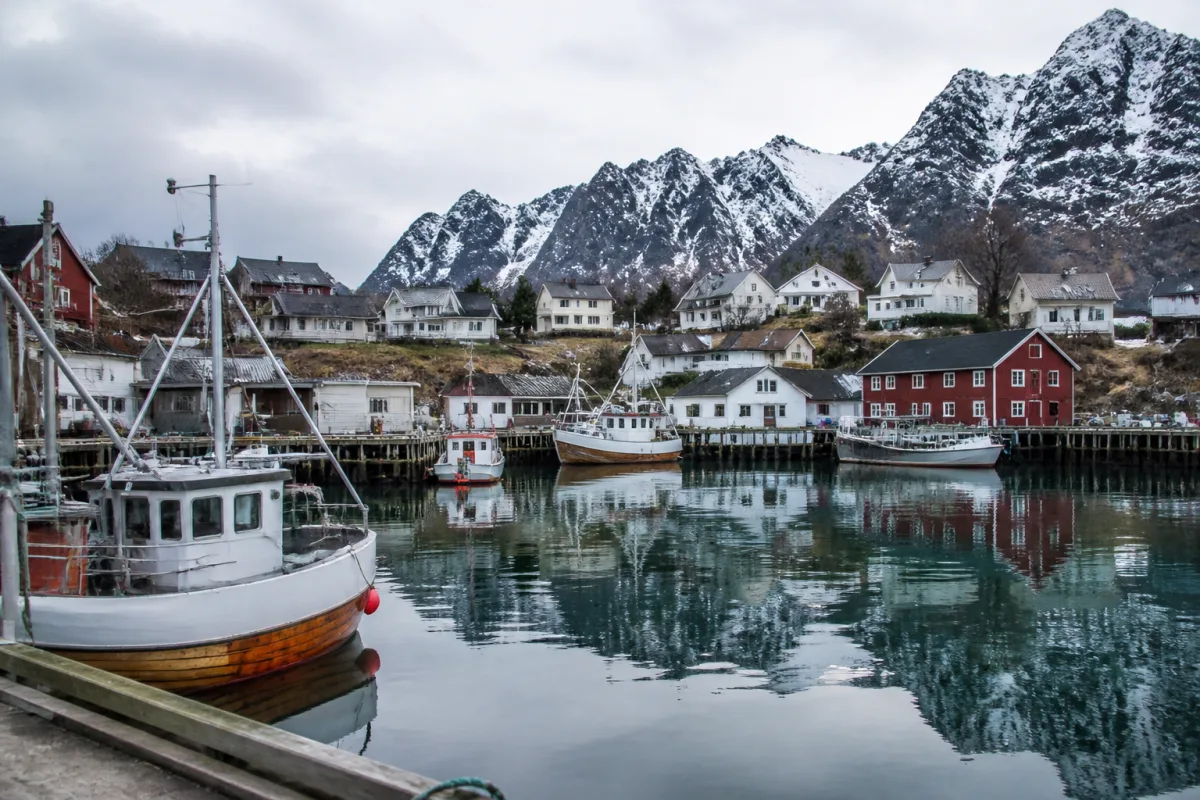

It’s possible to move to Norway from Poland for work without agencies or visas — through Polish Facebook groups that arrange jobs at fish factories, and from there look for work in your own field in cities like Oslo.
In short
- The fish factory job in Norway was found through a Polish-language Facebook group without leaving Poland first.
- The employer at the factory covered paperwork, the denumer, housing, and transfer — the couple only paid for flights themselves.
- The factory contract ran for three months, tied to the cod season.
- Working as an electrician in Oslo didn’t require Norwegian — English was enough.
- The move from the factory to Oslo turned out harder than the job search itself: the housing wasn’t ready to move into.
Why they decided to move from Poland to Norway
The decision to leave grew out of a very concrete practical goal: the couple wanted to build their own, “third” home — a separate life together, not a repeat of either of their parents’ scenarios. In their view, the financial conditions in Poland simply wouldn’t allow it: a Polish salary wouldn’t have covered a project like that.
Piotr had already been thinking about moving to Scandinavia well before he met his partner, and he’d carried the idea of going there specifically for a long time. When the couple started discussing a shared plan, the choice landed on Norway: it felt right to start their life together somewhere completely new, with nothing tying it to either person’s past.
The decisive push came from his partner: she said that if Piotr himself didn’t find a job in Norway, she’d find one for herself. That pushed him to search harder — and soon, through a Polish group on social media, an organized vacancy at a fish factory turned up, and that’s where both of their move began.
she said that if Piotr himself didn’t find a job in Norway, she’d find one for herself
How to find a fish factory job in Norway from Poland
They started looking for work while still in Poland, without waiting to move first: the couple came across a Polish-language Facebook group that organized recruitment for a fish factory in Norway. The group was called something like “Polacy w Norwegii” — someone in the group had posted a job listing, and that’s how contact with the employer started, through Messenger.
Recruitment happened entirely remotely, before they even left Poland. Both partners went to the factory — it became their first job in Norway.
The employer took care of most of the logistics:
- paperwork needed to work legally in Norway;
- housing on site;
- a denumer — a temporary identification number, without which it’s impossible to work or get paid in Norway;
- transfer from the arrival point to the village where the factory was located.
The only thing the workers paid for themselves was the flight to Norway — on arrival, they were met and driven straight to the site.
The contract ran for three months and was tied to the cod season: that’s the period when the factory needed extra hands. Once the three months were up, the couple didn’t renew the factory contract — they’d already started looking for other work options in Norway while still under contract.
The fish factory job was found through a Polish-language Facebook group before the move — recruitment and interviews happened entirely remotely.
The factory handled paperwork, the denumer, housing, and transfer — the workers themselves paid only for their flights to Norway.
What the fish factory employer arranged
Switching from the fish factory to electrician work in Oslo
The electrician job was found before the factory contract even ended — through the same Polish-language Facebook groups: there they connected with a Polish man looking for electricians in the Oslo area. Negotiations happened remotely, the employer hired the applicant as an electrician, and by the time the factory contract wrapped up, the couple already knew they were moving to Oslo — housing there had been arranged in advance, and all that was left was to sign the contract.
Norwegian wasn’t required for the job: communication was in English, and that was enough for paperwork and everyday matters. At the time of the move, his partner also got by in English, and only learned Norwegian later, through a year-long course. Conversational English turned out to be enough for working as an electrician and handling day-to-day life in Oslo, although people around them regularly suggested keeping up with Norwegian — it would, by general consensus, make things easier.
The contract didn’t last forever. The electrical company he worked for ran into financial trouble, and since he lived in Oslo while the company’s office was in Fredrikstad, the employer had to cover extra travel costs for him. When it came time to cut expenses, his position was the first to go. By that point he had almost three years of experience as an electrician — but that didn’t save him from the layoff.
After the layoff, the applicant went on unemployment benefits (dagpenger) and, at the time this story was put together, had been receiving them since March. The job search continued constantly, through contact with an employment caseworker. One attempt turned into a disappointment: early in the year, a Polish electrical firm took him on as a temporary cover worker, but the actual need for him lasted only about a month and a half — after which the employer said his experience and qualifications weren’t sufficient for further cooperation.
the employer said his experience and qualifications weren’t sufficient for further cooperation
Almost three years of experience as an electrician didn’t prevent a layoff once the company started cutting costs on travel between cities.
Cleaning work: how his partner found her place in Oslo
After three months at the fish factory, his partner moved to Oslo and got a job as a cleaner. Her first position was housekeeping at a hotel, and later she moved to a cleaning company.
She’s stayed in the same line of work since then, but the setting keeps changing: she’s cleaned daycares, schools, and offices, and now works in private homes. Formally it’s the same job — cleaning — but the actual places have changed several times along the way.

Moving to Oslo: what they ran into in the new place
The couple says the hardest moment of their three years in Norway wasn’t finding work — it was the move from the factory in Myre to Oslo. At the fish factory, the housing had been fully ready to move into: a separate bedroom, a shared living room, bedding, tools, and everything needed in the kitchen — just move in and live.
Oslo turned out to be different. In photos, the room in the shared housing looked decent enough for the couple, but once they arrived, reality didn’t match the picture. The kitchen was shared with other housemates, who treated the communal fridge and stove very differently: to simply leave food in the fridge, you’d practically need to buy a new one, and they could only cook on the counter after three days of cleaning — that’s how long it took to get the kitchen into usable shape.
The bed in the new room was bare — no bedding, not even pillows. For the first two nights, the couple slept covered with towels and jackets, improvising with whatever they had until they got what they needed. They describe this moment as a shock, but it’s exactly what pushed them to sort out practical matters faster and rebuild their life from scratch.
For the first two nights, the couple slept covered with towels and jackets
The situation didn’t turn around right away: it was only last December that the couple moved into the apartment they now consider their final, permanent home. That same period also brought a change in their family — his partner’s son joined them, and now the three of them live together.
Life in northern Norway: climate, the village, and relations with Norwegians
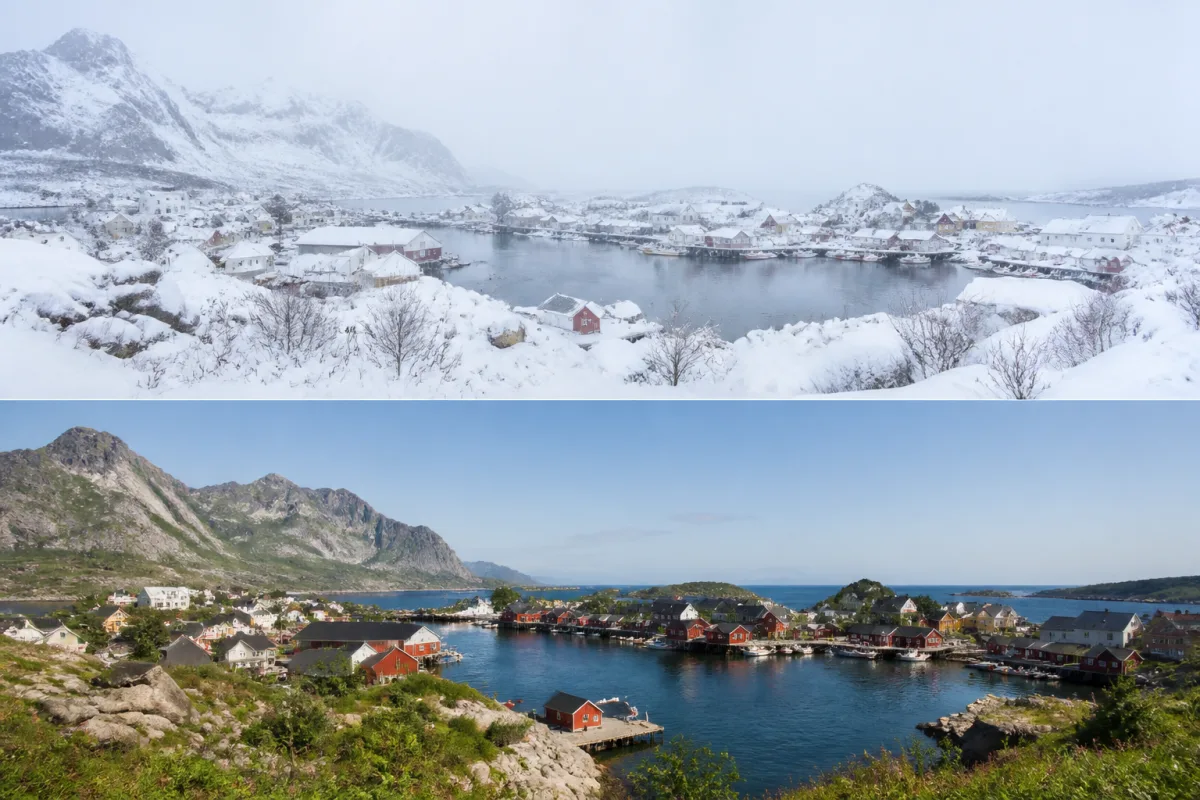
The village where the fish factory stood had 157 residents — and most of them worked at that same factory. The couple arrived for the season in winter and brought only winter gear: a warm jacket, thermal underwear, snow boots. They were counting on moving to Oslo right after one of the harshest winters the region had seen in a while.
But somewhere between May and June, summer switches on up north almost overnight: the air warms up to over 20 degrees, even though there could have been waist-deep snow just recently. The couple had no summer clothes or shoes at all — they had to buy everything locally in a hurry, just to function normally in the new climate.
Relations with the locals were mixed. The Norwegians at the factory were friendly, worked and laughed alongside the foreign staff, but outside of work tasks they preferred to stick to their own circle. At lunch, Norwegian and Polish workers split into separate groups: there was no “come sit with us” kind of shared meal — more like two groups coexisting in parallel on the same shift.
At the factory, Norwegians worked and laughed with foreign staff but kept to themselves off shift — there were no shared lunches.
Life in Oslo: the atmosphere and the cost of living
Oslo’s atmosphere turned out to be different: people there are more open and quicker to engage than the Norwegians up north. The city feels more international — they made friends with Spanish-speaking neighbors there, and once a year this international circle gets together: the Norwegians speak Norwegian, the couple speaks English, and their Spanish-speaking friends speak Spanish among themselves.
Frequently asked questions
Do you need EU or Polish citizenship to get a fish factory job in Norway this way
The story describes hiring through Polish-language Facebook groups — recruitment was aimed at Poles and happened entirely remotely from Poland. No other citizenship conditions are mentioned in this story, so no conclusions can be drawn about workers with other citizenships.
What happens to housing and paperwork if the factory contract isn’t renewed
In this story, once the three-month contract ended, the couple handled finding new housing and work in Oslo themselves — the factory provided housing and paperwork only for the contract period. The search for a new option started before the contract even ended, and housing in Oslo was arranged in advance.
Can you get hired as an electrician in Norway without Norwegian education credentials
In this story, the employer hired the electrician based on remote negotiations and work experience, with no mention of a Norwegian diploma or qualification verification at the hiring stage. Later, when trying to get hired at another firm, it was precisely insufficient experience and qualifications that led to the refusal to continue cooperation.
How quickly do Norwegians start trusting foreign coworkers
In this story, even during the time spent working at the factory, the friendly attitude never turned into shared lunches or being included socially — Norwegians and Poles coexisted in parallel on the same shift. This applies specifically to the northern village; in Oslo, by the couple’s experience, the atmosphere was different and more open.



Comments
Reader experience is useful, but it is not advice: check the rules on the official site.
No account needed: click Sign in, type any name, and you are done.