

The 240-day rule lets an H-1B holder keep working for the same employer after their I-94 expires, as long as the extension petition was filed before that date — but only until day 240 or a denial, whichever comes first.
In short
- Official PERM processing time is about 300 days, but the independent tracker H1BGrader estimates actual wait time at 10 months and 3 days.
- An H-1B extension (Form I-129) currently takes about 11.5 months — that matters a lot alongside the 240-day rule.
- The 240-day rule only applies when staying with the same employer; changing employers triggers portability instead, with no such limit.
- Filing an extension at the start of the 6-month window gives a buffer of about 423 days — filing 3 months out drops that to 331 days.
- The OPT fee, ending the H-1B grace period, and reworking extension reviews are still just proposals, with comments accepted through the 9th–13th.
PERM Processing Times: 360 Days as of Early November
The U.S. Department of Labor regularly updates PERM processing times on its own page. At the time this material was prepared, processing took about 360 days — but since this figure changes, the current value should be checked on the official DOL page on the day you file. That means cases now being reviewed were roughly filed in early November 2025.
The calculation method has changed. The department used to show the audit queue separately and specify which month’s filings were currently being processed. That data is gone now: the site only shows three figures — average processing time over the last 30, 90, and 180 days. Going by the 180-day figure, cases from around November 2025 are being processed — meaning both methods (the 360-day figure and the 180-day average) land close to the same result.
The year-over-year trend shows a notable speedup: in March, PERM processing took about 501 days, and now it’s around 300 days. The department hasn’t disclosed the reason for this drop; it could be a smaller number of filings, a change in the processing workflow, or both.
The department hasn’t disclosed the reason for this drop; it could be a smaller number of filings, a change in the processing workflow, or both.
A separate data source is the independent tracker H1BGrader, which collects statistics on case categories the department doesn’t publish directly. By its estimate, about 98% of cases filed in August have already been processed, versus about 90% of those filed in December 2025; these figures are collected independently of DOL and may differ from official statistics. The tracker’s current wait time is about 10 months and 3 days — longer than DOL’s official 300 days. The gap comes down to methodology: the 300-day figure is a 30-day rolling average, not the full wait time for any specific case.
Practical takeaway: filing PERM in March 2026 means a decision shouldn’t be expected before roughly January 2027.
PERM Processing Times: Official Data vs. the Independent Tracker
Average PERM processing time by source and period
- Now (30-day average, DOL)~300 days
- March (DOL)~501 days
- H1BGrader tracker~10 months and 3 daysindependent estimate, not from DOL
DOL officially reports about 300 days (a 30-day average), but the independent tracker H1BGrader estimates actual wait time at 10 months and 3 days — the gap comes from different methodologies.
H-1B Extension Takes 11.5 Months: What That Means in Practice
According to USCIS, Form I-129 for H-1B extension of stay is currently taking about 11.5 months to process. That’s the figure specifically for I-129 — the form used to extend H-1B status with either a current or a new employer.
That timeline matters on its own, but it becomes critical alongside the 240-day rule: if processing drags on for nearly a year, the applicant risks running past the 240-day window and losing work authorization before a decision is even made.
To gauge timelines for a specific company, H1B Grader is a useful tool — it has historical data on processing times and how filings were handled for individual employers. That helps estimate when to start the extension process based on a company’s actual track record, not just USCIS’s general figures.
What the H-1B 240-Day Rule Actually Covers
The 240-day rule allows continued work for the same employer after the I-94 expiration date, as long as the H-1B extension petition was filed before that date. The 240-day count starts from the expiration date of the current H-1B status (the date listed on the I-94), not from the date the extension petition was filed — that expiration date is what sets the clock for how long work can continue.
On day 240, work authorization ends automatically, even if the petition is still pending and the applicant remains with the same employer. Work must stop either on that day or earlier, if the petition is denied first — whichever comes first.
Based on available information, reaching day 240 on its own doesn’t trigger unlawful presence right away — the applicant is generally considered to move into a period of authorized stay, which doesn’t allow work but does permit remaining in the country until the petition is decided. This isn’t an official status, and in borderline cases it’s worth checking the situation with an immigration attorney.
In practice, this line hasn’t always been enforced consistently: there have been cases where H-1B workers were placed into removal proceedings after day 240. Because of that, it’s worth always carrying the filing receipt, approval notice, and the I-94 itself — these are the documents that prove the applicant falls under the rule’s protection if the question ever comes up. Enforcement of this line used to be loose, but it may be stricter now, which is why these documents are worth keeping on hand at all times.
there have been cases where H-1B workers were placed into removal proceedings after day 240
Work authorization ends automatically on day 240, even if the petition decision hasn’t come through yet. The filing receipt, approval notice, and I-94 are proof you’re covered by the rule.
Does the 240-Day Rule Apply When Changing Employers
The 240-day rule doesn’t apply when moving to a new employer — a different mechanism, portability, covers that case instead. When changing employers, the 240-day limit doesn’t apply at all: work can continue while the transfer petition is pending, with no tie to that deadline.
The difference in mechanics is fundamental. Extending with the same employer allows working for a maximum of 240 days past the I-94 expiration date, and if no decision arrives within that window, legal work stops. Portability for an employer change doesn’t carry that limit: the applicant can start working for the new employer as soon as the petition is filed and keep working there for the entire time the petition is pending — even if review takes longer than 240 days.
the applicant can start working for the new employer as soon as the petition is filed and keep working there for the entire time the petition is pending — even if review takes longer than 240 days
The 240-Day Rule vs. Portability When Changing Employers
| Criterion | Extension with the same employer | Changing employer (portability) |
|---|---|---|
| Does the 240-day limit apply | Yes | No |
| When work can start/continue | Right after I-94 expires, up to 240 days | As soon as the petition is filed |
| What happens if no decision arrives in time | Work stops on day 240 | Can keep working the entire time the petition is pending |
When to File an H-1B Extension to Avoid Losing Work Authorization
The earliest an H-1B extension can be filed is 6 months before the petition’s expiration date. Filing right at that point gives a combined buffer of the 240-day rule plus roughly 183 days until expiration — around 423 days total, or about 13.5 months. With current processing times around 11.5 months, that buffer is usually enough, though the exact processing time for any individual case can’t be predicted in advance.
The later the filing, the smaller the cushion. Filing 122 days before expiration cuts the total buffer to roughly 362 days — already a point where the risk becomes noticeably higher. Filing 3 months before expiration drops the buffer to 331 days, and a situation where work has to stop before a decision comes through becomes possible. Filing 2 months before expiration is worse still, and 1 month before is the worst option of all.
In practice, this means: filing at the last minute can leave an employee without work authorization before USCIS even issues a decision. An employer can’t keep that person on staff indefinitely, and losing H-1B work authorization effectively means it’s no longer possible to legally remain in the country.
Premium processing speeds up review but doesn’t guarantee protection in this situation. USCIS handles some of these cases without premium processing applied — the fee may get refunded in that case, but that doesn’t remove the risk of losing work authorization and having to leave the country if the decision doesn’t arrive in time.
Since the 240-day rule only applies while staying with the same employer, the practical takeaway is simple: as soon as the 6-month filing window opens, it’s worth coordinating filing timing with the employer and an attorney right away, so a decision is guaranteed to arrive before the 240-day limit runs out.
H-1B Extension Buffer by Filing Date
The earlier the filing, the bigger the cushion before work authorization is at risk
- Filed 6 months out (earliest possible)~423 days
- Filed 122 days out~362 days
- Filed 3 months out331 daysrisk of work stoppage before decision
Filing right when the 6-month window opens gives a buffer of about 423 days — enough given current 11.5-month processing times. The later you file, the smaller the cushion and the higher the risk of losing work authorization.
Midterm Election Results and Their Effect on Immigration Rules
Following the November 3 midterm elections, Democrats won control of both chambers of Congress — the House and the Senate. Newly elected members won’t take office right away: swearing-in is set for January 3, 2027, and that’s when the new Congress officially begins.
The balance of power doesn’t give Democrats the ability to push reforms through on their own yet. In the House, preliminary counts put them at around 244 seats — a solid majority. In the Senate, it’s around 54 seats, which isn’t enough to overcome a filibuster — that requires 60 votes. Overriding a presidential veto needs two-thirds of votes, and neither chamber has that majority either. The numbers are enough to block restrictive immigration bills but not enough to push through their own agenda.
This has little effect on current rules. The $100,000 fee, the OPT proposal, and agency audits are executive actions: proclamations, presidential orders, or regulations issued directly by the executive branch and federal agencies, bypassing a Congressional vote. Congress can’t undo them — it can demand reporting, summon agency officials to hearings, and ask questions, but it can’t stop the actions themselves.
Congress does have real leverage where funding is involved: a government shutdown, which could start December 11, could delay PERM processing and other procedures — that’s the area actually under its control.
With the new Congress beginning January 3, all bills from the previous session expire, including proposals aimed at curbing H-1B abuse — they’ll have to be reintroduced from scratch. In the month before that, a so-called lame duck session will take place — sessions of the outgoing Congress where some movement on bills is still possible. But overall, a change in majority doesn’t shift things instantly: current regulations stay in effect, and the main consequence of the Democratic win at this stage is tighter oversight of the executive branch, not a reversal of its decisions.
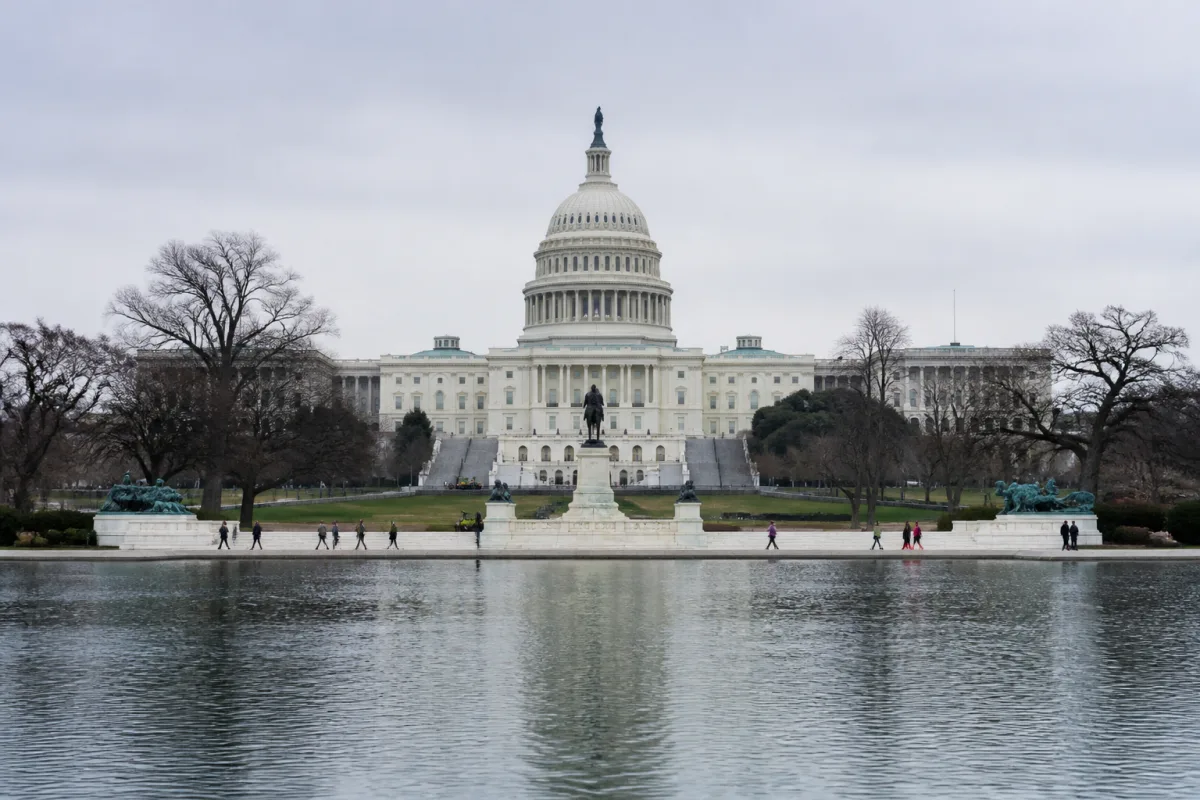
Democrats don’t have the 60 Senate votes needed to beat a filibuster or the two-thirds needed to override a veto — they can’t push through reforms, but they can block restrictive bills and tighten oversight of agencies.
Three Proposed Rules and Their Comment Deadlines
A public comment period is currently open on three proposed regulations at once, closing next week — the deadlines fall on the 9th, 10th, and 13th. None of the three rules is in effect yet: these are proposals, which is exactly why comments are being collected rather than the rules being applied in practice.
- OPT fee. The proposal introduces a fee paid by the school that recommends a student for OPT: $70,000 for the first OPT and $30,000 for each subsequent one. The rule hasn’t taken effect yet — it’s a proposed regulation, and anyone it would affect should leave a comment detailing the impact while the window is still open.
- Ending the H-1B grace period. The proposal removes the current 60-day grace period for H-1B holders. This is being called one of the most significant items under discussion, and its consequences are also worth spelling out in a comment.
- Reworking how extensions are reviewed. The proposal eliminates the distinction between an initial extension and subsequent ones: USCIS would review every extension application from scratch, without deference to previously approved petitions — effectively treating it as a brand-new filing. The expected effect is longer processing delays precisely because of this approach.
All three items remain proposals as of this writing: neither the OPT fee, nor the end of the grace period, nor the new extension review process applies to current filings until the comment period closes and a final rule is published.
The CPT Lawsuit: Where the Case Stands
In August, ICE sent two mass mailings to schools about CPT (Curricular Practical Training — program-integrated training for F-1 students): they stated that CPT is only allowed if the training is required for every single student in the program to earn their degree. According to the plaintiffs, this contradicts a rule that had stood for roughly 35 years — elective courses with CPT were not previously excluded from qualifying for training. Facing the risk of losing SEVP certification, some colleges and universities have already stopped approving CPT for elective courses.
A lawsuit against these mailings was filed on October 5. On October 20, the government responded that the mailings were simply a reminder, not a rule change; the plaintiffs disagree and maintain this amounts to a fundamental change in practice, introduced without explanation and without a public comment period. Among those affected, according to the plaintiffs, one university denied CPT to more than 120 students, and at the University of Wisconsin the approval rate dropped noticeably. A court hearing took place (around the 6th), but there’s no public ruling yet.
Until the court rules, current restrictions remain in effect: CPT authorization still has to come from the school’s DSO (Designated School Official), and that’s the process to follow right now — not waiting for the outcome of the lawsuit.

The lawsuit over ICE’s CPT mailings hasn’t been resolved by the court yet. Until a ruling comes, current rules apply — authorization still has to come from the DSO, regardless of how the case turns out.
H-1B Visa Stamping Slots and Other Things to Watch This Week
- No new H-1B stamping slots opened up. This week saw no mass release of interview slots at Indian consulates, wait times keep climbing, and the situation remains unpredictable.
- Hold off on travel if you can. If a visa is already stamped or has expired, and the trip isn’t mandatory or urgent, it’s better not to go — unpredictable slot availability raises the risk of getting stuck outside the U.S.
- No new rules expected in the coming week — nothing currently under discussion is taking effect yet.
- Duration of status is still tied up in court. There’s no new ruling on the fixed duration-of-status proposal; the matter remains pending.
- The PERM suspension for eight companies is ongoing — the process continues for these cases, but there are no new details this week.
- The PERM overhaul has White House approval but hasn’t been published. The revised PERM rule has cleared White House review, but the official publication hasn’t happened yet — it’s too early to expect it to take effect.
Frequently asked questions
What happens if an H-1B extension decision doesn’t arrive before the 240 days run out?
Work for that employer has to stop right after day 240, or after a denial — whichever comes first. Reaching the end of this period doesn’t by itself trigger unlawful presence: the applicant moves into a period of authorized stay, which allows staying in the country but not working. In borderline cases, it’s worth checking the situation with an immigration attorney.
Can the decision be appealed or sped up if the 240 days are about to run out with no answer on the petition?
The 240-day rule is strictly tied to the I-94 expiration date, not to anything the applicant does, so it doesn’t include a built-in extension mechanism. The only practical tool is premium processing, which speeds up review but doesn’t guarantee a decision will arrive before the deadline, and doesn’t protect against the risk of having to stop working.
Does anything need to be done if H-1B is being transferred to a new employer and the extension hasn’t been approved yet?
In that case, the 240-day rule doesn’t apply at all — portability takes over instead: the employee can start working for the new employer as soon as the petition is filed and keep working the entire time it’s pending, even if that takes longer than 240 days.
What happens to PERM and H-1B filings if the government shuts down on December 11?
A shutdown could delay PERM processing and other procedures — this is one of the few real levers Congress has left, since funding is the area actually under its control, unlike executive actions like the $100,000 fee or agency audits.
Can an F-1 student get CPT approved for an elective course right now, while the lawsuit is still pending?
Yes — until the court rules, current restrictions remain in effect: CPT authorization still has to come from the school’s DSO, and that’s the process to follow right now, not the outcome of the lawsuit.
What happens to bills aimed at curbing H-1B abuse once the new Congress takes office?
When the new Congress begins on January 3, 2027, all bills from the previous session expire, including proposals aimed at curbing H-1B abuse — they’ll have to be reintroduced from scratch. Before that, a lame duck session will take place, where some movement on bills from the outgoing Congress is still possible.


Comments
Reader experience is useful, but it is not advice: check the rules on the official site.
No account needed: click Sign in, type any name, and you are done.