
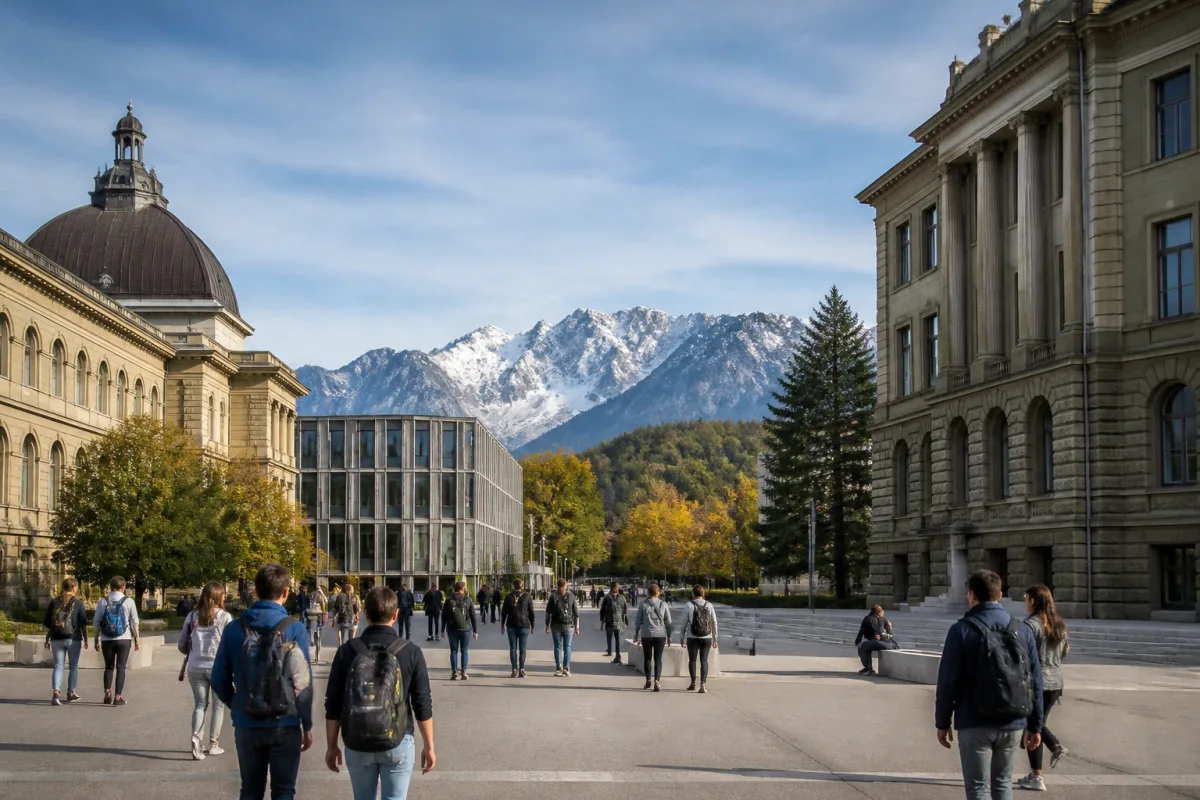

Getting into a Swiss university is realistic if you pick the right program among world-class schools and put together a document package whose exact requirements depend on your home country’s diploma and the chosen university.
In short
- ETH Zurich ranks 8th worldwide, EPFL Lausanne 22nd, and St. Gallen’s master’s in Strategy ranks 1st in the world in its field.
- International candidates for ETH Zurich’s master’s programs apply as early as November, a full year before the program starts.
- A semester at ETH Zurich for international students costs around CHF 1,900 — far cheaper than private US universities, where tuition runs into the tens of thousands.
- ETH Zurich’s Excellence Scholarship (ESOP) provides around €15,000 per semester plus a full tuition waiver.
- After graduation, international students from outside the EU can stay in Switzerland for another 6 months to look for a job in their field.
Which Swiss universities rank among the world’s best
ETH Zurich holds 8th place in the global ranking, while EPFL Lausanne sits at 22nd. A strong Swiss university can be chosen to match a specific goal: for technology, ETH Zurich or EPFL Lausanne; for business and finance, St. Gallen; for medical sciences, Zurich and Basel. Geneva, Lausanne, and Bern are also worth a look.
At St. Gallen, the master’s program in Strategy and International Management ranks 1st in the world among programs of its kind. And at ETH Zurich, a university idea can genuinely turn into a business: in 2024 alone, research at ETH Zurich produced 37 new startups, and the university is now linked to 615 active spin-offs.
in 2024 alone, research at ETH Zurich produced 37 new startups, and the university is now linked to 615 active spin-offs
What else sets Swiss universities apart
- strong international reputation of diplomas;
- a large number of programs taught in English;
- lower competition than at Ivy League universities.
For technology, choose ETH Zurich or EPFL Lausanne; for business and finance, St. Gallen; for medicine, Zurich or Basel.
What documents you need to apply
The standard application package includes:
- passport;
- high school diploma or university degree;
- transcript of grades;
- a certificate confirming your language level;
- academic CV;
- motivation letter;
- letters of recommendation.
Some fields of study additionally require a portfolio. Individual programs may ask for other documents or entrance exam results — this should be confirmed with the specific university.
For master’s programs, the admissions committee also evaluates how closely your bachelor’s degree relates to the new program and which relevant courses you’ve already completed.
Standard application document package
How admission requirements depend on your country and program
Admission requirements depend on the country where your diploma was issued and on the specific university — there’s no single rule for all applicants. If your diploma falls under a recognized type (such as the IB or A-Levels), coursework is often accepted without an entrance exam; if your diploma isn’t on the recognized list — as is the case for some diplomas from CIS countries — the university may require an entrance exam or tests such as the GMAT or GRE. So the task isn’t to find a universal formula, but to find a university where your prior educational path best matches the requirements of a specific program.
At the master’s level, the approach is different: the admissions committee evaluates the candidate’s whole profile — grades, projects, research, professional experience, and recommendations. For technical programs, they also look at relevant math, programming, or science coursework in your previous degree.
Language certificate requirements are also tied to the program rather than to the university as a whole. English-taught programs accept IELTS, TOEFL, and similar certificates; French-taught programs accept DELF or an equivalent. The language of instruction doesn’t always match the region’s language, either: most programs at the University of Geneva’s Faculty of Science don’t require knowledge of French.
most programs at the University of Geneva’s Faculty of Science don’t require knowledge of French
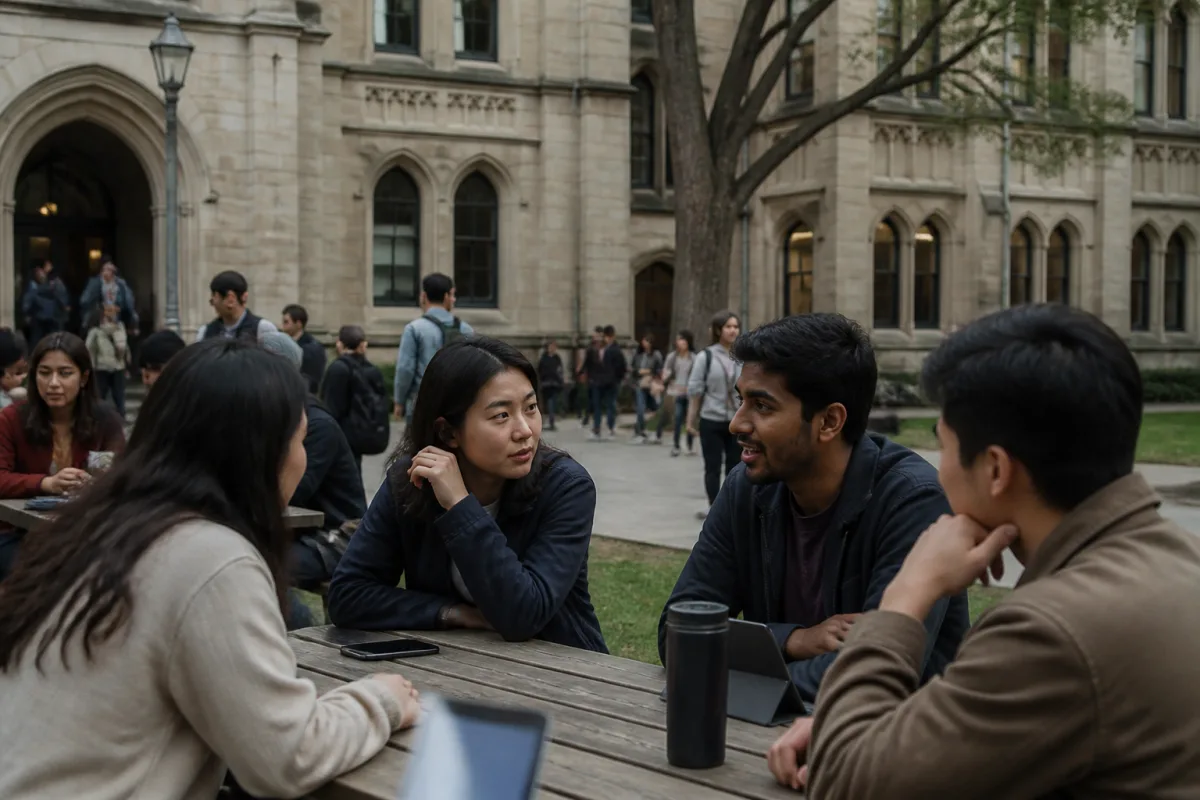
Requirements depend on the country where your diploma was issued and on the specific program: a recognized diploma (IB, A-Levels) is often accepted without an exam, while an unrecognized one may require entrance tests like the GMAT or GRE.
Studying in English in Switzerland
Switzerland has four official languages — German, French, Italian, and Romansh — but getting into a program taught entirely in English is easiest at the master’s level, where the selection of English-taught programs is broad, though unevenly spread across fields. At the bachelor’s level, instruction is mostly in German, French, or Italian, and fully English-taught bachelor’s programs are the exception rather than the rule.
The largest number of English-taught programs is in computer science, data analytics, cybersecurity, and natural sciences. There’s also a solid selection in finance and management. For other fields, it’s worth checking separately whether a program is taught in English or only in one of the national languages.
How to choose programs and when to apply
- Find programs through education portals. You can filter options by degree level, field, and language of instruction — faster than searching directly on university websites.
- Shortlist 8–10 programs that look interesting. At this stage, cast a wide net: filter only by field and language level, without checking details yet.
- Verify each program on the university’s official website. Education portals only give you an initial filter — current requirements, tuition, language of instruction, and application deadlines need to be checked there.
- Narrow the list down to 4–6 programs. Keep the ones that best match your academic profile, budget, and future plans.
- Start preparing early — some strong programs open applications as early as the previous fall. For admission the following academic year, that means identifying programs and requirements over the summer and having your full document package and language certificate ready by fall.
- Watch for early deadlines at individual universities. For example, international candidates for ETH Zurich’s master’s programs apply as early as November, a full year before the program starts.
How to choose a program to apply to
Six steps from initial search to a finished document package.
- Find programs through education portalsfilter by degree level, field, language
- Shortlist 8–10 interesting programswide selection, no detailed check yet
- Verify each on the university’s websiterequirements, tuition, language, deadlines
- Narrow the list to 4–6 programsby profile, budget, and plans
- Start preparing earlysummer–fallsome programs open applications the previous fall
- Watch for early deadlinesNovembere.g., ETH Zurich master’s programs
International candidates for ETH Zurich’s master’s programs apply as early as November, a full year before the program starts.
How much tuition costs and whether you can work
A high ranking for a Swiss university doesn’t mean high tuition, unlike private universities in the US or UK.
| University | Tuition per semester |
|---|---|
| University of Geneva | around CHF 500 |
| University of Basel | around CHF 850 |
| ETH Zurich (international students) | around CHF 1,900 (around CHF 3,800 per year) |
| Cornell University, US, for comparison (ranked 16th worldwide) | around $57,000 per year |
The gap between a Swiss and a US university from the same global ranking is more than tenfold.
The gap between a Swiss and a US university from the same global ranking is more than tenfold
It’s also possible to study and earn money at the same time. At ETH Zurich, a teaching assistant’s hourly rate is around CHF 30; working about 15 hours a week brings in roughly CHF 2,000 a month — a meaningful chunk of monthly living costs.
After graduation, international students from outside the EU can stay in Switzerland for another 6 months to look for a job in their field.
What scholarships are available for a master’s degree
The largest of the known programs is ETH Zurich’s Excellence Scholarship (ESOP): around €15,000 per semester plus a full tuition waiver. It’s aimed at strong master’s candidates, meaning competition is based primarily on academic results.
| University / Faculty | Funding amount |
|---|---|
| ETH Zurich (Excellence Scholarship, ESOP) | ≈€15,000 per semester + free tuition |
| EPFL Lausanne | ≈€11,000 per semester |
| University of Geneva, Faculty of Science | €10,000–16,000 per year |
Strong funding options are often posted not on general scholarship portals but on the website of a specific university or faculty, so it’s worth searching for a scholarship at the same time as the program itself, not after receiving an offer.
Scholarship funding amounts
Master’s scholarship amounts at different Swiss universities.
- ETH Zurich (Excellence Scholarship, ESOP)≈€15,000 per semesterplus a full tuition waiver
- EPFL Lausanne≈€11,000 per semester
- University of Geneva, Faculty of Science€10,000–16,000 per year
Strong scholarships are often posted on a specific university or faculty website rather than general portals — search for them alongside the program, not after you get an offer.
Frequently asked questions
Can you transfer to a Swiss university from another university if you’re already partway through a bachelor’s degree?
This isn’t covered separately in the material, but the general admissions principle is the same as for new applicants: the committee looks at how closely your completed coursework and your previous university’s program match the field you want to switch to. The decision on crediting completed courses is made by the specific university — there’s no single rule.
What happens if you don’t get your language certificate in time?
A language certificate is part of the standard application package, so applications aren’t reviewed without it. Since some strong programs open applications as early as the previous fall and documents need to be ready by fall, it’s worth getting the certificate well ahead of time rather than close to the deadline.
Can you get into a Swiss master’s program without a bachelor’s degree in the same field?
Yes, but the admissions committee evaluates your whole profile: grades, projects, research, experience, and recommendations, not just whether your degree field matches. For technical programs, they also look at relevant math, programming, or science coursework you’ve already completed — the less overlap there is, the lower your chances of admission.
Can you apply to several Swiss universities at the same time?
There’s no direct restriction mentioned in the material, and the logic of the selection process itself — shortlisting 8–10 options and then narrowing down to 4–6 — implies applying to several universities in parallel. Each program still needs to be checked and applied to separately on the specific university’s website, with its own deadlines and document package.
Comments
Reader experience is useful, but it is not advice: check the rules on the official site.
No account needed: click Sign in, type any name, and you are done.