
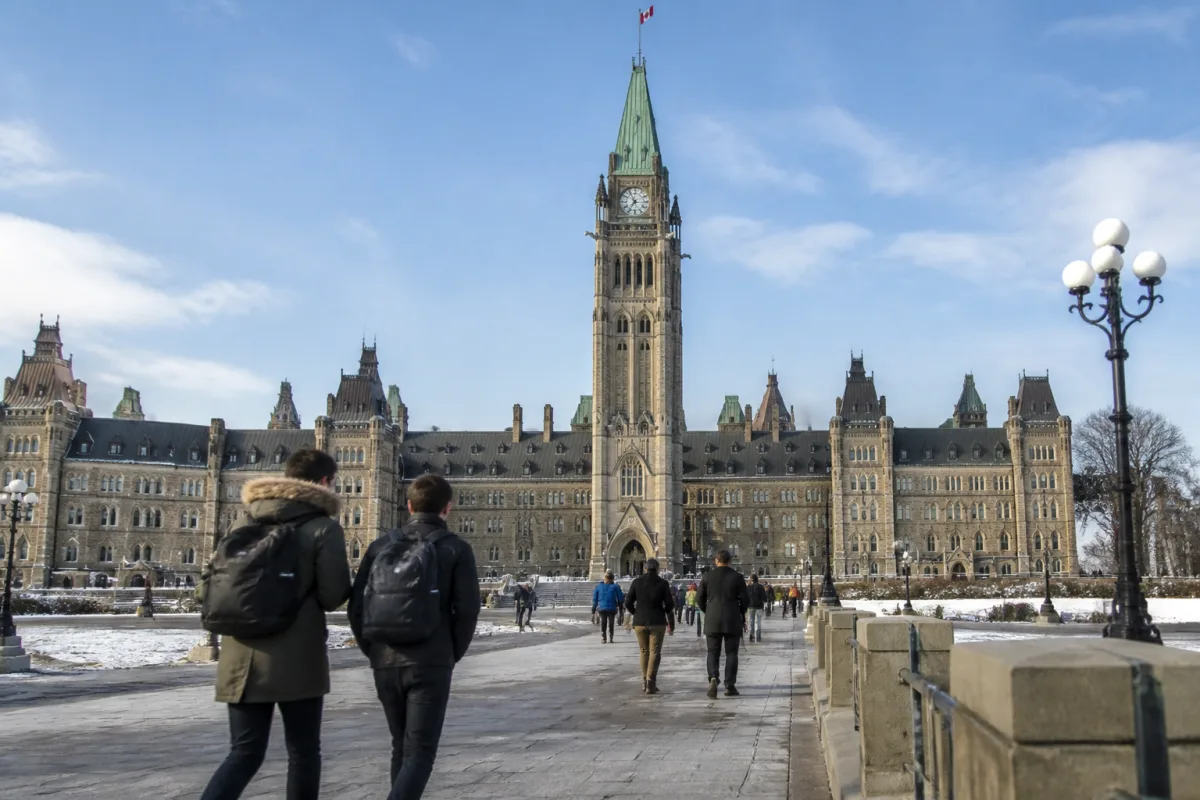

Canada’s government is legally required to table a new immigration levels plan for 2027–2029 by November 1, and the prime minister has already signalled a return to controlled population growth.
In short
- Prime Minister Carney signalled a possible return to “controlled” population growth, but gave no specific numbers or timeline.
- The current plan holds admissions at 380,000 permanent residents a year through 2028 — the new plan is due no later than November 1.
- Canada’s population growth fell to 0.5% a year — the lowest since 1915 — driven by a drop of 150,000 in temporary residents.
- The Express Entry cut-off score for French-speaking candidates was 382, versus 518 for candidates with Canadian work experience.
- The C.D. Howe Institute is calling for lower admissions, not higher — down to 340,000 people and 3% temporary residents by 2029.
What the Prime Minister Said About Population Growth
Canadian Prime Minister Mark Carney told The New York Times: “The question now is when we resume controlled population growth.” The word “controlled” is the key part here: this isn’t about opening the border or returning to previous numbers, but about a gradual, cautious increase — the prime minister did not name specific figures or new rules.
The question now is when we resume controlled population growth.
The statement came after three years in which the government talked exclusively about cutting admissions. After the pandemic, Canada’s population grew at a record pace — nearly 3% a year — driven mainly by temporary residents: international students, workers, and asylum seekers. By fall 2024, they made up about 7% of the country’s population. In response, the government cut study permits, tightened rules for workers, and reduced permanent residence targets, aiming to bring the share of temporary residents down to below 5% of the population.
Carney did not talk about opening the border or returning to previous numbers — he pointed to a gradual, cautious increase, with no specific figures or new rules announced.
The Current Plan: How Many People Canada Admits Now
Canada’s current immigration levels plan runs through 2028, and its numbers are the starting point for the new 2027–2029 plan.
| Category | 2026 | 2027–2028 |
|---|---|---|
| Total new permanent residents | 380,000 a year | 380,000 a year |
| Express Entry (federal skilled workers) | 109,000 invitations | 111,000 a year |
| Provincial Nominee Program (PNP) | about 92,000 | about 92,000 |
| Temporary resident cap | no more than 385,000 new arrivals a year | no more than 370,000 new arrivals a year |
| Fast-tracked transition to PR for people already working in Canada | up to 33,000 | program runs in 2026–2027 |
| Transition of protected persons to permanent status | about 115,000 | — |
Express Entry is the online system Canada uses to select skilled workers for permanent residence. Provincial programs work differently: a province itself picks and nominates candidates based on its own labour market needs.
The plan separately accounts for people already in Canada: up to 33,000 workers will get a fast track to permanent status in 2026–2027, and about 115,000 people who already hold protected status in the country will be transitioned to permanent resident status.
The new plan won’t start from a blank page: the figures for 2027 and 2028 are already set in the current document, and they can only be revised — with 2029 added on top.
Canada’s Immigration Levels Plan: Targets for 2026–2028
The core figures of the current plan, which will serve as the starting point for the 2027–2029 document.
- Total new permanent residents (2026)380,000 a year
- Express Entry (2026)109,000 invitations
- Provincial Nominee Program (PNP)about 92,000
- Temporary resident cap (2026)no more than 385,000new arrivals a year
- Fast-tracked transition to PR for workers already in Canadaup to 33,000in 2026–2027
- Transition of protected persons to permanent statusabout 115,000
Express Entry Cut-Off Scores in September 2026
September saw eight Express Entry draws, with candidates receiving more than 11,000 invitations to apply for permanent residence. The largest was a draw for healthcare and social services workers: 3,500 people were invited at a cut-off score of 475.
One category stood out separately: candidates with Canadian work experience. In one September draw, physician candidates with Canadian work experience needed only about 198 points — noticeably lower than the threshold for other occupations. For other candidates with Canadian work experience, the cut-off score dropped over the month: it stood at 523 in mid-August and fell to 518 in the last September draw.
The drop is small — just 5 points — but it shows this category is gradually becoming more accessible, unlike the general federal pool, where competition among candidates remains high.
Physician candidates with Canadian work experience needed only about 198 points in September — well below the threshold for other occupations with Canadian experience.
Why French Proficiency Boosts Permanent Residence Chances
In 2025, French speakers made up nearly 9% of new permanent residents settling outside Quebec. Under the government’s plan, that share is meant to rise to 9.5% in 2027 and 10.5% in 2028.
The gap already shows up in Express Entry scores. In an August draw for French-speaking candidates, 5,000 people were invited at a cut-off score of 382. By comparison, candidates with Canadian work experience faced a cut-off score of 518 in the last September draw — a gap of more than 130 points.
That gap cuts two ways for different groups of applicants. Some find work in Canada, get a work visa, and put in at least a year on the job — yet even then may fall short on points for permanent residence. Others have never set foot in the country: they have education, work experience back home, and French skills — and that’s enough to get an invitation without ever visiting Canada.
In late September, the immigration minister announced new initiatives to attract francophones: about $1.2 million will go to programs in Newfoundland, Saskatchewan, and northern Ontario. The sum is modest, but the direction is clear — these candidates will now be actively sought out.
Candidates with Canadian work experience and visas may still fall short of the 518 cut-off, while French-speaking applicants who have never visited Canada clear the bar at 382.
Canada’s Demographics: A Record-Low Population Growth Rate
As of July 1, 2026, Canada’s population stood at nearly 42 million, according to the national statistics agency, and it grew by just 0.5% over the year — by these figures, the slowest pace since 1915, that is, since the First World War.
the slowest pace since 1915, that is, since the First World War
The main driver of the slowdown is a drop in the number of temporary residents: their numbers fell by 150,000 over the year. International student numbers fell hardest, by more than 140,000. As of July 1, temporary residents made up 6.7% of the population; the current plan’s target of under 5% is still some way off, though the trend toward it is clear.
Other pressures are building on top of this. Canada is aging: half the population is now over forty. At the same time, employers have roughly 500,000 job openings to fill, while the inflow of new residents has nearly ground to a halt. The combination of an aging population, labour shortages, and a sharply reduced flow of temporary residents is what’s building pressure on the government to raise immigration again.
Canada’s Population Growth Is Slowing
The population growth rate has dropped to its lowest point in over a century, driven by a decline in temporary residents.
- Population growth over the year0.5%the slowest pace since 1915
- Decline in temporary residents150,000 peopleover the year
- Drop in international studentsmore than 140,000over the year
- Share of temporary residents as of July 16.7%plan target: under 5%
Half of Canada’s population is over forty, employers have about 500,000 job openings to fill, and the inflow of new residents has nearly stalled.
What to Expect From the 2027–2029 Plan
The new immigration levels plan is due no later than November 1. Three things are worth watching for.
- Total new permanent residents for 2029. If the plan sets a figure above 380,000, that would run counter to the cautious tone the prime minister struck in his interview.
- How spots are split between Express Entry and provincial programs. Even with the same overall growth, where the added spots go matters — it changes the odds for different categories of applicants.
- The temporary resident cap. A sharp increase in the cap isn’t expected. Instead, the shift to permanent residence will likely favour people who are already living and working in Canada — betting on those already in the country rather than on new arrivals.
It’s also worth watching the rising share of French-speaking immigrants — a target already built into the current plan, and one that’s likely to keep climbing.

What Economists and Critics of the Current Plan Are Saying
The C.D. Howe Institute — one of Canada’s most respected think tanks — is urging caution on raising immigration. Its immigration council recommends admitting 380,000 new permanent residents in 2027, then cutting that figure to 340,000 by 2029.
On temporary residents, the institute takes an even firmer line: it treats 5% of the population as a hard ceiling rather than a goal to work toward, and argues the share should eventually come down to 3%.
Well-known Canadian economist Mikal Skuterud opposes raising immigration for a different reason. In his view, businesses are pressuring the government to close labour shortages with immigrants instead of raising wages and competing for workers in the labour market.
businesses are pressuring the government to close labour shortages with immigrants instead of raising wages and competing for workers in the labour market
There’s a housing argument too. Nearly one in four Canadian households spends more on housing than it can afford, and among renters, that rises to one in three.
Where Different Voices Stand on Canada’s Immigration Policy
Table scrolls sideways
| Party | Government (current plan) | C.D. Howe Institute | Economist Skuterud |
|---|---|---|---|
| Permanent residents by 2029 | Benchmark — no higher than 380,000 (per the PM’s remarks) | Cut to 340,000 | No position stated |
| Share of temporary residents | Target — under 5% | Treat 5% as a hard ceiling, 3% long-term | No position stated |
| Main argument | Labour shortages and an aging population | Risks to housing and the labour market | Businesses are closing labour gaps with immigrants instead of raising wages |
Compiled from the statements cited in this article.
Frequently asked questions
What happens to people already in Canada on temporary status if the cap is cut?
A sharp increase in the temporary resident cap isn’t expected. Instead of a new wave of arrivals, the government is likely to focus on moving people who already live and work in Canada into permanent status — a trend already visible in the current fast-track programs for workers and protected persons.
Can I apply through Express Entry without French and without Canadian work experience?
Yes, the general Express Entry pool is open to these candidates too, but competition is tougher there: the cut-off score for the general category runs well above the scores for French speakers or candidates with Canadian work experience, so the odds of an invitation are lower.
Is it worth working in Canada first if the plan is to apply for permanent residence through Express Entry later?
Canadian work experience lowers the cut-off score compared with the general pool, but it doesn’t guarantee an invitation: even candidates who have already worked in the country for a year sometimes fall short on points, because competition exists in this category too, even if it’s lower than in the general federal pool.
Does the lower cut-off score apply equally across all occupations?
No, the drop isn’t even: for physicians with Canadian work experience, the threshold was about 198 points, while for other candidates with Canadian experience it held at 518–523 — occupations like medicine and social work get separate, more lenient draws.
How long does a new immigration levels plan stay in effect after it’s published?
The law requires Canada’s government to table a plan covering the following three years, so the plan due no later than November 1 will run through 2029 and then be revised again on the same cycle.
Why is the C.D. Howe Institute recommending lower admissions of permanent residents by 2029, not higher?
The institute points to housing and demographic pressures: it views the current pace of growth as unsustainable and proposes cutting admissions from 380,000 to 340,000 people a year, while bringing the share of temporary residents down to 3% over the long term, instead of the current 5% target.


Comments
Reader experience is useful, but it is not advice: check the rules on the official site.
No account needed: click Sign in, type any name, and you are done.