
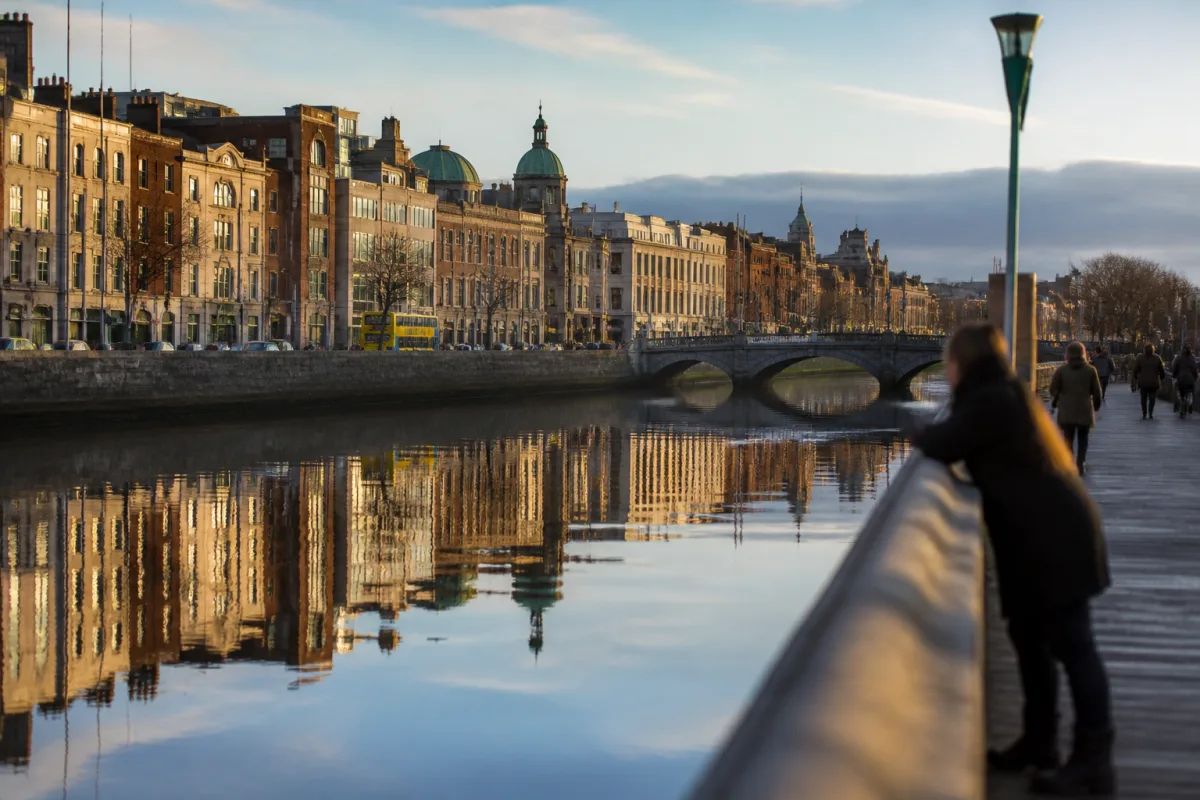

Indians received the most Irish citizenship through naturalisation over nine years — 18,250 passports. Ukrainians ranked 18th with 1,756 naturalisation certificates, but in 2025 the number jumped sharply to 366 people.
Top-20 countries by Irish passport issuance
According to naturalisation statistics from 2016 to 2025, India ranks first, outpacing Poland by 1.7 times. Indians received 18,250 passports, Poles — 11,000. The United Kingdom is third with 9,500 passports.
The remaining places in the ranking are distributed as follows: Romania (9,200), Nigeria (7,300), Brazil (7,000), Pakistan (almost 6,000), the Philippines (5,500), China (almost 5,000), Ukraine (3,300), the USA (3,000), Latvia (almost 3,000), Syria (2,500), Egypt (2,000).
Further down the list is the Russian Federation with 1,870 passports and Ukraine with 1,756 certificates. According to official statistics, 134,570 people obtained citizenship through naturalisation.
Growth of Ukrainian naturalisations in 2025
In 2025, Ukrainians showed a sharp increase — 366 people received Irish citizenship, more than in any previous year over the entire observation period. This means the pace of Ukrainian naturalisation has noticeably accelerated.
Ukraine ranks among the top twenty countries that received Irish citizenship since 2016, contrary to the initial assumption of a more modest place in the ranking.
The real number of citizens is higher than the statistics
The official figure of 134,570 does not reflect the full picture. Irish law provides that children of citizens automatically acquire citizenship by birth. Since most naturalised people are of family age, the real number of citizens who gained status through this mechanism may be three to four times higher.
If such a coefficient is applied to the main statistics, the number of people who obtained Irish citizenship through naturalisation and the birth of children would amount to approximately 300,000–400,000 people over the nine-year period.
Naturalisation versus other paths to citizenship
Naturalisation differs from citizenship by descent or family connection. It requires physical residence in the country for an established period under a work contract or other grounds. Unlike programmes such as citizenship through an Irish relative abroad (when a relative lived in Ireland), naturalisation is an official path that presumes living in the country.
In Ireland, naturalisation is often seen as the next stage after obtaining refugee status or protection. A person arrives, applies for international protection, receives refugee status, and after five years of residence can apply for naturalisation. Processing takes a couple of years, after which a passport is issued.

Revocation of citizenship is almost impossible
Citizenship obtained by birth cannot be revoked. Cases of naturalisation revocation are extremely rare. Over the past 15–20 years, Ireland has revoked only six or seven naturalisation certificates out of more than 130,000 issued. This means that if a person has obtained citizenship and lives in the country more or less reasonably, they retain it practically for the rest of their life.
General trends in Europe
Ireland follows general European trends. In most European countries, the top ten in naturalisation are occupied by similar countries: India often leads or is near the top of the ranking, and Pakistan, Romania, Egypt and Syria are also among the leaders. Some differences depend on the local economy and history of immigration, but the overall portrait of naturalised citizens in Europe remains roughly the same.
Comments
Reader experience is useful, but it is not advice: check the rules on the official site.
No account needed: click Sign in, type any name, and you are done.