
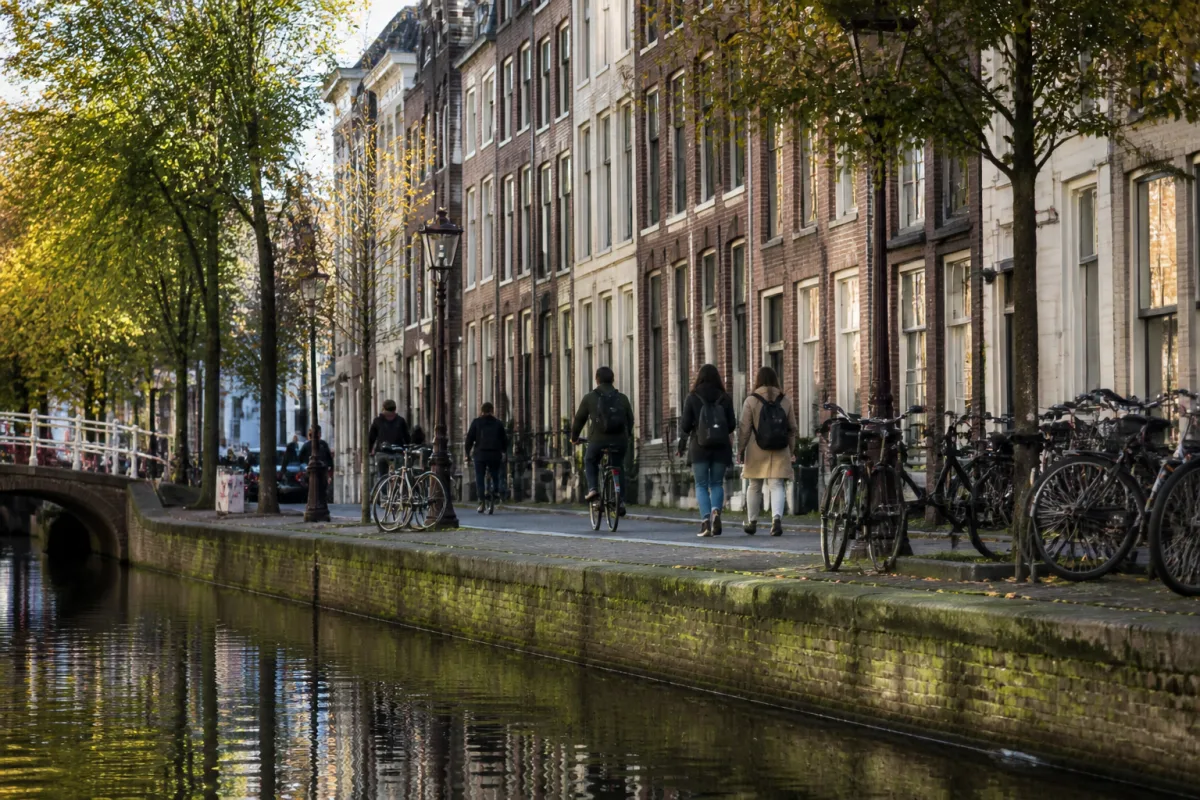

In 2027, studying at a Dutch university costs international students roughly €8,000–20,000 a year for a bachelor’s degree and €5,000–30,000 for a master’s, with the exact figure depending on the type of institution — research university or university of applied sciences — and the program.
In short
- A Russian school diploma corresponds to HAVO level, enough for HBO, but not for direct entry into a research university — that requires VWO, a foundation year, or IB/A-levels.
- Registering on Studielink isn’t a completed application: afterward, documents almost always need to be uploaded through a separate university portal.
- The January 15, 2027 deadline closes admission for limited-enrollment programs, for which no more than two applications are allowed per year.
- An accepted offer of a place must be confirmed in Studielink within 2 weeks, or it passes to the next candidate in the ranking.
- The NL Scholarship (€5,000–20,000) covers only the first year of study, while larger merit-based scholarships aren’t available for every program.
Research University or HBO: How to Choose the Right Type of Institution
Dutch higher education has two main types of institutions — research universities and HBO (universities of applied sciences) — and the difference between them shapes the entire path ahead. A research university offers academic, research-focused training with a 3-year bachelor’s program; this route makes sense for anyone planning a master’s degree, academic research, or an analytical career. HBO is built around practice: internships and projects with real companies are woven into the curriculum. A bachelor’s at an HBO takes 4 years and often leads more directly into an applied profession than the academic route does.
A common mistake is choosing an institution simply because its name includes the word “University,” which sounds more prestigious. For marketing, logistics, design, or applied IT, a strong HBO program with a built-in internship frequently serves a career goal better than an academic bachelor’s degree. The choice of institution type should be driven by future profession, learning format, budget, and plans for further study — not ranking. That turns the shortlist into a strategy rather than a collection of recognizable names.
A research university means 3 years of academic training aimed at a master’s degree and research; HBO means 4 years with practice and internships aimed at a specific profession. Choose based on your career goal, not on the word “University” in the name.
Research University vs. HBO: Key Differences
| Criterion | Research University | HBO |
|---|---|---|
| Bachelor’s duration | 3 years | 4 years |
| Program focus | Academic, research-based training | Practice, internships, company projects |
| Required school level | VWO (direct entry) | HAVO |
| Best suited for | Master’s degree, research, analytics | Fast track into an applied profession |
Choose the type of institution based on your future profession and plans for further study, not on how prestigious the name sounds.
School Diploma Equivalency and the Path to Admission
According to an assessment by the Dutch organization NOFIC, a Russian secondary school diploma corresponds to at least HAVO level. That level is usually enough to apply to a university of applied sciences (HBO). Direct entry into a research university, however, generally requires a higher level of secondary preparation — VWO — and a standard Russian diploma typically falls short of that.
That level is usually enough to apply to a university of applied sciences (HBO).
This doesn’t close the door to a research university; it adds an intermediate step to the path. One option is a preparatory foundation year or a year of study at another recognized university, after which direct entry into a bachelor’s program becomes possible. Another route is an international diploma, such as IB or A-levels. A third is an individual assessment of the diploma and the applicant’s other achievements by the university itself — in this case the institution decides not by a formal equivalency table but by the full set of documents.
The exact recognition logic in each case is set by the individual university, not by a general rule. So before writing a motivation letter and assembling an application, it’s worth checking formal compliance with program requirements — otherwise there’s a risk of discovering a level shortfall only after effort has already gone into the application.
For direct entry into a research university, a Russian diploma is usually not enough — you’ll need VWO, a foundation year, IB/A-levels, or an individual assessment by the university. Verify eligibility before writing your motivation letter.
How to Choose a Program Without Getting the Requirements Wrong
A shortlist doesn’t need to consist of ten prestigious names — a few well-considered options, split into ambitious, realistic, and safe choices, are enough. This kind of split lowers the risk of ending up with no offer at all: ambitious options raise the ceiling, safe ones protect against rejection.
For each program on the list, it’s worth checking:
- the type of institution (research university or HBO) and any required subjects, including the required math level;
- the admission format — standard or selective;
- the curriculum, availability of internships, and graduates’ career outcomes;
- tuition cost, scholarships, and the city where the program is based.
An identical program name doesn’t guarantee identical course content. An International Business program at one university might be built around research and economics, while at another it centers on practical projects and a mandatory internship. So what needs reading is not the program title but the list of modules inside it.

How to Apply Through Studielink: A Step-by-Step Process
For most programs, applying starts on Studielink, the official registration portal. That’s only the first step: the process doesn’t end with registration on this portal alone.
That’s only the first step: the process doesn’t end with registration on this portal alone.
- Create a Studielink account and add information about prior education.
- Select the desired programs and submit an enrollment request.
- After that, the university typically opens its own applicant portal, where documents and completed assignments are uploaded.
- Get access to the university’s portal, upload documents, and go through the selection process if the program requires one.
- After receiving an offer from the university, fulfill all stated conditions and confirm enrollment.
Each university runs part of the process on its own platform in parallel with Studielink, so after registering it’s worth checking both accounts.
2027 Admission Deadlines for the Netherlands
Registration for many programs starting in fall 2027 already opens in fall 2026, but the exact opening date and internal stages for a specific university need to be checked separately — there’s no single schedule across all institutions.
| Deadline | What it applies to |
|---|---|
| January 15, 2027 | Programs with limited enrollment — often psychology, international business, computer science, and other popular fields, though the list varies by university |
| April 15, 2027 | Applicants receive a ranking position following selection for limited-enrollment programs |
| 2 weeks from the offer date | The place must be accepted in Studielink, otherwise it typically passes to the next candidate in the ranking |
| May 1, 2027 | General benchmark for other programs — those without limited enrollment |
| Winter (exact date depends on the program) | Scholarship deadlines, which often fall earlier than the main application deadlines |
For limited-enrollment programs, no more than two applications are allowed per academic year. Since scholarships run on their own schedule and often expire in winter, it’s worth building a preparation calendar around the earliest date, not the final possible deadline of May 1.
2027 Admission Deadlines for the Netherlands
Key dates to build your application calendar around.
- Limited-enrollment programsJanuary 15, 2027
- Selection ranking resultsApril 15, 2027
- Accepting an offered place2 weeks from the offer dateotherwise the place passes to the next candidate in the ranking
- Programs without limited enrollmentMay 1, 2027
- Scholarship deadlinesWinter (exact date depends on the program)often earlier than the main application deadlines
January 15 closes admission for popular limited-enrollment programs, and scholarships often have their own deadlines even earlier, in winter. Build your calendar around the earliest date, not around May 1.
Documents and English Level Required for Admission
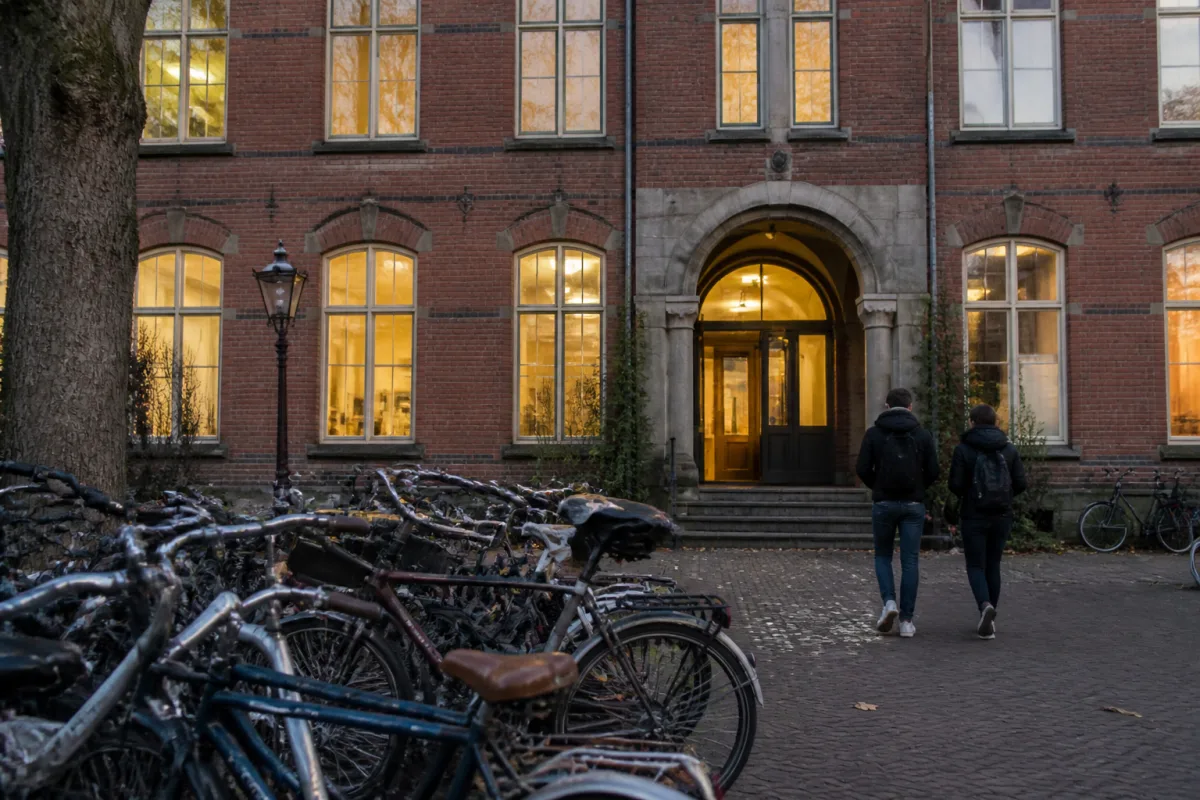
The basic document package includes a passport, a diploma or certificate with a transcript of grades, an official translation of documents if required, proof of English proficiency, a CV, and a motivation letter. Recommendation letters or a portfolio are only needed if the program explicitly requests them.
A common IELTS requirement range is 6 or 6.5 for a bachelor’s degree and 6.5 or 7 for a master’s. It’s important to check not just the overall score: a university can set a minimum for each section of the test separately. For technical and economics programs, math results are reviewed separately, and sometimes an additional test is required.
For selective programs, the document package is supplemented with online tests, essays, and other activities, up to and including an interview. Selection at such universities is typically built around several weeks of preparation, so getting through it in a couple of days before the deadline isn’t realistic — the criteria need to be studied well in advance.
Basic document package for applying
Tuition Costs and Scholarships for International Students
For international students, the 2027 benchmark is €8,000–20,000 for a bachelor’s degree and €5,000–30,000 for a master’s, with the spread depending on the university and program. Living costs average around €1,000 a month, with Amsterdam, as the capital, costing more and smaller cities noticeably more affordable.
The best-known funding option for international students is the NL Scholarship. It currently ranges from €5,000 to €20,000 a year and is paid for the first year of study only — meaning it covers just the start of the program, not the full duration.
Beyond that, universities have their own merit-based scholarships for academic and other achievements, and these can be significantly larger than the NL Scholarship. A telling example from practice: one applicant received an offer from a Dutch university with a scholarship that covered nearly the entire cost of tuition — a sign that merit-based scholarships can far exceed the base NL Scholarship. But not every field of study participates in merit-based programs, and deadlines and requirements change every year, so the terms need to be checked separately for each program.
one applicant received an offer from a Dutch university with a scholarship that covered nearly the entire cost of tuition
Tuition and Living Costs in the Netherlands for 2027
Benchmarks for international students: the spread depends on the university and program.
- Bachelor’s degree€8,000–20,000/year
- Master’s degree€5,000–30,000/year
- Living costs per montharound €1,000Amsterdam is more expensive, smaller cities are more affordable
- NL Scholarship€5,000–20,000paid for the first year of study only
The base NL Scholarship (€5,000–20,000) is paid for the first year of study only. Larger coverage comes from universities’ own merit-based scholarships, but they’re not available for every program.
Five Common Mistakes When Applying to a Dutch University
Five mistakes come up most often among applicants and can derail admission even with a strong profile.
- Confusing research university with HBO. An applicant picks the wrong educational track without understanding the difference between the academic and applied types of institution.
- Diploma equivalency not checked in advance. A program’s subject requirements go unverified until after applying, and the gap surfaces too late.
- Limited-enrollment programs discovered after January 15. By that date, competitive selection for such programs is already closed or close to it.
- Studielink registration mistaken for a completed application. The applicant never logs into the university’s separate portal, where documents need to be uploaded and the application finished.
- One generic motivation letter sent to multiple programs. The text doesn’t account for the specifics of a particular program or university.
These five points all come down to choosing the right track, checking requirements, meeting deadlines, and preparing documents individually — the same steps covered throughout the admission process above.
Frequently asked questions
What is the orientation year, and how long do I have to apply after graduating?
After completing a bachelor’s or master’s degree in the Netherlands, graduates can apply for an orientation year — a year during which they’re allowed to work freely or search for an employer. The application can be submitted within 3 years of graduation, so it doesn’t need to happen immediately after getting the diploma.
Can I move from HBO to a research university after my bachelor’s?
A direct transition isn’t spelled out, but the logic follows from the secondary-school-level requirements: an HBO diploma on its own doesn’t replace VWO. The same options that apply when entering straight from school are relevant here — a foundation year, a recognized year of study at another university, an international diploma, or an individual assessment of documents by the university itself.
What if I’ve already submitted my application on Studielink but haven’t logged into the university’s portal?
Registering on Studielink is only the first step, not a completed application: afterward, the university typically opens its own applicant portal, where documents and completed assignments need to be uploaded. Without that step, selection won’t be completed even if the Studielink application was submitted on time — this is one of the most common mistakes applicants make.
Can I apply to a limited-enrollment program after January 15?
January 15 is the key deadline specifically for limited-enrollment programs, and by that date competitive selection for them is usually already closed or close to it. If a program is found after that date, the realistic options are to consider it for the following academic year or to switch to a non-limited-enrollment program with a later deadline.
What happens if I don’t accept an offered place within two weeks?
After selection results on April 15, a student receives a ranking position, and if the university offers a place, it must be accepted in Studielink within two weeks. Missing that window typically means the place passes to the next candidate in the ranking — so an offer can be lost simply due to a missed deadline, not a rejection.
Do I need to meet the English requirement separately for each section of the test?
Yes: beyond the overall IELTS score, a university can set a separate minimum for each section of the test — reading, writing, speaking, and listening. So an overall passing score of 6 or 6.5 for a bachelor’s program might not be enough if one section falls short of the required minimum for that specific program.
Do merit-based university scholarships apply to every field of study?
No: merit-based scholarships for academic and other achievements aren’t available for every program, and their deadlines and requirements change each year. So the terms for a specific field need to be checked separately rather than assumed from general information about these scholarships.


Comments
Reader experience is useful, but it is not advice: check the rules on the official site.
No account needed: click Sign in, type any name, and you are done.